In the Christian faith, life and physical health are considered precious gifts entrusted by God. They should be taken care of taking into account the needs of the other person and the common good.
The attitude of Catholicism to health, disease and death

Published Jan. 12, 2022 07:45

The temporal nature of human life is revealed in disease and suffering. The attitude towards health glorifies suffering as a path to salvation. Body worship is unacceptable
Basic assumptions:
- Drug prohibition
- It is ethical to abuse tobacco, not tobacco use
- Sunday is to be a day of rest, devoted to family, cultural, social and religious life, with obligatory Mass attendance
- Strongly rejecting the entertainment industry promoting passivity and purely fun entertainment
- There are no restrictions on the consumption of foods, and how to prepare and serve them. Moderate / self-restraint is recommended in order to respect health. The culture of fasting has been greatly reduced throughout history (Fridays, Ash Wednesday, Good Friday). It applies to people from 14 to 60 years of age.
Organ transplant, blood transfusion:
- Organ transplants and blood transfusions are allowed
- Autologous transplants are justified by the principle that a certain part of the body can be disposed for the benefit of the whole body
- Homologous transplants (within the same genre) are justified by the principle of solidarity and love (gift to the suffering)
- Organ may be collected from a deceased and alive donor, as long as it does not cause serious and irreversible harm to the donor
- Ethics forbid donating all organs (brains, sex glands)
- Body functions can be artificially replaced to preserve organs for transplant
- Heterologous transplants (different species) are not always reprehensible from a moral point of view, each case should be considered individually (you can cornea, you can't sex glands)
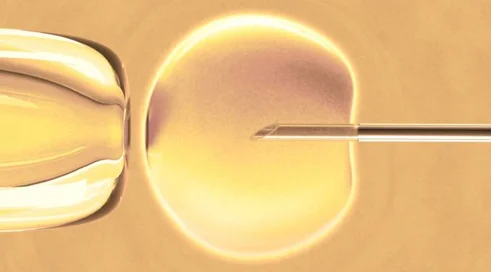
In vitro:
Fertilization with a semen collected from a sperm bank is especially reprehensible because it is contrary to the marriage relationship, the dignity of the spouses, the parental vocation and the right of the child from conception and birth in marriage and through marriage. The Church does not categorically prohibit the use of various artificial means the sole purpose of which is to facilitate the natural act (homologous artificial fertilization within a marriage with the spouse's sperm, provided that it has been obtained by a normal marriage act).
- IVF is wicked, not as a result of a marriage act, but outside of it
- It is not allowed to use alien gametes
- Artificial insemination of unmarried or informal women is not allowed
- "Surrogate motherhood" runs counter to the dignity of a woman, the unity of marriage and the dignity of human reproduction.
- Conception, pregnancy, birth and nurture are to be the sole responsibility of the parents.
Contraception
The Bible is not explicit about the types of contraceptives. However, you can find very important foundations for discussing family planning. God undoubtedly encourages people to be fertile, to have children. A child is a gift from God, a sign of blessing to parents.
Contraception as such (regardless of the method adopted) is a violation of the internal integrity of the marriage act, which is to be, on the one hand, an act that unites the spouses, and, on the other hand, an act that is internally fertile, open to a new life, in accordance with the purposefulness inherent in human nature. Of course, there are times when a woman cannot get pregnant (the infertile part of the menstrual cycle), but intercourse during this period does not affect the internal structure of the marriage act and is fair.
The Church, therefore, cannot accept contraception for anthropological reasons: the dignity of the human person and of the marriage covenant shown in Revelation does not make this possible.
Abortion
- The sanctity of every stage of life from natural conception to natural death
- The right to life belongs to human rights
- God is the source of all life, He creates, sustains and takes it away
- Any conscious attempt on the life of the unborn is unacceptable
- Abortion is the killing of a defenseless human being (punishment of excommunication)
- The mother and father of the unborn child are equally responsible for the abortion, as well as all those involved in the procedure
- A still living fetus should be baptized, which is the responsibility of healthcare professionals
- A dead fetus deserves the same respect as any deceased (burial)
- The fetus cannot become the subject of experiments or a source of organs for transplant
Euthanasia
The basis for rejecting euthanasia from a religious point of view is the fact that man must not destroy life, which is a gift from God, the one and absolute Lord of life, and which includes certain obligations and man is only its user.
The basis for rejecting euthanasia from a personalistic point of view is that the life of every person has the same value and meaning due to the fact that God created him for eternal life, in the light of which he captures the meaning of suffering. For God loves and respects every human being, even if he or she has no social or economic value. Human dignity based on God belongs to man as a person, and moral freedom is to serve the fulfillment of his personality.
& nbsp;