Thyroid nodules - effectiveness of natural extracts

Published July 13, 2023 10:58
Fot. arch. red.
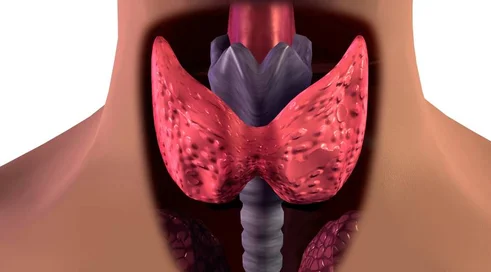
Thyroid nodules are a very common thyroid pathology, with an estimated risk of occurrence in the general population of so roughly 5% to 10%, with a much higher incidence in women, increasing in frequency with age, and in areas of greater iodine deficiency. Thanks to advances in technology and the increased availability of high-resolution ultrasound and other imaging modalities, coupled with physicians' increased focus on preventive medicine and not always successful attempts to improve access to health care resources, however, their incidence appears to be higher than estimated. As recent studies suggest, the presence of thyroid nodules can be demonstrated in about 19-68% of randomly selected individuals. As we know, among people in their 40s, statistically one in two people can already be found to have a focal thyroid lesion. And among women over 65, 3/4 of them are found to have thyroid nodules. Fortunately, the vast majority of these lesions - about 95% of thyroid nodules are benign , and fortunately not very common, although with an increasing trend in some areas of the world - thyroid cancer is one of the most successfully treated endocrine system cancers.
Recently reviewing scientific publications on the beneficial effects of natural substances on our thyroid gland including those supporting the fight against cancer of this gland, I decided to recall the results of a study entitled: "Treatment for benign thyroid nodules with a combination of natural extracts.", which literally means: "Treatment for benign thyroid nodules with natural extracts." According to a research paper published in 2019 in the journal Molecular Medicine Reports-using a combination of natural extracts can have surprisingly good results in reducing the size of benign thyroid nodules. However, it is puzzling that no one, after such seemingly spectacular results obtained by the team of researchers, decided to repeat the study on a larger group of people
As a reminder, here's what the aforementioned study looked like:
The inclusion criteria for the study were as follows: patients over 18 years of age, consent to participate in the study by signing an information form, euthyroid status [thyrotropic hormone (TSH) and free thyroxine (fT4) values within normal limits], no active thyroid disease, confirmed benign thyroid nodule by ultrasound-guided fine needle aspiration (Bethesda 2), no previous thyroid surgery, ablative thyroid replacement therapy, thyroid hormone treatment, no steroid or beta-blocker treatment, presence of one or more thyroid nodules documented by ultrasound.
The study was conducted at the Institute of Endocrinology in Bucharest, Romania, where the effectiveness of a supplement based on natural extracts in reducing the size of thyroid nodules was investigated. The study included 34 patients with thyroid tumors who were randomly assigned to a group receiving the active ingredients of the supplement or a placebo group.
The study consisted of three visits for each patient. At each visit, TSH and fT4 levels, among others, were assessed, and thyroid ultrasound was performed. The main parameter of the study that was assessed at each visit, and which came as quite a surprise, was the change in the size of thyroid nodules, which was evaluated by comparing the largest diameter of the nodules based on ultrasound measurements.
Promising results...
The researchers showed that the use of a combination of spirulina, turmeric and Boswellia extracts led to a reduction in the area of benign thyroid nodules. A comparison of the effects of the active substances with the placebo group showed a statistically significant difference, with the group receiving the active ingredients having a greater reduction in tumor area compared to the placebo group.
The overall reduction in tumor area for all 34 patients averaged 20.3%. More than 85% of patients showed a reduction in tumor area of at least 5% after 3 months, and 64.7% showed a reduction of at least 10%. Only one patient had a slight (not statistically significant tumor reduction), while four patients had a slight tumor increase.
Comparing the overall effects of placebo and active substances across all administrations, it was observed that administration of active substances (n=39) resulted in a mean reduction in thyroid nodule area of 0.611 cm2±0.933 (SD), while administration of placebo (n=29) resulted in a mean reduction in nodule area of 0.178 cm2±0.515 (SD). Testing for statistical significance between the two groups (active vs. placebo) on V3 versus V1 using the t-test for means and standard deviation revealed a mean difference of 0.433 cm2, which was statistically significant when calculated using both the t-test for equal variances (standard deviation of difference is 0.192, P=0.027) and the Aspin-Welch test for unequal variances (standard deviation of difference is 0.177, P=0.017)
Patients took two capsules of the active substance or a placebo twice a day, about 30 minutes before breakfast and lunch. The active substance contained a combination of spirulina, curcumin and Boswellia extracts in doses of 400-50-50 mg per capsule.
For a period of three months, patients were regularly examined, the size of thyroid nodules was measured, and hormonal parameters were analyzed. The results of the study showed that the active substance caused an average reduction in the area of thyroid nodules of 20.3% compared to the placebo group.
The majority of patients taking the active substance had a reduction in nodule size of at least 5%, and some by as much as 10% or more. There were no significant changes in thyroid function versus blood levels in patients taking the active substance. The safety of the active substance was good, with no serious side effects observed.
The study suggested that the combination of spirulina, curcumin and Boswellia extracts could be a promising approach for treating thyroid nodules, but it was pointed out even then that further research was needed to confirm these results and determine the optimal doses and duration of therapy.
The mechanism of action as explained was probably related to anti-inflammatory effects, improvement of antioxidant status and the action of ceruloplasmin. Finding a safe and effective alternative for patients with thyroid tumors who do not require surgery seemed crucial at the time.
Spirulina, as a rich source of nutrients, can promote regenerative processes and reduce inflammation in thyroid tumors. Curcumin, known for its anti-inflammatory properties, may help reduce swelling and suppress inflammatory reactions in thyroid tissue. Boswellia extracts also show anti-inflammatory effects and may have beneficial effects on thyroid tumor processes.
However, in tempering a bit of over-optimism, it is worth noting that the study included a relatively small number of patients and, in addition, the components used in the study were supplied by a specific company, making the study less objective and therefore could theoretically bias the results.
Certainly, larger randomized clinical trials are needed to better understand the mechanism of action of this set of substances and to confirm its efficacy and safety before drawing definitive conclusions.
However, I wonder why no one has tried to repeat the study on a larger group of patients? Could the results of the study have been manipulated? I prefer to believe that the reason was different, and soon there will be a team of researchers willing to confirm or rule out the positive effects of natural extracts on the human thyroid, especially since nodular thyroid disease is becoming more common.
Regardless of the result, it is important to remember that each patient with confirmed thyroid nodule lesions should be evaluated individually, and the decision on treatment should be made by a specialist after a thorough analysis of the patient's condition and needs. It is important for patients to consult with their doctor before making any decision regarding the treatment of thyroid nodules, and to try not to use anything too hastily without the knowledge of their doctor. Certainly, the use of natural extracts in treatment cannot be a substitute for specialized consultation and should not be considered as an "in lieu of" option, for example, instead of a nodule biopsy and cannot replace further treatment.
What's interesting is that we know more and more in light of recent studies. For example, phytonutrients such as alloperine, apigenin, curcumin and resveratrol show promising anti-tumor properties in anaplastic thyroid cancer cells. They can inhibit the growth of tumor cells, induce apoptosis (programmed cell death), arrest the cell cycle, inhibit angiogenesis (the formation of new blood vessels in the tumor) and modulate autophagy processes (self-starvation of tumor cells). However, it is important to note that not all phytonutrients show the same effects in different types of thyroid cancer cells, which may be due to differences in their biological characteristics and drug resistance mechanisms. In contrast, one recent study confirms that among natural macromolecules, a polyphenolic extract from Annurca apple pulp (AFPE) may play a potential therapeutic role in a broad spectrum of human cancers, including by exhibiting antioxidant properties.
As it turns out, AFPE, already acting at micromole concentrations on thyroid cancer cell lines, indicating that the compound may be a promising natural adjuvant in the approach to treating thyroid cancer.
In the quest to find effective and safe alternative treatments for thyroid tumors, it is also important to develop preventive medicine, meaning regular preventive examinations, including thyroid ultrasound. Measures of this type can help detect thyroid tumors at an early stage, which allows for quicker and more effective action. In addition, it is worthwhile to take care of elements such as patient education about healthy lifestyles, such as proper nutrition, regular physical activity and avoidance of risk factors - such as demanding a lead shield in the form of an appropriately shaped neck collar when having a dental x-ray, let alone a pantomogram, all of which can play an important role in preventing tumors, both benign and malignant. For, as is well known, any, even already small dose of ionizing radiation can increase the risk of developing thyroid cancer 20 years after exposure. With advances in technology and science, we can expect further discoveries and innovations in the area of thyroid tumor diagnosis and treatment. But will anyone want to refresh a seemingly so promising study? In the meantime, every now and then if we have indications let's check our thyroid gland, not only for hormones, but also for ultrasound. A normal TSH level, does not at all exclude the presence of nodules, and yet this is what quite a large number of our patients think. Are you also among them?
Dr.n.med. Marek Derkacz, MBA