- My sister did not live to see the diagnosis. I never met her. I had my first symptoms when I was seven months old," says Adrianna Mleczko, a patient with congenital thrombotic thrombocytopenic purpura (cTTP). It is an ultra-rare, unpredictable blood disease that can go undiagnosed for years. Its symptoms are sometimes discrete, but the consequences - dramatic.
Congenital thrombotic thrombocytopenic purpura (cTTP): Through suffering to diagnosis

Published April 22, 2025 10:58
Fot. Getty Images/iStockphoto
Congenital thrombotic thrombocytopenic purpura is one of the rarest diseases of the hematopoietic system. It can produce no symptoms for years, only to suddenly strike with full force. It is also a real chameleon, as it can perfectly mimic many other diseases. In childhood, the symptoms can be discreet but misleading - so much so that over the years patients are treated for completely different diseases. Such was the case with Roman Gruszczyk, who had his first bout of the disease as an infant, and only heard the proper diagnosis at age 45. - Symptoms can be neurological - tangles, strokes, speech problems - or they can be nephrological, such as kidney failure, says Dr. Joanna Zdziarska, a hematologist who specializes in thrombocytopenia. - Patients often go to neurologists or nephrologists first. Many times the disease is diagnosed only after many years and misdiagnoses, she adds.
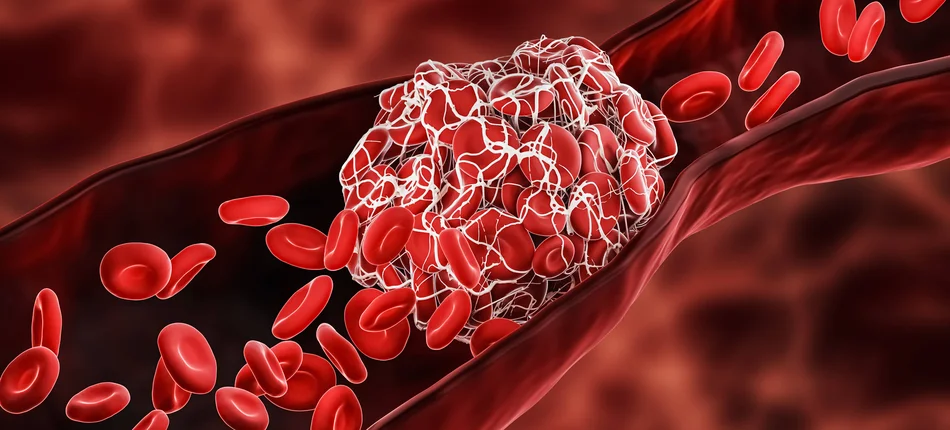
Within days, a seemingly healthy person can find himself in a life-threatening condition. The disease is caused by a deficiency or impairment of the enzyme ADAMTS13, a protein responsible for cutting large molecules of von Willebrand factor, which plays a key role in blood clotting. When the enzyme is missing or insufficient, platelets "stick together". - They form "plugs" that clog blood vessels," explains Dr. Joanna Zdziarska. This can result in anemia, thrombocytopenia, organ damage, stroke and even death. The disease comes in two forms - acquired, much more common, caused by the presence of antibodies that destroy ADAMTS13, and congenital (cTTP), resulting from a genetic mutation that leads to permanent deficiency of the enzyme. These forms require different treatment, so appropriate diagnostic testing is crucial.
Plasma - a rescue, but also a burden
Currently, treatment consists mainly of fresh frozen plasma transfusions. For many patients, this is the only solution available, but it severely disorganizes life. Sometimes patients even end up in the hospital for three days every two weeks. In such a situation, it is difficult to study, work, meet with friends. This is not only a physical limitation, but also an emotional one. Their world revolves around the next test results and infusion dates. - Life looks like this: from cast to cast. You never know when the next one will come," says Roman Gruszczyk. In Ms. Adrianna's case, the throws appeared up to four times a year, and for ten years she was treated with steroids. - Finally a medical student suggested a diagnosis of HUS - it was wrong, but at least the plasma treatment helped. After each administration I recovered for several days," she says. Unfortunately, Ms. Alicia is allergic to plasma. She even went into anaphylactic shock. - After plasma therapy there were still flare-ups, but shorter and less intense," she says.
Katarzyna Lisowska of the Per Humanus Foundation points out the risks associated with plasma: - Infections, allergic reactions, hospitalizations. This is why a change in the standard of treatment is sorely needed.
Hope: an injection that can be administered at home
For years, doctors have had very limited options: ineffective treatment (there is less ADAMTS13 factor in plasma) and difficult diagnosis. That change is already coming. - Recombinant ADAMTS13 enzyme, which is exactly what patients lack, can be administered by injection, even at home, Dr. Zdziarska says. - One of my patients went to the hospital every two weeks for years. Now he takes the drug on his own and can finally live a normal life. - For the first time, there is an effective treatment and a real possibility of diagnosing the disease. Diagnostic tests are now available on a regular basis," the doctor adds.
Thanks to the new drug, Adrianna Mleczko has not had a single flare-up. - I am a kindergarten teacher, I am in constant contact with children and infections. I go through them, but my results don't even flinch. There are people who have gone through more than 30 strokes. They require care. Plasma was not able to protect them from stroke, while the drug did," she says.
Roman Gruszczyk admits that it was the drug that gave him his life back. Now he is waiting for a reimbursement decision. -Patients with the disease are few, but that doesn't mean they can wait indefinitely. Every day is a risk of another flare-up and more complications," stresses Katarzyna Lisowska. Modern treatment is the only way for patients with cTTP not to disappear from the job market, social life and have a return to normality.