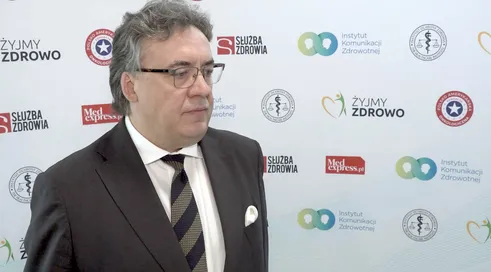
We ask Christopher Kope, president of National Drug Manufacturers, about the impact of biological drugs on medical progress.
Bioequivalent drugs are biological drugs

Published June 29, 2023 11:22

Medexpress: We are hearing more and more about therapies with biological, bioequivalent drugs. In a few words, can you give an overview of what these drugs are and their impact on medical progress?
K.K.: Biologic treatment is a breakthrough. I would like to deny the division - there is no reference biological treatment and biological treatment with bioequivalent drugs. We treat with biologic drugs all the time. The division exists only in the realm of registration. First there was one product, and after twenty years more products have arrived, which are beginning to compete on price. But the treatment is a biological treatment. And it is groundbreaking when it comes to certain diseases, it gives patients not only hope, but causes them to recover. Therefore, biological treatment, especially now that competition is coming, needs to be expanded. Because then the prices of these drugs go down, meaning the cost of therapy for the payer goes down, and at the same time they become more widely available to patients (more patients can be treated), and the results of treatment are spectacular.
Medexpress: How does Poland compare with other countries, especially European ones, in terms of availability of bioequivalent drugs?
K.K.: Biologic treatment is slowly moving forward. Indeed, in recent times, with the advent of competitive biologic, bioequivalent drugs, treatment has begun to expand. The Ministry of Health is removing time restrictions in therapy, inclusion of patients in therapy (no longer when they are the sickest). But we still have to chase European averages, because in Europe 15, 40, 50 percent of patients are treated, in our country 2-3 percent. We need to treat more of them, especially since we know that in all countries this treatment brings results (in us, in this narrow group, too). Scientists as well as the community are already sure that the treatment will also benefit the remaining patients. So we need to expand the treatment, chase Europe and figure out how to do it. In Poland, treatment is made available mostly in drug programs, which narrow the availability. At the same time, we have a limited number of specialists. And now the question is not whether, but how to expand access? Answer: we should cause expansion through access to, for example, in outpatient specialized care, where this treatment could be given to the patient free of charge, without the need for hospitalization, if it does not require it, and supervision in a drug program. Alternatively, use hybrid systems e.g. outpatient and pharmacy. In some countries, these drugs are already available at the pharmacy. That is, for those who need more control there are drug programs, and for the rest, treatment in hybrid programs, i.e. outpatient specialty care or pharmacy.