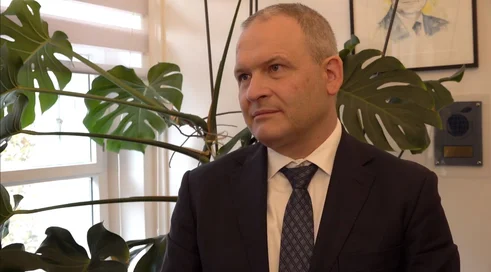
Deputy Minister Maciej Miłkowski announced at the Economic Forum in Karpacz that next year some biological drugs will be available not only in hospitals, but also in outpatient clinics. A list of such drugs is already being developed at the Health Ministry, and work will soon move to the implementation stage. - This is very good news for patients, some of whom, in order to administer the drug, have to drive several hundred kilometers, take a day off work or ask someone to help them get to the hospital," says Violetta Zajk, president of the National Association of Young People with Inflammatory Connective Tissue Diseases "3 Let's Stay Together. She adds that the Association was developing a map of centers implementing drug programs in rheumatology and it turned out that there are only 20 of them - This is definitely not enough. The Health Ministry recently launched the long-awaited biological treatment program for lupus patients, and this means that the centers running the existing drug programs will be even more burdened, and are already becoming inefficient, she added. She stressed that she hopes the list of biologic drugs that will be made available to patients in outpatient clinics will also include those for rheumatology patients.
Biological drugs: Maciej Miłkowski announces facilitation for patients

Published Sept. 14, 2023 11:19

Barriers to access to therapy
Biological drugs have revolutionized medicine, as they have proven effective against diseases for which previously used pharmaceuticals did not work. In Poland, access to these therapies is still much worse than in other EU countries. According to the report "Inequalities in Access to Biological Treatments in Autoimmune Diseases in Europe," in 2020, 1.8% of patients with rheumatoid arthritis in Poland had access to biological therapies, compared to about 20-25% in other European countries.
Until recently, the barrier to access was the price of these therapies. Adalimumab was, right after its introduction, one of the most expensive drugs in the world. Thanks to competition in the market, the decrease in the cost of therapies has reached up to 80%. According to patients and clinicians, the savings generated can be used to make these drugs available to more patients who need them. However, it will not be possible to achieve the degree of accessibility seen in other countries without organizational changes, because hospitals running drug programs are not able to treat so many patients.
AOTMIT recommendation
The president of AOTMiT in June this year issued a recommendation (No. 65/2023 of June 30 this year) to add therapies currently provided under drug programs in hospitals for chronically ill patients to the list of guaranteed outpatient specialized care services. According to him, this will improve the availability of drug therapies, reduce the burden on hospitals that implement the programs, and relieve the burden on the entire system by eliminating clinically unwarranted hospitalizations.
Violetta Zajk stresses that this would enable chronically ill patients who have to take medications in the hospital under drug programs - to administer them in outpatient clinics with continued pharmacotherapy at home. - If the change were to go into effect, patients' quality of life would improve significantly. A visit to the hospital is not only costly, an organizational effort, but also stressful. Patients - who are often dependent - would not have to travel to hospitals, sometimes far from where they live, for the administration of biological drugs, but could go to the nearest outpatient clinic, he points out.
Mapping of dispensaries
In June this year, Prof. Brygida Kwiatkowska, a national consultant in rheumatology from the National Institute of Geriatrics, Rheumatology and Rehabilitation in Warsaw, said that with the support of the Health Ministry, she was analyzing the activities of outpatient clinics treating patients with rheumatic inflammatory diseases, especially rheumatoid arthritis (RA). Outpatient clinics that have experience in therapy could become involved in drug programs. They would work directly with reference centers to benefit from their knowledge and experience in ensuring patient safety and quality of treatment, and refer patients there for further lines of therapy.