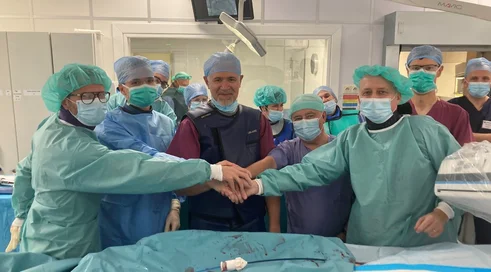
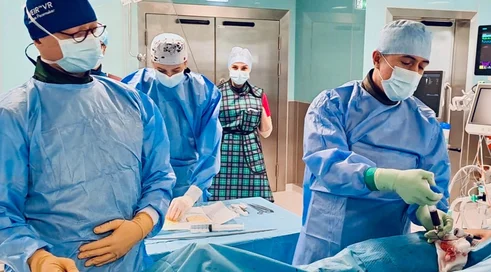
In the Department of Electrocardiology of the First Chair and Department of Cardiology of the UCK WUM, a procedure to implant a single-chamber cardiac pacing system was performed last Thursday (21.09.). This is a new generation of this type of device and an opportunity for patients in whom the use of a traditional pacemaker is associated with the risk of infection.
Poland's first implantation of a new generation electrodeless pacemaker

Published Sept. 25, 2023 08:01
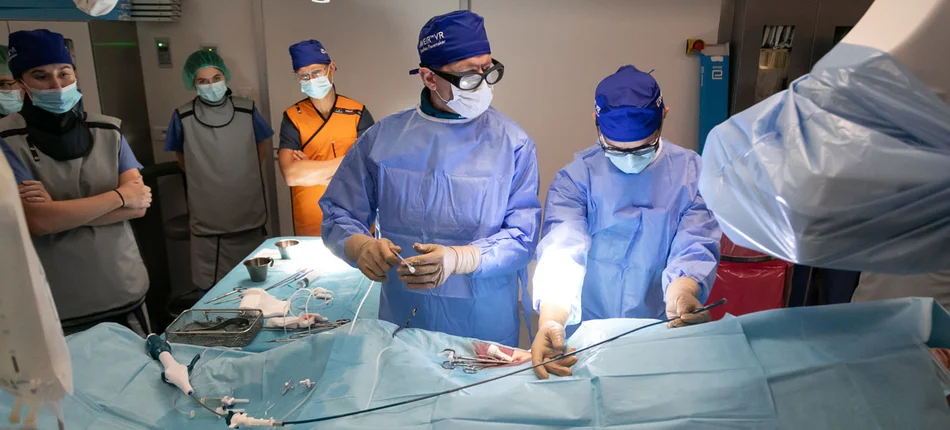
fot. WUM
Traditional pacemakers have electrodes. Modern ones are electrodeless. Implanting an electrodeless pacemaker reduces the patient's risk of infection associated with the presence of an electrode. The procedure itself is also minimally invasive. It is carried out from a small puncture through the femoral vein. The entire system is only 4 cm long and resembles a small battery.
- This modern method is reserved for special patients for now. They can be divided into two groups. One is the very young, who are promising for very long survival. Such patients in the case of classic pacemakers would have the risk of many infections and many device replacements during their lifetime. The second group of patients are those who have an increased risk of infection, are facing some major surgery and/or immunosuppressive treatment. The indication for the modern method is also the occurrence of complications (infections, rupture of electrodes) after the use of a traditional pacemaker, comments Prof. Marcin Grabowski.
The procedure using a new generation pacemaker was performed on a 61-year-old patient. He had indications for a pacemaker due to a so-called heart block. However, implanting him with a conventional pacemaker would have entailed risks, as the patient is awaiting a liver transplant.
A day earlier, a similar procedure was performed by Prof. Przemysław Mitkowski at the Cardiac Electrotherapy Laboratory of the University Clinical Hospital in Poznań. In Poland, such operations were performed just 11 days after the first such procedures in Europe.
Elaborated. based on: WUM