Is it too late to urge Poles to get the flu vaccination? The patient's path to this vaccination is complicated. We will talk about all sorts of organizational barriers that make the level of implantation in Poland leave much to be desired.
Medexpress debate
Influenza vaccination: an obstacle course for patients and providers

Published Dec. 14, 2023 09:00
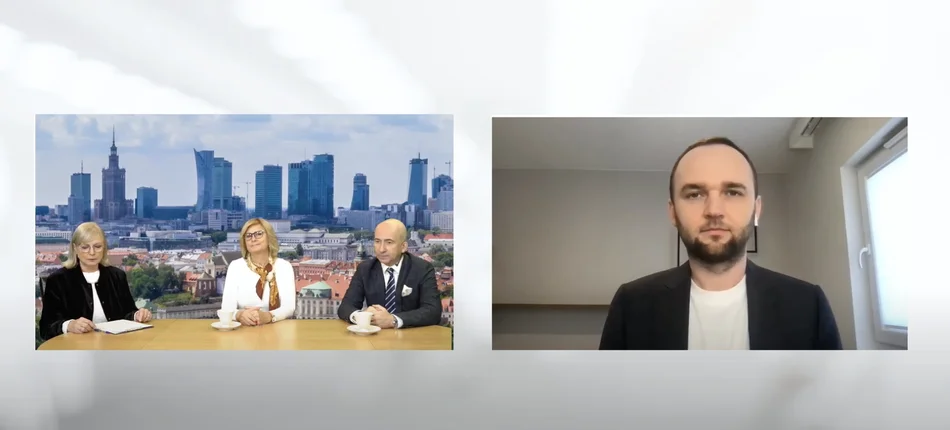
The debate was attended by:
Prof. Joanna Chorostowska-Wynimko, head of the Department of Genetics and Clinical Pulmonology at the Institute of Tuberculosis and Lung Diseases, vice president of the European Lung Association, member of the scientific council of the National Infectious Diseases Program
Dr. Mikolaj Konstanty, Silesian Chamber of Pharmacy, member of the scientific council of the National Program for Combating Infectious Diseases
Dr. Aleksander Biesiada, plenipotentiary of the main board of the Polish Society of Family Medicine, a primary care physician
Are there queues at the POZ to get vaccinated against influenza?
Dr. Alexander Biesiada: I, unfortunately, do not observe such queues. Instead, we observe a lot of infectious illnesses within the respiratory tract, both in terms of patients with Covid-19, influenza or other conditions, including colds. The problem is the occurrence of these infections simultaneously. Infection season is when we should vaccinate patients. It is certainly not too late to get vaccinated and to encourage vaccination.
But the patient's road to vaccination is very bumpy. What does she look like at the moment?
Prof. Joanna Chorostowska-Wynimko: As a pulmonary specialist, I take care of patients at particular risk of severe respiratory viral infections, and I have to say that, unfortunately, access to vaccination for patients is not easy. First of all, due to the very high occupancy of primary care. For patients with chronic respiratory diseases, chronic obstructive pulmonary disease, bronchial asthma, this kind of infection carries a much higher risk than in healthy people. They are also often older people, over 65 years of age. This is an additional risk factor. Our system is failing because vaccines are difficult to access financially. Let me remind you that the most important vaccines for us, i.e. influenza, covid, pneumococcal, are free for the group of people over 65, and for younger adults they are reimbursed only 50%. The barriers are administrative solutions and the issue of awareness, education of the public, as well as health care workers.
It's true. There are situations where health care workers discourage or question the need for vaccination, or do not vaccinate themselves. What is the patient's path to vaccination? Does he or she have to have a prescription from the PCP, fill it at the pharmacy and return to the PCP?
Dr. Alexander Biesiada: In the Polish system, this process is complicated. If only the question of financing itself. For a large part of patients, vaccinations, against influenza, are free vaccinations. I am thinking here of patients before 18 and after 65 years of age. The legal change with the introduction of the DZ and S prescription in these groups has meant that we can indeed vaccinate these patients against influenza free of charge, and the rest of the population with a 50% fee. Just note that a patient can get a prescription practically only at the POZ. Obtaining one during a consultation in a private office is impossible. In outpatient specialty care, it is also very difficult due to the need to check and verify the preparations issued so far. And finally, the system makes us have patients in close age ranges. I remember such a situation: a 64-year-old patient and her 66-year-old husband, both with disease burdens, have completely different pathways in the system. The 66-year-old can be vaccinated free of charge by the flu pharmacy, but his wife, two years younger, despite her disease burden, has to pay for the vaccine. We have a confusion of terms, because the wife cannot be vaccinated at the pharmacy. And how do you explain to a patient how to get the vaccination? If the patient, meeting the criteria, has the opportunity to be vaccinated free of charge in pharmacies that have a contract with the provincial branch of the National Health Fund then the path is simple. The rest of the patients, on the other hand, return to the POZ and again have to wait for qualification to get a prescription. Then there is the transportation of the vaccine from the pharmacy, the responsibility that the patient bears for it. And we are talking about prevention, which should be extremely simple and accessible for patients.
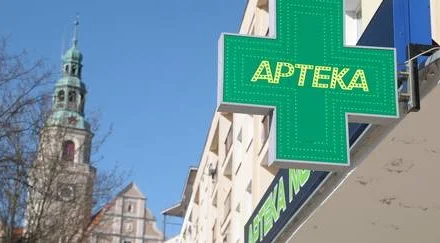
We know that when we vaccinated against Covid, pharmacies were places that Poles actually used. Thanks to the pharmacy vaccinations, more than 23 percent more people were vaccinated. So it was a great success. Now we seem to be squandering that, because most pharmacies don't provide vaccinations, or they do it for a fee. What is the reason for this?
Dr. Nikolai Konstantin: Covid paradoxically opened and changed the pharmacy in the eyes of patients to a place where benefits appeared. I think it was a lesson we worked through very well. Practically two years after the pandemic, we have legislation and we are already prepared for certain things. However, there are a couple of reasons that make us complicate the system. First, for a period of time, patients were vaccinated because the referral or prescription was permanently entered into the system. Now, thanks to the provisions of a major amendment to the reimbursement law, we have the opportunity to expand the basket to include pneumococcal, Covid-19 and influenza vaccinations. However, operationally, pharmacies are not prepared to do this for two reasons. There are very long delays in reimbursement contracts with the National Health Service. The whole operation was supposed to start on November 1, and the patients listed here were supposed to receive benefits from pharmacies as a reimbursable vaccination. They are not receiving it. These contracts are complicated, and pharmacies have entered a completely different mode of signing them. When everyone wanted such benefits to enter pharmacies quickly, we had a solution - pharmacies had contracts issued and prepared and simply signed them on portals. At the moment we are going through a bidding process, similar to hospitals. But these procedures are unfamiliar to pharmacies. They have never participated in such a process before. Second, the reporting and billing systems are unclear. Right now in Poland, as in every EU country, we have a shortage of pharmacists. It seemed that solutions to bring patients closer to pharmacies would encourage everyone to facilitate procedures. Unfortunately, we have the opposite situation, because we are not encouraging pharmacists, but complicating the degree of entry of this solution into pharmacies. Commercial services have been introduced as a solution, but there is little interest in them. This is due to the state of awareness, but also the waiting period, because we have a situation all the time where it is said that vaccination will be. We are in the middle of the season and pharmacists are trying to catch up with lost time. This is not easy. In a few days we will start vaccinating against covid-19, and the situation is the same. Our population points are gone, and the pharmacy vaccination points are not prepared. As a pharmacist who runs a pharmacy with his wife, until today I have not signed such an agreement. And this worries me, because patients come to us, they are interested in the service, and we keep delaying. Of course, we can recommend some commercial solution when it comes to the two pneumococcal and influenza vaccinations, but patients who have already "stuck out" a prescription somewhere do not want this. We have reimbursement for the vaccine as a product at a very high level, so the financial barrier is disappearing, but organizationally we are not where we should be. The experience we gained in the pandemic is nullified. We will have to rebuild the system, because the implantation level will drop from 7-8 percent to 3-4 percent.
The World Health Organization recommends that the senior population should be 75 percent vaccinated. We have about twenty-something.
Dr. Nikolai Konstantin: But we have embarked on this path. Allowing pharmacies as vaccination centers was a very good solution. It's a European and proven solution. On the other hand, the way we are complicating provider access is so confusing that medical personnel are discouraged by these procedures instead of developing a pathway of preventive solutions. And prevention is an important element at the moment.
I feel that we have stopped having access to any data on what scale we are dealing with when it comes to influenza.
Prof. Joanna Chorostowska-Wynimko: Unlike in the pre-pandemic period, but also last year, when there was a lot of talk about the flu, this year there is a lack of information in the media on the subject. My sense is that there is little information about vaccination, its necessity and value. In the context of what we're talking about here, this compounds the confusion. And I think that population vaccination rates in Poland will fall this year. It's important to remember that the success of a vaccination campaign depends primarily on two things: education and accessibility. Both of these are not working in Poland.
Since we're talking about some organizational barriers, perhaps specific financial incentives for healthcare providers who vaccinate patients are important.
Dr. Alexander Biesiada: They are certainly important. Please note that the motivator for the patient is to receive the vaccination free of charge or with a small fee. On the other side, however, is the entire team that should be involved in the vaccination. This could be the pharmacist at the pharmacy, or the staff at the PCP. In order to implement vaccination effectively, funding on the payer side should be provided. Moreover, in the pandemic we had such a situation that the pricing for the implementation of vaccination was quite good. This made it possible, for example, to implement vaccinations at home. Now we have a gro of patients excluded from immunization, in terms of the adult population. I'm thinking of patients who are ill, lying in home conditions or in senior citizen homes. It is difficult to provide them with vaccination conditions there, and there is no public funding for the implementation of vaccination. Such a patient will not come to the pharmacy and also with access to the POZ has difficulty. And the doctor in the infectious season will direct his resources to care for the population that comes to him, possibly for patients who are sick at home. In contrast, there is very little space for preventive care for patients who remain in nursing facilities. I also see the problem in a broader context. Remember that we used to have local governments that funded flu vaccinations. At the moment this has stopped, because the local government would have to finance practically one hundred percent of the price of the vaccination, plus the entire procedure, while at the same time we have reimbursement under prescribing by the National Health Service, which cannot be combined with local government programs. That is to say, those sources of organizational assistance, which were usually helpful especially for patients from day care centers, senior citizens' homes, have practically ceased. And I agree with the thesis that instead of improving the vaccination rates of the most vulnerable patient groups, we are going back to the point before the pandemic.
What is the importance of monitoring the number of cases, hospitalizations and deaths due to influenza?
Prof. Joanna Chorostowska-Wynimko: Data always raise awareness about the threat. From this point of view, they are absolutely crucial. They are needed to organize the system and plan spending and build priorities. If we don't have data, we don't know what the social costs are, how many patients we hospitalize due to severe infection caused by influenza, covid or other viruses. Without them, we cannot build an effective prevention system or a proactive system of care for these patients. This is a very serious problem. We also don't have the arguments to talk to policymakers. Indications are that perhaps the cost of providing the vaccine, under conditions of free access, will be less than the cost to the economy and society of increasing numbers of infections.
We don't analyze it. Do other countries do?
Prof. Joanna Chorostowska-Wynimko: Yes. In many European countries, there are programs to adequately track and build knowledge about the number of infections leading to severe course, hospitalization for respiratory viral infections and finally death. Unfortunately, in Poland, the data we report on deaths due to influenza are completely unrepresentative, even "random. As a result, the information on pharmacoeconomics, is completely speculative, resulting from extrapolations, some covenants, while not from hard data.
What can you do as an environment, as a Chamber of Pharmacy, to restore pharmacies as a place for flu vaccination?
Dr. Nikolai Konstantin: The patient's path to us is still extended. An important challenge for the new health minister will be to bring back the idea that a pharmacist can issue a reimbursable prescription for a product in a pharmacy. We need to shorten the path to a single visit - a patient interested in the product comes in and, after talking to the pharmacist, decides to get the vaccination. The pharmacist issues the prescription, makes the qualification and performs the medical service. This is the solution we have been talking about for many months. When the infection season ends in late March, April, we have two months to take action. After the summer vacation, the implantation period should begin. Therefore, the next step will certainly be to sort out the operational flaws in allowing more pharmacies into the process. I am thinking here of training courses. They have started, but for the past two and a half years no one has trained pharmacists in the administration of the vaccine. Another point that seems important in our environment is that pharmacists should leave pharmacies with the vaccine. This good idea is implemented in other European countries, where a pharmacist can go to the DPS. The point of service for vaccination is the pharmacy, but the pharmacist has the right to take the vaccines and go out to DPS or a large workplace, schools. These challenges were prepared and described in the strategy prepared this year by the National Program for Combating Infectious Diseases. This is a very good document. It simply needs to be implemented.
What are the recommendations of the Polish Society of Family Medicine?
Dr. Alexander Biesiada: We would like to see this pathway simplified. In my opinion, the participation of a medically qualified person in the act of issuing a prescription for a vaccine that has a preventive purpose is unnecessary. Let the system automatically issue such prescriptions. Then no one will have to explain why a nurse can issue a prescription for a vaccination a year after the last vaccination, but a day later not anymore. This is an absurdity that we do not understand. So, as much as possible, we are in favor of simplifying this system, of pulling in patients who, due to disease exposure, are most likely to have a severe course or complications. Note that the adult vaccination pool is growing - pneumococcal, RSV, Covid-19, so there will be more and more tools we use. We need to organize the system so that we can work efficiently with the patient and also be able to exchange information on what the patient has already been vaccinated for, when and at what point.
Prof. Joanna Chorostowska-Wynimko: I agree with this. Let me just remind you that there are very few contraindications to vaccination. The thinking that you have to go to the doctor to qualify for vaccination is rooted in the standard of practice in the pediatric vaccination calendar. In adults, on the other hand, we think that only in the case of an acute situation or infection, an exacerbation of a chronic disease, does it matter. We are very frustrated by the lack of data. Also in discussions with policy makers. This year at the Institute we are starting to collect them, we have entered the European program on severe course, infection, hospitalization, death due to influenza virus infection, RSV, Covid-19. I hope that this program will allow us to enter permanently with strong information for Poland.
Thank you for the meeting. And despite the difficult road to vaccination, we encourage vaccination. We hope that the problems of accessibility to vaccinations in pharmacies will be solved.