The Świętokrzyskie Oncology Center has implemented state-of-the-art solutions to implement new radiotherapy treatment techniques and precise monitoring of the irradiation area. It is the first in Poland to use a system that increases the precision of patient positioning during treatment with a medical gas pedal.
Innovative radiotherapy in Kielce. ŚCO has implemented an innovative solution

Published Nov. 13, 2024 11:51
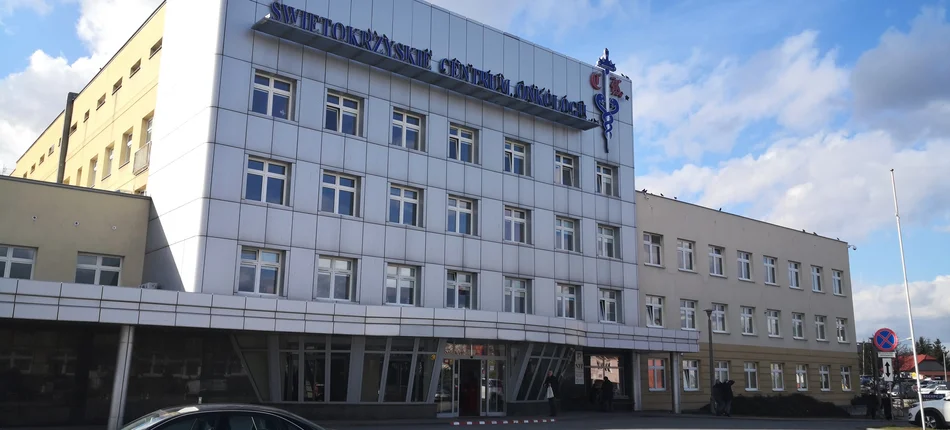
fot: Jarosław Roland Kruk / Wikipedia, licencja: CC-BY-SA-3.0
- A prerequisite for properly performed radiation therapy is to ensure reproducibility of the patient's positioning during the entire process of preparation and execution of irradiation. This is necessary in order to reach the therapeutic area (tumor) with the radiation dose precisely and, at the same time, limit the dose in the organs adjacent to it. Therefore, before each irradiation session, imaging is performed using a system integrated with the gas pedal to verify that the patient's position on the treatment table agrees with that during treatment planning. If the images differ, the patient's position is corrected, and only then does the treatment (irradiation) begin," explains Dr. Pawel Wolowiec, a doctor in the field of science in the discipline of physical sciences, a specialist in medical physics, an expert in medical physics in the field of radiation therapy, who heads the Medical Physics Department at the ŚCO.
Image quality supports treatment quality
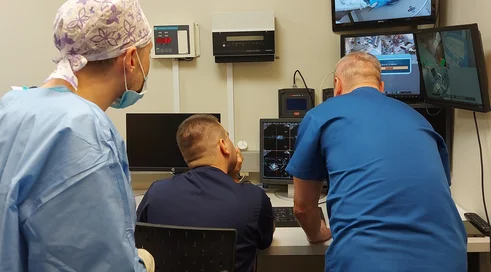
ŚCO is the first center in Poland to use the ClearRT system, which increases the precision of patient positioning, during tomotherapy on the Radixact gas pedal. Until now, the Radixact gas pedal operating at the ŚCO, on which helical beam radiotherapy is performed, was equipped with an imaging system using megavoltage (high energy) radiation, which resulted in lower image quality compared to conventional computed tomography (CT) used for treatment planning. The new ClearRT system, equipped with a kilovolt (lower energy) beam, produces images similar to conventional CT.
- As a result, now, by performing imaging before the start of the treatment session, we obtain images of almost the same quality as with CT scans and can see perfectly, both soft tissues and bones. As a result, our medical physics team is able to position and treat the patient with greater accuracy, ensuring even greater safety," explains Dr. Pawel Wolowiec.
Adaptive therapy follows the patient
The ClearRT system is also used in adaptive therapy with the PreciseART system for tomotherapy. Based on the images taken while verifying the patient's positioning, the ŚCO's medical physicists can prepare adaptation plans that take into account the patient's current anatomical or clinical situation, ensuring that the appropriate dose of ionizing radiation is delivered to the therapeutic area, while controlling the dose to healthy organs adjacent to the tumor.
- During treatment, the patient may lose or gain weight, which can have a significant impact on dose distribution and, consequently, on the outcome of treatment. Using the ClearRT system, medical physicists are able to assess the patient's anatomical changes on an ongoing basis and adapt the treatment plan to the current situation, if necessary, adds the head of the ZFM ŚCO.
The shorter, the safer
The Precision computerized treatment planning system used at the SICU, which is connected to the Radixact gas pedal, has also been retrofitted with the VoloUltra optimization system, enabling shorter irradiation times. Shorter patient dwell time on the gas pedal, increases treatment comfort and safety, and ensures that the gas pedal is available to more patients.
- By shortening the treatment time, the likelihood that the patient will move during irradiation is reduced. As a result, there is less risk of error, the treatment is safer, which also translates into a better therapeutic effect," explains Dr. Wolowiec.
The system watches over the correct positioning of the patient
The ŚCO is one of the first medical institutions in Poland to use a system for three-dimensional imaging of the patient's body surface (AlignRT) during Surface-Guided Radiation Therapy (SGRT) since 2021. Currently, two more gas pedals (Versa HD) of the ŚCO Radiotherapy Department have been equipped with this system.
- Surface-guided radiotherapy uses stereovision technology to monitor patients' surfaces in 3D, both to arrange them for treatment and to control their movements during irradiation. The AlignRT system uses stereoscopic 3D cameras to track the patient's skin surface and compare the image with the planned positioning. It allows the patient to be placed in the correct position with sub-millimeter accuracy, ensuring that the beam of ionizing radiation goes just where it was planned, sparing healthy organs and tissues. The system watches over the correct positioning of the patient throughout the irradiation, and if the patient moves, this information is immediately sent to the gas pedal and the radiation beam is stopped, says the medical physics expert.
Up to now, treatment with the AlignRT system (previously purchased for two gas pedals) at the ŚCO has mainly been carried out using the technique of irradiation on held deep breath in patients with such cancers as left breast cancer, lung cancer, liver cancer, and pancreatic cancer.
Installing the AlignRT system on the other two gas pedals will allow the use of SGRT technology for patients with other cancers as well. - The psychological aspect is also important: the use of this new solution can free patients from the need for permanent tattoos, which are necessary for proper alignment for radiation treatment, notes Dr. Pawel Wolowiec.
Annually, more than 2,500 irradiation procedures are carried out at the ŚCO Radiotherapy Department, which has 5 gas pedals.