NMOSD (Devic's disease) is a rare disease of the central nervous system, characterized by severe bouts of optic neuritis and spinal myelitis, which, if untreated, leads to severe patient disability. As of November 1, 2022, NMOSD patients have gained access to a modern treatment that beneficially modifies the course of this disease - i.e. the drug satralizumab, which is reimbursed under the B.138.FM drug program.
Recent long-term data support the efficacy of satralizumab in the treatment of NMOSD

Published March 23, 2023 11:23

Fot. Getty Images/iStockphoto
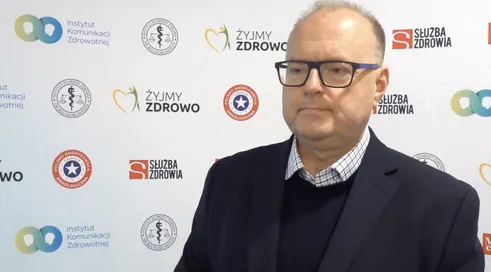
- The latest results of the SAkuraSky and SAkuraStar clinical trials, published in January 2023, confirmed the high efficacy of this therapy and favorable safety profile in patients receiving satralizumab for almost four years, says Prof. Konrad Rejdak, MD, head of the Department of Neurology at the Medical University of Lublin and president of the Polish Neurological Society.
- NMOSD (also known as Devic's disease or syndrome) is an aggressive autoimmune disease of the central nervous system with frequent, severe exacerbations.
- As of November 1, 2022, people with NMOSD have gained access to a modern treatment that beneficially modifies the course of this disease - i.e. the drug satralizumab, which is reimbursed
under the B.138.FM drug program. - The latest data, from the extension phase of the SAkura study, were published in January 2023. They indicate that after more than 3.5 years of treatment with satralizumab (192 weeks of therapy), 71% of participants in the SakuraSky study (satralizumab in combination with immunosuppressive drugs) and 73% of participants in the SAkuraStar study (satralizumab in monotherapy) remained free of disease flares, and 90% of patients were free of severe flares.
- In 90% of SAkuraSky patients and 86% of SAkuraStar patients, there was no deterioration in EDSS performance during this time.
- The incidence of adverse events, serious adverse events, infections
and severe infections in the satralizumab-treated group were comparable to the incidence
observed in the placebo group and did not increase with increased duration of exposure to satralizumab.
NMOSD is a rare autoimmune neurological disease? What do we know about it? How does it manifest itself and what consequences is it associated with?
NMOSD (also known as Devic's disease or syndrome) is an aggressive disease of the central nervous system with frequent, severe exacerbations. Clinically, NMOSD manifests primarily as optic neuritis and resulting unilateral or bilateral visual disturbances (up to and including total loss of vision), and myelitis
and resulting hemiparesis, sensory disturbances and bladder dysfunction. Although the cause of NMOSD remains unknown, we have a good understanding of the pathomechanism of the disease. We know that underlying NMOSD is a malfunction of the immune system, which produces antibodies against its own protein called aquaporin 4. These antibodies cause inflammation and damage to the nervous system. The disease in most cases is projected, meaning that symptoms appear, last for a while, and then go into partial remission. In some time, however, another attack of the disease occurs, resulting in increasing irreversible disability.
What is the treatment of NMOSD with satralizumab, a drug reimbursed under the B.138FM drug program?
Satralizumab is a course-modifying drug for NMOSD, meaning that the goal of this therapy is to prevent disease flares and the patient's increasing disability. Satralizumab is a monoclonal antibody that precisely inhibits the production of harmful antibodies against aquaporin 4, involved in the development of NMOSD. The drug thus strikes at the cause of the disease, resulting in the control of disease activity, while at the same time providing a very good safety profile for the therapy. In the B.138.FM drug program, satralizumab can be administered to patients with NMOSD who have been confirmed to have antibodies to aquaporin 4 (anti-AQP4), either as monotherapy or in combination treatment with immunosuppressive therapy.
What is the effectiveness of satralizumab treatment?
The efficacy and safety profile of satralizumab therapy in patients with NMOSD were tested
in two randomized clinical trials: SAkuraSky and SAkuraStar. Both trials were double-blinded, and the efficacy of the investigational therapy was compared with placebo
in combination with immunosuppressive therapy and placebo alone, respectively. In the SAkuraStar study, patients randomly assigned to the satralizumab group received the drug as monotherapy, while
in the SAkuraSky study, satralizumab treatment was combined with immunosuppressive therapy. In both studies, the efficacy of satralizumab was evaluated by parameters such as time to onset of disease flare, frequency of flare, and changes in the EDSS scale, which describes the degree of disability in patients. Very high efficacy of the drug was found for all these parameters. As for inhibition of the incidence of episodes, the efficacy reached above 70%. The favorable results of both of these studies became the basis for the registration of satralizumab
for the treatment of NMOSD patients with positive titers of antibodies to AQP4.
After the drug was registered, both trials entered the so-called open extended phase, in which all participating patients were offered treatment with satralizumab. A total of 111 patients (49 from the SAkuraSky trial and 62 from the SAkuraStar trial) are participating in this phase of the SAkura study. The latest data, from the extended phase of the SAkura study, were published in January 2023. They indicate that after more than 3.5 years of treatment with satralizumab (192 weeks of therapy), 71% of SAkuraSky trial participants and 73% of SAkuraStar trial participants remained free of disease flares, and 90% of patients were free of severe flares. In addition, 90% of patients in the SAkuraSky study and 86% of patients in the SAkuraStar study had no deterioration in EDSS performance during this time. Importantly, the incidence of adverse events, serious adverse events, infections
and severe infections in the satralizumab-treated group were comparable to those observed in the placebo group, and did not increase with increased duration of exposure to satralizumab.
The latest data have therefore confirmed that this is a therapy that gives long-term control of disease activity with a good safety profile. And this is consistent with our observations, as our center in Lublin participated in the SAkuraSky clinical trial. We see that our patients - which include those who have been receiving satralizumab for 10 years - are stable, have no NMOSD flares and do not experience therapy-related side effects. That's why we're glad that this treatment is becoming more and more available at various centers in Poland.
Source: press mat.