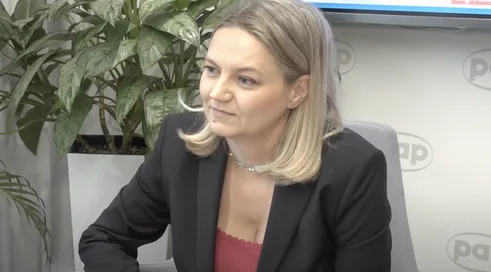
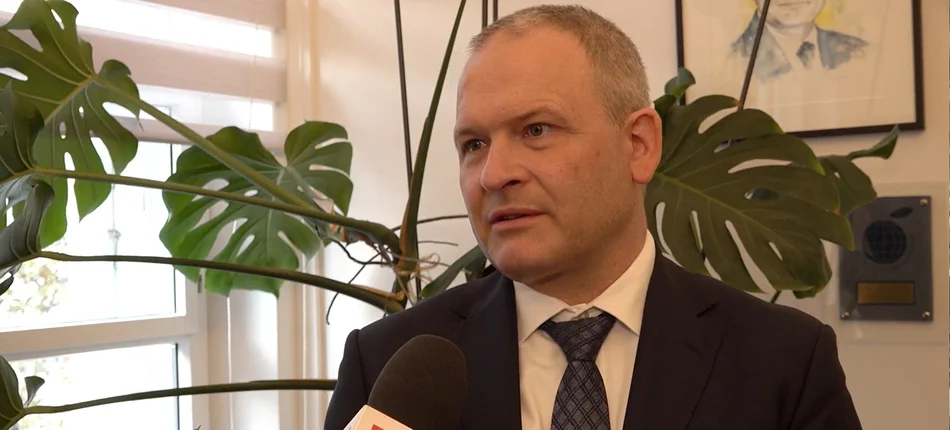
An interview with Deputy Health Minister Maciej Miłkowski.
Maciej Miłkowski on changes that have taken place in hematooncology

Published Dec. 4, 2023 09:56
What has been accomplished over the past few years in hematooncology?
Hematooncology as a field was actually noticed for the first time, because treatment in addition to transplantation, had no funding, was very expensive and unavailable in Poland. For the last four or five years or so, there has been an increase in funding for more lines of treatment, new drugs. In fact, all drug programs in hemooncology have either been created or augmented with further lines. We already have five such lines of treatment. Most hematooncological diseases have become chronic diseases. Doctors already have a tremendous choice in subsequent lines of treatment. In this regard, we have leveled off to the level of other countries in Europe. Sometimes, in some indications, we are even leaders. We have a fund for new drug technologies with a high level of innovation, and we use it all the time. This sector of all medicines has been the most empowered, made visible. We should also mention here the very good cooperation with pharmaceutical companies. Now that we have more lines, new drugs are being registered. This would not have been possible had it not been for the very good cooperation with the national consultant, the director of the National Institute of Hematology, Professor Ewa Lech-Marańda. This cooperation contributed to the fact that all this was implemented. An important element is that the drug programs have changed, they have been rewritten. Doctors can see how to use particular drugs and in which indications, how to monitor them. This, too, has mostly been modernized. All drugs that have lost their period of exclusivity are moved to the chemotherapy catalog, where you don't have to fill out the therapeutic program monitoring system. There are expanded indications and central purchases by the National Health Service. This increases the possibility of access to therapy for patients.
What other challenges do we face when it comes to hematooncology?
It is the most expensive field in medicine. Most therapies are added to the currently existing ones. As a result, we have two-, three- and four-year therapies. Therefore, they are more expensive. These are new drugs, so we have periods of exclusivity. The old regimens, which still have exclusivity periods, a very expensive annual cost of treatment and more innovative therapies, are not within Polish limits. We are not able to fund them, especially in broad populations where we often have reimbursement applications, that is in the first or second line. In subsequent ones, where it's the patient's last chance, we are able to accept it. But in these broader populations, it is difficult to cover all patients with such therapy. We have succeeded a few times recently, but mainly through good risk-sharing instruments. This is expected, but it will be difficult. We succeed if there is a year or two left until the exclusivity period expires. Then we know how many patients we can cover with therapy and we already enter with full generalization. Then everything takes place faster.
Drug programs do not always keep up with guidelines, both emerging at the European and national levels. What is the reason for this shift?
The first thing is to change the timing of drug programs. Until now, they could only be done at the request of a national consultant. Previously, there were no such changes, because the consultants were not interested. It seemed to them that there was no cooperation with the MZ, so why apply and be interested? Now they have people in the MZ who want to cooperate with them. The second element was that you had to get the approval of all the market participants who took part in a particular program. Now there is a change, which came at the request of doctors and patients, so that the Ministry has the ability to make changes on its own. And that's why next year it will be easier to implement them. All the little things, monitoring, qualification, elements that harmonize European guidelines, will be able to be introduced. But when it comes to costs, when we have an expansion of the population by at least 15 percent, such requests are always referred to AOTMiT with the question of whether the requests are valid and what population can be covered by treatment. Then we always analyze whether we are able to bring about such a change without applications. We try to do this then for all products, and at the request of companies we sometimes analyze only one drug product.