Folded in May this year. by National Medicines Manufacturers to the European Parliament, a petition to support the production of ingredients for the production of drugs in the EU was approved and will be considered in the fall of this year.
National Medicines Manufacturers submit a petition to the European Parliament

Published May 25, 2022 10:51
Thinkstock/GettyImages
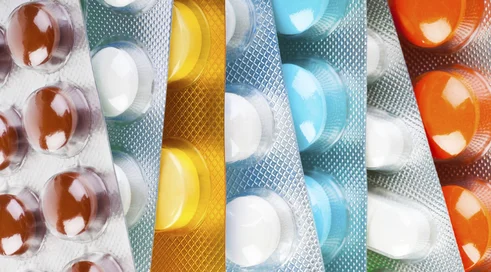
80% of the substances used in the manufacture of drugs in Europe come from China or India. The progressive addiction led to a partial loss of competences in the field of their own production. Until the mid-1990s, Europe and the US supplied 90 percent of the total. substances used in the production of drugs in the world. Today, only 20 percent. Even 20 years ago, there were about 170 producers of active substances in Poland, today there are a dozen or so - PZPPF alarms.
The SARS-CoV-2 pandemic has shown the dangers of dependence on Asia. As a result of production interruptions in local factories and global transport, as well as the increased demand for pharmaceuticals around the world, the principle of international solidarity was violated, which translated into shortages of drugs and active substances.
In the "Petition on the need to support the production of active substances for medicinal products in the territory of the EU", the National Medicines Manufacturers emphasized the need for EU bodies to develop mechanisms to support the production capacity of pharmaceutical substances. Their lack, higher labor costs and the need to meet stringent environmental standards in Europe make pharmaceutical production unprofitable. Investments will be needed to restore it to the extent necessary to ensure the security of the EU. The implementation of the production of one active substance takes from 3 to 6 years, and its cost, depending on the required synthesis technology, is estimated at EUR 50-180 million.
The governments of Germany, France and Spain encourage investments in pharmaceutical production at home. However, these actions will not have any effect for the entire Community unless coordinated efforts are made that will directly contribute to building new and maintaining existing production capacities in Europe.
- An example of such a coordinated strategy is the EU's plans to strengthen Europe's semiconductor ecosystem by attracting investment and increasing production capacity, and testing and assembling them in integrated plants and EU factories. As in the case of chips, establishing criteria to support plants producing pharmaceutical substances and opening EU production lines would contribute to ensuring the safety of the EU - says Krzysztof Kopeć, president of the National Medicines Manufacturers.
Another direction could be the establishment of a system of subsidies for the production of these substances, similar to direct subsidies for agricultural production. The support system should reduce manufacturing costs to allow the pharmaceuticals price to be lowered and to compete with Asian products.
It is also necessary to immediately intervene to support the pharmaceutical substances currently produced in the EU and not to allow the decrease in the production volume, which leads to the irreversible closure of the production line.
- The return of this production to the EU will stimulate economic development and provide new jobs. It will increase the competitiveness of European manufacturers and the EU's resilience to future drug shortage crises. It will also help restore Europe to industrial leadership. The strategic work has already been done, now it is time for concrete actions - points out Grzegorz Rychwalski, vice president of the National Medicines Manufacturers.
"Petition on the need to support the production of active substances for medicinal products in the EU territory" went to the Committee on Petitions of the European Parliament. National Drug Manufacturers also recalled that one of the objectives of the Resolution of the European Parliament of November 2021 on the pharmaceutical strategy is to strengthen the global competitiveness of the EU pharmaceutical sector in the world, and the EU health program for 2021-2027 aims to sustain the production of active substances and generics, and to promote pharmaceutical products manufactured in Europe.
Source: math. press releases