Doctors and patients speak with one voice: remission in inflammatory bowel diseases is the therapeutic goal today, and modern drugs are changing the lives of patients - but only those who reach them. And this is still a problem in Poland.
IBD: Remission is the most important goal

Published May 19, 2026 18:38
Fot. Getty Images/iStockphoto
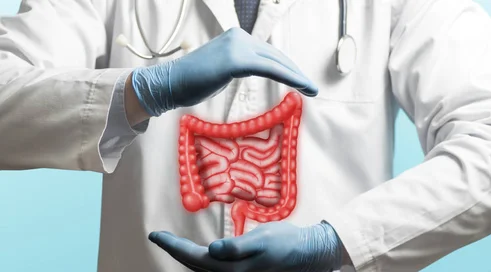
More than a hundred thousand Poles are living with a diagnosis of inflammatory bowel disease. These are chronic, progressive, unpredictable diseases and, as participants at the conference "IBD knows no boundaries: Access to care in IBD" emphasized. - accompanying patients throughout their lives. The peak incidence is between the ages of 15 and 40. Children, adolescents, people in the prime of their careers and families get sick. - 70 percent of the patients in the Crohn's disease registry we kept were under the age of 35. Twenty-five percent were children. These are young people who want to work, start families, and live a normal life," said Prof. Grazyna Rydzewska, head of the Department of Internal Medicine and Gastroenterology with the Subdivision for Treatment of Inflammatory Bowel Diseases at PIM MSWiA, and vice president of the Polish Society of Gastroenterology.
The disease you can't see
Agata Mlynarska, journalist and founder of the Health Without Taboo Foundation, who suffers from Crohn's disease, spoke about the patients' perspective. - I lay in the ward with a sense of hopelessness and saw patients who were ashamed of their disease, she recounted. She admitted that it was difficult for her to persuade journalists to want to cover the topic of diseased bowels, because how to talk about it? Over the years, A.Mlynarska argued, a lot has changed. Today, IBD is spoken of more loudly and without shame. Nevertheless, the disease still remains invisible to outsiders - and this generates another problem. - Imagine planning your commute based on the location of toilets? This is the reality of our patients. We talked at the ministry about a passport for a patient with IBD. The goodwill is there, but it hasn't worked so far.... - Prof. Rydzewska said.
An avalanche of disease - and an "Asian phenomenon"
Professor G.Rydzewska drew attention to a disturbing epidemiological trend. IBD, rare in Asia a few decades ago, is now increasing exponentially in China and other countries in the region. - The first described cases of IBD in China were in 1978 - more than a century after the first European cases. Today, Asians come to conferences and talk about hundreds of thousands of patients. We began to wonder why. Is it hamburger? Not really. It's emulsifiers, stabilizers, artificial colors, processed products - carrageenan, carboxymethylcellulose, polysorbate. It's westernization of the diet in a bad way," the professor explained. She added that until 2025, titanium dioxide - a substance banned today in food production by the European Union, but still available in stores in old stocks - was present in colored confectionery sprinkles. According to studies, children consume many times more of it than adults, which increases the risk of inflammatory bowel disease. - "Light" products are not healthier. I always say this: don't want sugar? Don't take artificial sweeteners. Don't want fat? Don't reach for artificial substitutes. Mayonnaise from the store is not egg yolk and oil - it's emulsifiers. And these emulsifiers are everywhere," the professor stressed.
Diagnosis: three and a half years for diagnosis
One of the biggest challenges remains the time from the appearance of the first symptoms to diagnosis. According to data presented by experts, it averages three and a half years in Poland. - Patients go from doctor to doctor. There are young girls who lose weight, don't eat, vomit - and end up first at a psychiatrist with suspected anorexia. Only then does someone get the idea to perform an endoscopic examination, and it turns out that the girl has a disease in the small intestine," said Dr. Magdalena Kaniewska, a gastroenterology specialist at the Ministry of Internal Medicine.
Dr. Edyta Kilewicz-Martí added that the symptoms of IBD are often downplayed by patients themselves: - Diarrhea, blood in the stool, abdominal pain, weight loss - these are things the patient doesn't tell the doctor about as soon as they enter the office. It is necessary to ask. And we always ask about extraintestinal symptoms as well: skin changes, joint changes, eye changes, weakness. This disease is not only intestinal.
Calprotectin, an inflammatory marker determined from stool, remains a key diagnostic tool that is still not reimbursed. - This is scandalous. We have discussed it many times, including with representatives of the Ministry of Health. They said it would be soon - but it is still not in the basket of reimbursed services," Prof. Rydzewska said.
Modern treatment
The therapeutic arsenal in IBD has grown significantly in recent years. Three of the newest drugs - ryzankizumab, guselkumab, mirikizumab - are still awaiting reimbursement. - The selective interleukin 23 inhibitors, which are not yet in reimbursement, are so effective and so safe that new U.S. guidelines say that if a woman becomes pregnant, we are not to stop the therapy because it is safe. For us, this is such a supreme guarantee of safety," said Prof. Rydzewska, and stressed the role of spersanolized therapy: it works on the disease, on the patient's expectations, but also on accessibility.
Prof. Rydzewska's 2025 publication "Algorithms of treatment selection in inflammatory bowel diseases" is to be updated annually. - One size does not fit all. We arrange treatment like a Rubik's cube: differently for a patient with extraintestinal manifestations, differently for a woman planning a pregnancy, differently for a patient with a severe course," she said.
Only 10 percent of patients are treated with biologics
Despite the availability of effective therapies, coverage remains inadequate. Biological treatment under drug programs covers only about 10 percent of patients with IBD in Poland. - This is not enough. The drug programs are good - really good and getting better. Inclusion criteria have been significantly expanded. But patients are not reaching out. Either they don't know that such treatment exists, or there is no center in their region that provides this treatment," said Prof. Rydzewska.
Jacek Holub, spokesman for the Polish Society for the Support of People with Inflammatory Bowel Diseases "J-elita" confirmed the problem first-hand: - Patients from Podlasie or Opole travel three hundred kilometers and more to get an infusion. A mother with a sick child. A child tired, weakened, with diarrhea. This is the reality. Marek Lichota, president of the Appetite for Life Association, spoke of the plight of patients requiring parenteral nutrition who have not received effective treatment in time. He added that layers of public empathy go to the heart or lungs. - If the intestines did not work and did not provide energy, neither the heart nor the lungs would work. I found this out dramatically - after successive surgeries I lost a large part of my intestines and my life completely changed," he said.
Appeal for coordinated care
The demands of doctors and patients have remained the same for years and are still waiting to be implemented. The Polish Society of Gastroenterology has submitted a draft coordinated care model for IBD patients to the Health Ministry. This is another attempt. - We want a network of reference centers along the lines of Western Centers of Excellence. We want the patient to have his own center, where he can come once a year for a comprehensive visit with a doctor, nutritionist and psychologist. So that he doesn't have to travel from Szczecin to Warsaw," stressed Prof. Rydzewska. Experts also point to a financial paradox: reimbursement for modern treatment is an investment, not a cost. - Where there is good availability of biological therapies in IBD, Social Security pays less for sick leave. You have to give more at the entrance from one pocket to pay less later from the other," said Prof. Rydzewska. The conference ended with a joint appeal by all participants: to consider deep remission - endoscopically confirmed bowel healing - as a realistic and therapeutic goal, to urgently implement a coordinated care model, to improve diagnostic access, and to participate in the European Intercept screening trial, which looks for people with a family risk of IBD - a blood and stool test is enough.
- Our patients can be in remission. We have the tools. Now we need a system that allows them to do so," Prof. Rydzewska concluded.