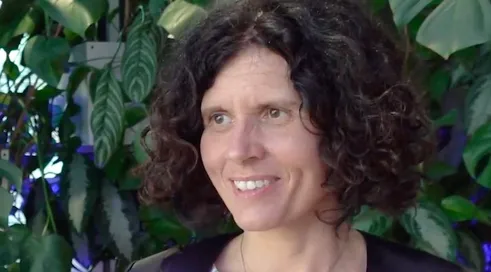
Motoneurons are responsible for muscle movement and strength, and their loss is a key problem in SMA. Prof. Anna Kostera-Pruszczyk, head of the Department of Neurology at Warsaw Medical University's UCK WUM Central Clinical Hospital, stresses that modern treatment makes it possible not only to protect these cells, but also to "activate" those that have remained inactive until now.
New prospects for SMA treatment. There is much to fight for

Published May 11, 2026 06:53

Professor, seven years ago, the goal of treatment in SMA was only to halt the progression of the disease, and today we are increasingly talking about clear improvements in patients' conditions. Can higher doses bring patients even greater improvements in motor function?
Of course, breakthroughs in medicine have it that they are rarely the one and only word. Therefore, I follow new publications with great interest, but also the fact that more new therapies appear in our drug program. I hope that this time, too, it will happen soon. Indeed, there have been very interesting results from a clinical trial investigating a new high-dose drug, which, incidentally, was the first to be registered for the treatment of SMA and is the first to be available in the Polish drug program. What seems to me to be very important from the point of view of our Polish patients is that patients who had already been treated were getting even more when they switched to this high dose. So there is definitely potential for children, youngsters as well as adult patients or those with already more advanced disease.
I am convinced that, on the one hand, our patients will reap as much as possible from the effectiveness of the new therapy - because they care a lot about having access and to rehabilitation - very difficult for them. I wish it were easier in our health care system. On the other hand, for my part, I can declare with 100% certainty that we will follow even more carefully than before what will happen with the treatment provided by the drug program, share our experiences, learn how to apply each new therapy rationally.
I also wanted to ask about motoneurons. What are they responsible for and how do they translate into motor function in patients? And does every motoneuron matter in SMA?
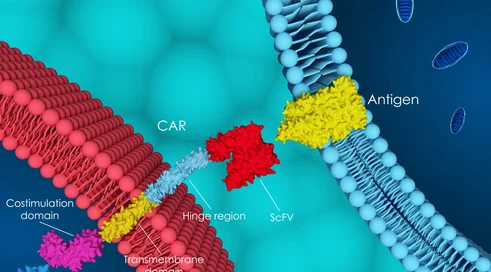
We are talking about the motoneuron. I would like to look more broadly at the topic of what we in neurology call a motor unit. A motoneuron is a motor cell whose protrusions travel to our muscles and transmit the information that the muscles are supposed to do some specific job.
It is the case that this single motoneuron governs the work of a certain group of skeletal muscle fibers. And in order for everything to work well, in order for us to be strong, fit, in order for us to have the correct muscle mass as well, we need this right good physiological number of motoneurons.
Several different pathological processes occur in SMA patients. The first is, unfortunately, especially in those youngest children with SMA1, with the acute form (this was the case in the period before it was possible to treat children pre-symptomatically, as we can already miraculously do today thanks to screening tests), there is an actual death of a large pool of motoneurons.
In the case of patients with chronic forms of SMA2 and 3, of course, there is a loss of a certain pool of motoneurons - permanent loss - these can no longer be recovered, but we also know that there is a certain pool of motoneurons that, figuratively speaking, enter a kind of dormant state. They do not die, but they are not active. Thanks to the therapy, there is very interesting first work coming out, both in treated patients and in the experimental model of SMA, I know that we can at least wake up some of these motoneurons, make them get to work again, take care of the right group of muscle cells and allow the patient to function at a much higher level than it was before.
I think it's a bit of an unexpected phenomenon that we can still reach out to motoneurons that the patient initially in some sense is unable to use, and they are there. If we reach out to them at the right moment, they will be able to take up their work and support the patient's functioning for many years to come. There is much to fight for.
And should the hand we give to the motoneurons be stronger?
If we think about the fact that something stronger will probably work more strongly, the only possible answer is yes. We, of course, will follow up, analyze, collect new information, while in this context, indeed, the first results of studies show that the high dose will have an even better effect than the existing one, although it was already a very good effect. I think it's worth mentioning that Polish patients were getting better results than those from clinical trials, which again means that we have the power of therapy reinforced by the great determination of the patients themselves.
And clinicians - which should be emphasized. Is the goal of treatment to fully protect motoneurons, and can higher doses achieve this?
Of course, we would always like to get a 100% effect. To what extent it will be possible to achieve a 100% effect time will tell. On the other hand, I am convinced that each even incrementally smaller pool of motoneurons that turn on is already a huge additional effect, a much better effectiveness of therapy.