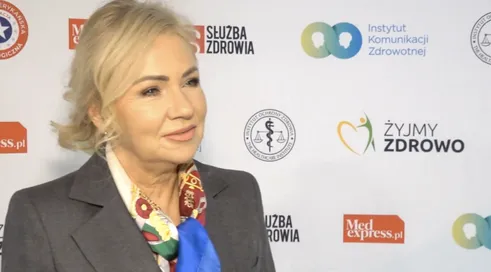
- In Poland, we do not have access to innovative therapies, even if only long-acting agents, which are already standard in neighboring countries. We also do not have access to subcutaneous therapies. Such therapy dramatically changes the lives of families and the patients themselves, not only for children, but also for adults," Ewelina Matuszczak, a member of the Association of Congenital Hemorrhagic Flaws Patients, said in an interview with Medexpress.
Hemophilia patients need innovative therapies

Published June 7, 2023 10:34

Thinkstock/GettyImages
Speaking of hemophilia, we are talking about a disease that cannot be cured. What is life with this disease like, both from the point of view of the patient and his loved ones?
Hemophilia today is a little different from hemophilia 20 years ago. Our children already have treatment available in the drug program and are covered by prophylaxis. This prophylaxis saves their lives and protects them from disabilities that very often affected their grandparents, for example. Prophylaxis in severe hemophilia, however, looks like this: our children have clotting factor administered every 2-3 days. This is done in the form of intravenous infusions. Children with hemophilia can thus lead almost normal lives or play almost all sports. They are practically no different from their peers. What is important in all this, however, is the word "almost." Let's think about what a huge stress for every child and sometimes adults are vaccinations or blood draws. Often people faint at blood draws. It is not uncommon for children to scream, lash out and cry at such procedures. Our kids have such experiences three times a week. It takes years before they get used to needles and pricking. For the first three years, they scream and jerk, just like healthy children do when blood is drawn. We hear everywhere that hemophilia is easily treated. In fact, we have a cure for it, but the other side of the coin is at what cost. Prevention is absolutely a salvation for us, because it saves our children, but it is also a nightmare that we have to face at home.
Such frequent insertions are certainly not without their effects on the condition of the veins either?
If we are talking, for example, about an eight-month-old baby who is learning to crawl, the parents are not able to be independent when administering the intravenous agent. Often it is not administered until the seventh or eighth time. The veins are tiny and burst, a trauma for both children and parents. It's also rare for a parent to be able to administer the drug to such a young child on their own. Administrations must therefore usually take place in hospitals or primary care clinics.
To be able to protect a child in whom there is no possibility of intravenous delivery of the agent, even if medical personnel do it, there is a need to place a vascular port. Unfortunately, this is not an ideal option either. The port is placed during surgery, before which very large amounts of factor are administered to the child. A complication of such an operation can be the appearance of an anti-coagulation factor inhibitor in the body. In addition, this is an operation carried out under general anesthesia. After that, the supply of the factor to the port must take place under very sterile conditions, due to the high risk of infection. Over the past six months, we have had more than a dozen cases of port infections. Two weeks ago, a child was brought to the hospital with a detached catheter, stopped practically at the heart chamber. Port replacement surgery is a big expense on the one hand, and on the other, it puts the child's life at risk. The risk of infection, on the other hand, already arises when the body temperature rises to 37 degrees, and as we know, children often struggle with infections. As a result, mothers become nurses for their children. Often one parent has to give up work to take care of a sick child. Meanwhile, science and medicine are moving forward, but the treatment of hemophilia in Poland has stalled.
In view of this, what are the needs in terms of care and therapy? What solutions are patients and their relatives waiting for?
In Poland, we do not have access to innovative therapies, even if only long-acting agents, which are already standard in neighboring countries. We also do not have access to subcutaneous therapies. Such therapy dramatically changes the lives of families and the patients themselves, not only for children, but also for adults. In our country, it is only available to patients who have developed an inhibitor against the agent. Clinicians, on the other hand, appeal to be able to treat their patients with innovative drugs. Every hemophilia patient has a different disease, and it is very important that the doctor be able to use the appropriate therapy. Because of the fact that we do not have access to other therapies, only short-acting agents, doctors cannot adequately protect patients. Patient treatment centers have approached the National Blood Center with a request to secure patients with subcutaneous drug therapy. After all, a large pool of money was saved in 2022 precisely because some patients with the inhibitor switched to subcutaneous drugs. It is therefore fully justified to make such therapy available to other hemophilia patients as well.
How are innovative therapies changing the lives of patients and their families?
To begin with, it is worth realizing that if you administer the drug intravenously, you are not talking about a small volume. You have to flush the vein, then administer the drug, and then, after the drug is delivered, flush the vein again. Subcutaneous drug, on the other hand, we administer, according to the doctor's instructions, once a week, once every two weeks or once a month, in a very small volume. Such therapy is a dream for us parents of young children, but also for boys who are entering adult life and can function in it in a completely different comfort.
Since we are aware of the progress that has been made in the treatment of hemophilia around the world, we cannot accept the daily suffering and risk of disability for our children. So we are very concerned about the introduction of modern therapies.
And what is the awareness of the hemophilia patient management regimen, for example, in hospital emergency departments or primary care clinics?
We often face problems, for example, when going on vacation or a school trip. We cling to our centers, or to people who can give a factor. Our association is working on education in PCPs and EDs Although there are clear guidelines, regarding the fact that the patient should be given the agent first and only then deal with the diagnosis, there is still a lack of awareness that this should be done. There is a lack of education even on how to distribute the agent.
What also strikes us is that there is no psychological care for families or for patients. Prophylaxis has been available since 2014, and there are still no publications that describe how a child undergoing IV treatment several times a week responds to it. Instead, we have plenty of opinions from psychologists who note that these children unfortunately often have sensory integration disorders. Sometimes a child will give a toy, throwing it, because he is afraid of touch.
Thank you for the interview.