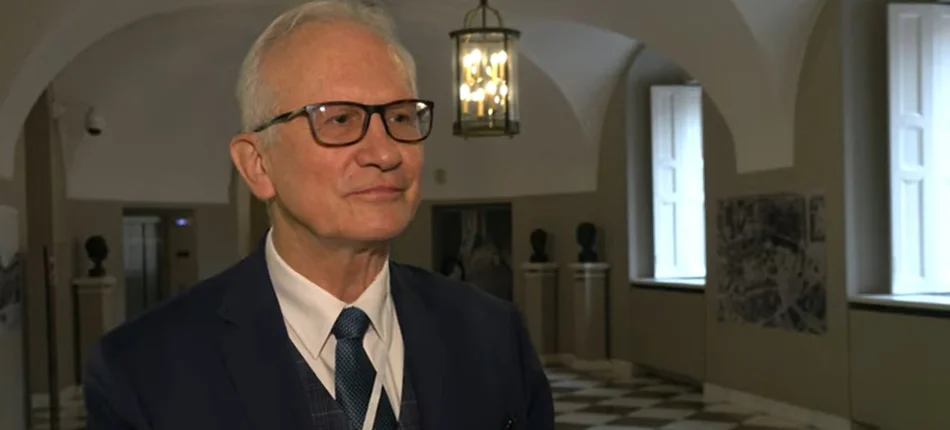
- Anesthesiology takes patient safety as its starting point. Anyone undergoing sedation or anesthesia must first and foremost be safe," Professor Janusz Andres, president of the Polish Society of Anesthesiology and Intensive Care, told Medexpress in an interview.
Prof. Janusz Andres: With new drugs, we can assure the patient that anesthesia is safe

Published Feb. 7, 2024 09:10
In anesthesiology today, can we say that we are beneficiaries of advances in science and medicine? And if so, in what areas?
It can be said that anesthesiology and intensive care has been the beneficiary of advances in science in every respect since its inception. As far as anesthesiology is concerned, both in the way anesthesia or sedation is carried out, as well as peri-procedural matters require monitoring, drugs and anesthesiological proficiency. We have progress in each of these areas. We can monitor all of the patient's basic vitals. We've also had great advances in medications for several years, with new-generation drugs recently available. They can not only create anesthesiological comfort during surgery, in perioperative medicine, but we also control pain with them, manage patients who require pharmacotherapy in life-threatening conditions. We have new drugs and new procedures, so the chance of surviving the perioperative period is much higher than it used to be. Such progress has actually been happening for the past 30 years. In the 1980s, there were new drugs that were anelgesics, new anesthetic drugs. Today we have great advances in pharmacotherapy in acute circulatory failure. There are new drugs, such as angiotensin, but we also have advances in the ability to sedate with a new drug like remimazolam. With it, we can assure the patient of the safety of anesthesia, the safety of peri-procedural care. So we are on a very good path for further development of anesthesiology and intensive care.
The possibilities associated with performing surgery are one thing, but you mentioned sedation, which seems to be crucial if we are talking, for example, about preventive examinations about a test such as colonoscopy, for example, which is, after all, crucial in the oncological diagnosis of colorectal cancer.
Yes, it all has to do with anesthesiology. We take patient safety as our starting point. Any patient undergoing procedural sedation or anesthesia first and foremost must be safe. Therefore, the whole process of training anesthesiologists is that we know how to act in a critical situation, in a situation where in a patient any of the systems, whether breathing or circulatory, must be secured in some way. This is something that we also need to teach others before procedural sedation is made available to other specialties as well. This should start with us, and we should be the leading area. We are the pioneers of cardiopulmonary resuscitation, as well as the treatment of patients in severe life-threatening conditions. Also, peri-procedural sedation is also possible when safety issues are addressed and secured by us from the very beginning.
What factors contribute to this security?
It is known what can threaten patients during anesthesia or sedation, and all these symptoms must be known, the drugs that can be administered during this procedure must be known. It is necessary to know what the side effects are. You need the speed of intervention that is characteristic of the person who conducts the so-called peri-procedural sedation. The speed of these decisions and their appropriateness to secure the function of the vital organs are our priorities.