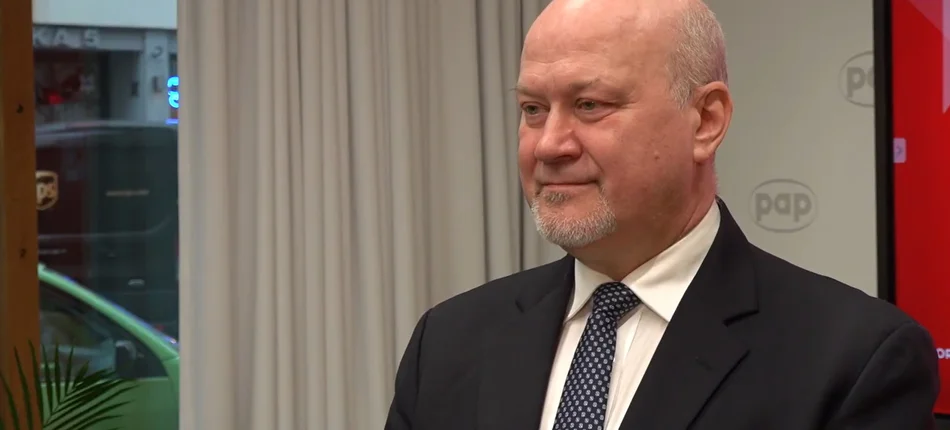
Interview with Prof. Marek Rękas, national consultant for ophthalmology
Prof. Marek Rękas: we can already treat AMD and DME at four-month intervals

Published Jan. 4, 2024 13:35
Professor, how has the B.70 drug program changed from January 1, 2024, and how does this program change the new substances introduced for patients and also new provisions.
The drug program we are talking about is the largest drug program of the National Health Fund. At the moment, for age-related macular degeneration, we treat about 40,000 patients, and for DME, or diabetic macular edema, about 9,000 patients. The fact that such a number of patients are being treated raises a problem in the system. We treat with injections of the drug into the eyeball. We repeat them in sequences, depending on the drug - every month or every two months. On the one hand, it's a problem for patients, and on the other hand, it's a burden on ophthalmology departments.
There is a trend in the world to introduce drugs that allow longer intervals between administrations. Drugs that have been appearing since January allow these intervals to be extended up to four months. These include pharycymab, aflibercept and dexamethasone. For obvious reasons, this gives an increase in the patient's quality of life on the one hand, and a reduced burden on ophthalmology departments on the other. Also for the system, it can carry savings in these programs, which will increase the availability of treatment for the aforementioned disease entities.
What are the benefits precisely for patients, but also for experts, of pharizymab therapy, the first bispecific therapy for retinal diseases?
This is one of the drugs that allows you to extend the interval between infections. This therapy is bispecific because it works on two handle points. The studies that are available at the moment say that this is a good drug, so the decision is for this particular drug to be in the program. I supported this decision as a national consultant.
This extension of the time between administrations is probably crucial for patients, who can make an easier life for themselves with the disease, but also for the system, which is thus not so burdened with patients coming to the hospital just for treatment.
To reinforce this trend, one would have to change the funding in the drug program a bit more and introduce, for example, lump-sum billing for the whole year. Then a given center would receive a single rate for treating a patient for a year, and would have the impetus to use these modern drugs, the benefits of which are unquestionable. Patients don't want treatment to disorganize their lives and those of their families. On the other hand, looking at it from the point of view of a clinic manager, this is also a big organizational problem. If one introduces systemic solutions in the form of precisely this lump-sum financing, which we have been pushing for for some time now, there will be savings that can be used in other ways.