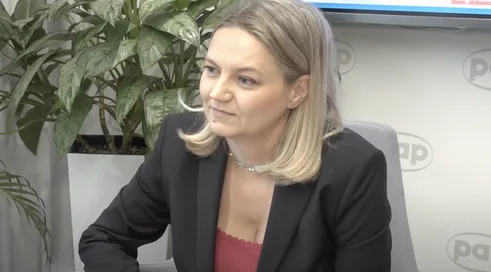
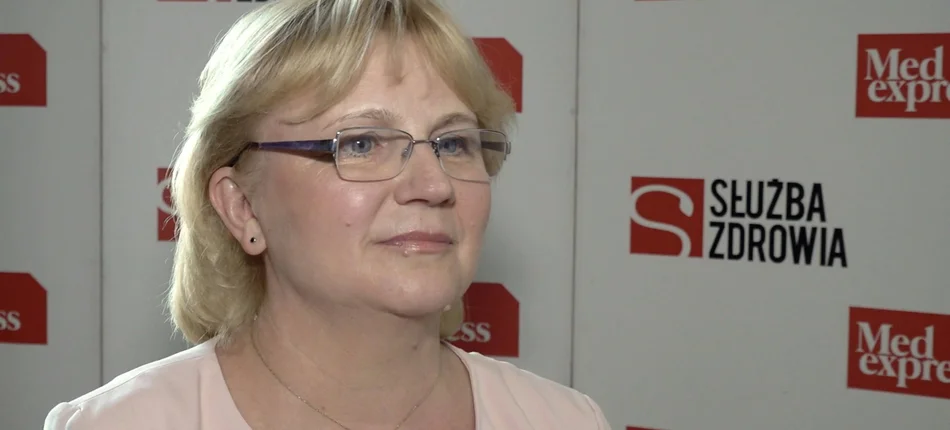
Professor Malgorzata Mysliwiec, head of the Department of Pediatrics, Diabetology and Endocrinology at the Medical University of Gdansk, talks about the role of early diagnosis of familial hypercholesterolemia, the problems of detecting the disease and how we can easily remedy it.
Prof. Mysliwiec: Screening for familial hypercholesterolemia is our dream

Published Sept. 26, 2023 08:00
How important is early diagnosis for familial hypercholesterolemia in children?
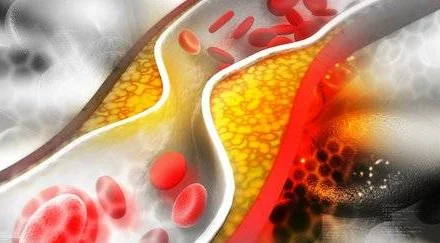
This has huge family and therapeutic implications. If we diagnose familial hypercholesterolemia in children, we can cascade diagnosis. It is an autosomal dominant disease, which means the risk of a child having the disease is 50 percent, so if we diagnose the disease in a child, we will also diagnose it in one of the parents. If the age is, for example, 6 years old, we will recognize the disease before the age of 40 and be able to start treatment. And we have statins. PCSK9 inhibitors are now available. So with these we will prolong the life of the parent, because we know that if the disease is undiagnosed and untreated, about 50 percent of patients with undiagnosed hypercholesterolemia live to age 60, and only 20 percent live to age 70. That is, a child quickly loses his or her parents to atherosclerosis and the consequences, that is, cardiovascular disease, so they die from a myocardial infarction or stroke. The diagnosis is twofold: the diagnosis in the parent and the inclusion of treatment, and the diagnosis in the child is the inclusion of treatment from childhood, so we have complete prevention of the development of atherosclerosis. Such a patient will live as long as those without familial hypercholesterolemia.
Is it a common disease?
It is a common disease, only rarely diagnosed. Its frequency is that of type one diabetes in children (1 in 250 people). In Poland, because there is no awareness of it and no screening, it is diagnosed very rarely, less than 5 percent. In countries where screening is carried out, such as Slovenia, the diagnosis is at 80-90 percent, as in Germany, Luxembourg and the Czech Republic. The diabetology, cardiology community has submitted a health problem charter to the Ministry of Health - the introduction of screening in six-year-olds at the balance of six-year-olds. Why exactly six-year-olds? Because schools require a doctor's certificate when conducting such a balance sheet, patient participation is at about 80 percent. If it is possible to introduce screening in the form of a simple lipidogram, we can already presume and pre-diagnose this disease on the basis of it, since there is an elevated LDL cholesterol (usually above 130, 160, 190 with normal triglyceride levels). And most often these children are thin, not raising any doubts that they may develop a serious disease that will cause them to have cardiovascular incidents at the age of 35-40.
Since the child is thin and has no symptoms, no one will look for familial hypercholesterolemia in him. Screening therefore offers a chance to detect it.
We most often diagnose hypercholesterolemia in children participating in sports, because a lipidogram is done as part of screening and general health checks. So a child comes to us who is athletic, playing soccer, for example, and it turns out that he or she has severely elevated LDL cholesterol, one parent is alive, and the other unfortunately had an incident that ended in death.
So it remains for me to wish that the Ministry of Health will grant your requests and introduce such screening as soon as possible.
This is our dream. We want this recognition to be not 5, but 80-90 percent. Especially since we have better and better drugs available. In addition to statins, which we can use from the age of 6, we have a PCSK9 inhibitor at the moment. And as I mentioned, this is an autosomal dominant disease, caused by mutations in genes including LDL cholesterol receptor apolipoprotein B, or PCSK9 protein. There are drugs for it, which allow to achieve normal levels of cholesterol, especially the bad one (colloquially speaking, LDL cholesterol).