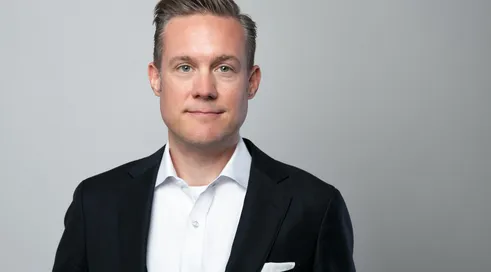
Diabetology has become one of the fastest growing fields of medicine in recent years, and Polish patients - at least in theory - have access to most modern therapies almost at the same time as other countries. Prof. Leszek Czupryniak, head of the Department of Diabetology and Internal Diseases at the Warsaw Medical University, calls for long-term thinking - from the perspective of patients' health and the future costs of the health care system.
Treat today or pay tomorrow? Prof. Czupryniak on the real needs of patients with type 2 diabetes

Published Dec. 19, 2025 07:22
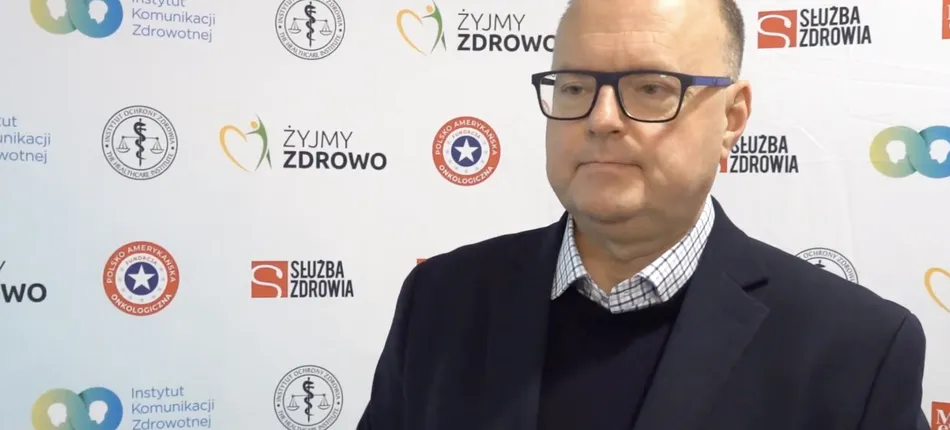
Professor, in recent years we have seen significant improvements in access to innovative therapies in many therapeutic areas. How do you assess the changes in diabetology, especially in the context of the lack of unmet medical need in the population of patients with type two diabetes indicated in the AOTMiT recommendation for the recently evaluated GLP1/GIP analog?
Diabetology is one of several leaders here, for the reason that in diabetology as well as in many other fields, firstly, there has been a very dynamic development in terms of therapy. Secondly, drugs and technologies that have emerged in the world are becoming available in our country basically immediately. Of course, the barrier is usually price. And this is where reimbursement helps patients, allowing them to benefit from these innovations. They are unequivocally beneficial, and we emphasize this at every step. What is being introduced is very well researched. We also see the effect of this at the very beginning of use in the patient. And here I'm talking both about drugs from two no longer so new groups, such as the SGLT2 inhibitor on GLP1 analog, but also technologies like continuous glycemic monitoring. This is changing diabetology for us completely.
The latest thing is a battle, a discussion about the possibility of reimbursement for a drug called thirzepatide, which has two indications: in diabetes and in obesity. It is not reimbursed here or here. It is a drug that has the best studies, very high efficacy, a very good safety profile, and is well tolerated. We would like it very much so that as many patients as possible use these drugs. The price is high. Here we always resent the industry for probably pricing the product as expensive as it can. On the other hand, this price will decrease, because competition in this market will be very high. The possibility of treating obesity is electrifying the entire pharmaceutical industry, and all companies are thinking about using ozempic and mounjaro. I repeat that the world is divided into those who take ozempic and mounjaro and those who don't admit it. And this is our future. On the other hand, it is certainly the case that in a group of patients - and here patients with type two diabetes are a clearly distinguished group and one that benefits the most - but also in the treatment of obesity, these benefits are enormous, because if we can help a patient reduce weight by 20-30 kilograms, and usually we can talk about several kilograms of weight reduction, the health benefit is simply colossal - all the consequences of obesity we simply level out. As far as I know, the opinion of AOTMIT, of all councils, is positive, the decision is rather negative, but it is simply due to the commonly discussed and debated financial problems. With that said, this is a short-sighted issue, because if we don't treat obesity today, we will be treating its consequences not in fifteen years, but in five, and diabetes is just one of them. We should be wise enough as a governing society to, however, in this narrow budget, by the way, with the hurricane optimism that is sometimes presented, because the latest information about the budget for next year is that it will be the highest as far as health care is concerned, and this money will be the most. So there really should be a small pool of money so that for some of the patients who benefit most from this treatment, this drug will be more available. The financial barrier is significant here, and many patients don't take the treatment, giving up, or they will start and stop, and this is chronic treatment, because both diabetes and obesity are chronic diseases, meaning they are incurable and require years of treatment. That's why we call for foresight, which is difficult in this day and age, in our country in general, but the nature of these diseases and at the same time how these drugs work is precisely such that we have to think far ahead, and even so, the pool of patients who will be able to receive these drugs in reimbursement will be narrow compared to the real needs we have as a society.