Supplying a cancer patient's body with adequate amounts of essential nutrients can be difficult for a number of reasons. As a result, at least one in three cancer patients struggle with malnutrition. To raise awareness of this problem, the Nutricia Foundation, together with the EuropaColon Poland Foundation, has launched a series of educational webinars called "Without nutrition there is no treatment."
The best cancer therapy may not help without proper nutrition

Published April 12, 2023 09:10

Between 30% and 85% of cancer patients experience symptoms of malnutrition or cachexia. The risk of malnutrition itself is present in virtually every type of cancer, with the highest risk in patients with upper gastrointestinal cancers - esophageal, gastric, pancreatic, as well as colorectal and head and neck cancers. Many factors contribute to the development of malnutrition. The main one is the disease and its consequences related to loss of appetite, gastrointestinal complaints, impaired swallowing, and difficulty in preparing and eating meals independently.
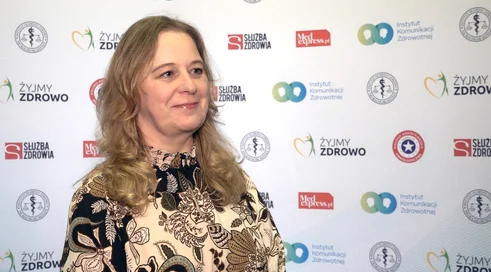
- Every oncology patient, especially those diagnosed with gastrointestinal cancer, should undergo a nutritional screening. It is in gastrointestinal cancers that malnutrition affects up to more than 80% of patients," stresses Iga Rawicka, president of the EuropaColon Poland Foundation, which works to raise public awareness of gastrointestinal cancers.
While proper nutrition should be considered an indispensable part of the healing process, this is not always the case. Meanwhile, when a sick or convalescent patient is unable to meet his or her, often increased, nutritional requirements with a traditional diet, he or she may be at risk of malnutrition.
- Even the best therapy, the most modern drug will not help if the patient is not properly nourished. So, he or she is not getting the right amount of energy, or calories, and essential nutrients, the most important of which is protein. I often use such a figurative comparison - most tables have four legs. Basic cancer treatments - surgery, chemotherapy and radiation therapy - are still only three legs of the table. Without the last leg, or nutritional support, the table can tip over," explains Dr. Pawel Kabata, a surgical oncologist.
Malnutrition is also a disease
Poor nutritional status, or malnutrition, has many consequences that affect the healing process and subsequent recovery. Very often, it can also result in lowered immunity, which can lead to more frequent infections and postoperative complications, which in turn translates into a longer stay of the patient in the hospital.
- Most patients realize that what they eat matters, but they underestimate how much. They come for help when the problems resulting from malnutrition are already at a very advanced stage. Preventing malnutrition is better than treating it. I see a difference between patients who are properly nourished and those who lose weight - their muscle mass decreases, and as a result, they struggle earlier and more often with the effects of malnutrition, such as chronic fatigue or lowered immunity," says Maja Czerwinska, MD, PhD, clinical dietitian.
One method of supporting the treatment and recovery process can be medical nutrition in the form of oral nutritional supplements(ONS for short). In a small volume, they contain essential nutrients, such as protein , which is the main building block of the body and for which the requirement in a cancer patient is almost twice as high as in a healthy person, and omega-3 fatty acids, which can influence the reduction of inflammation in a cancer patient, and thus contribute to improving appetite, reducing weight loss and muscle mass. Incorporating medical nutrition as early as the time of diagnosis can help strengthen the patient before treatment, reduce the risk of discontinuation of therapy due to patient malnutrition, and thus increase the chance of timely treatment completion.
The need for nutritional support during oncology treatment is important in any type of cancer, but especially for cancers where the risk of developing malnutrition is greatest, including head and neck, lung, colorectal, gastric and pancreatic, during preparation for chemotherapy and radiation therapy, during and after chemotherapy and in the perioperative period.
Without nutrition, there is no treatment
There is still a need to build awareness about the role of nutrition in cancer, so a series of webinars on three types of cancer - colon, stomach and pancreas - has been launched. The events are moderated by EuropaColon Poland Foundation president Iga Rawicka, who received the "Swallow of Hope" in the Oncology Patient Organization Leader category during the recent 11th Oncology Patient Forum organized by the Polish Coalition of Oncology Patients Foundation.
Knowledge on nutrition in cancer is shared by experts:
- Pawel Kabata, MD, an oncologic surgeon at the Department of Oncologic, Transplant and General Surgery at the University Clinical Center in Gdansk,
- Maja Czerwinska, MD, PhD, clinical dietitian with the nutrition team at Medicam Specialist Hospital in Gryfice, and lecturer at the Pomeranian Medical University in Szczecin.
- The webinars are aimed at patients at different stages of cancer and their caregivers and are designed to raise awareness of the important role nutrition plays in cancer. Each meeting will focus on a different cancer," explains Iga Rawicka.
The webinar with experts on nutrition in colorectal cancer can be viewed free of charge on the channels of the Nutricia Foundation (on the profile on Instagram @JestemOpiekunem, on zywieniemedyczne.pl) and the EuropaColon Poland Foundation ( LinkedIn, YouTube, Twitter: @EuColonPolska
Facebook: @EuropaColonPoland).
The next webinars are coming in April:
- April 14 (Friday) at 6 pm - please join us for a webinar on nutrition in gastric cancer,
- April 27 (Thursday) at 6 pm - the meeting will focus on nutrition in pancreatic cancer.