The 27th Warsaw Course on Cardiovascular Interventions (WCCI) Workshop, organized by the Foundation for the Support of Interventional Cardiology under the auspices of the Association of Cardiovascular Interventions of the Polish Society of Cardiology and in cooperation with EAPCI and EuroPCR, was held on 19-21.04.2023. Representatives of cardiovascular medicine from all over the world, including the Cardiovascular Intensive Care Association of the Polish Society of Cardiology, the 30 Club of the Polish Society of Cardiology, and the Euro 4C group of the EAPCI and the European Society of Cardiology, took part in creating the program of this oldest and one of the most prestigious cardiology workshops in Europe.
What Poles have in the heart, or WCCI 2023

Published May 8, 2023 09:27
As emphasized by Prof. Robert Gil. - President-Elect of the Polish Society of Cardiology and Director of WCCI, for the first time at WCCI a technological cardiology village was set up, which was very popular with participants.
- These were rooms where there were demonstration devices from various companies, on which one could "practice" performing various vascular procedures or examinations. This included intravascular imaging, left ventricular assist, new devices to reduce atherosclerotic plaque (orbital atherectomy, coronary lithotripsy), in short, over the course of two days, specialists showed how to use these devices, how they can be applied in clinical situations and their technological nuances. - lists the professor. - This technology village generated a great deal of interest, and the most interesting of the devices was considered by participants to be the one where you could build your own endovascular guidewire. The village was a great success. - He continues. - Also, for the nth time, the format of a session on specific clinical cases along the lines of the classic EuroPCR session (HWIT- How would I treat such a patient?) worked well. Nota bene, EuroPCR is the most prestigious meeting of invasive cardiologists in Europe, and we have been collaborating with WCCI for years. This year's theme was the cardiogenic shock patient. A huge number of questions and interest from the participants, a lively discussion and an edifying exchange of experience," Professor Robert Gil summarizes.
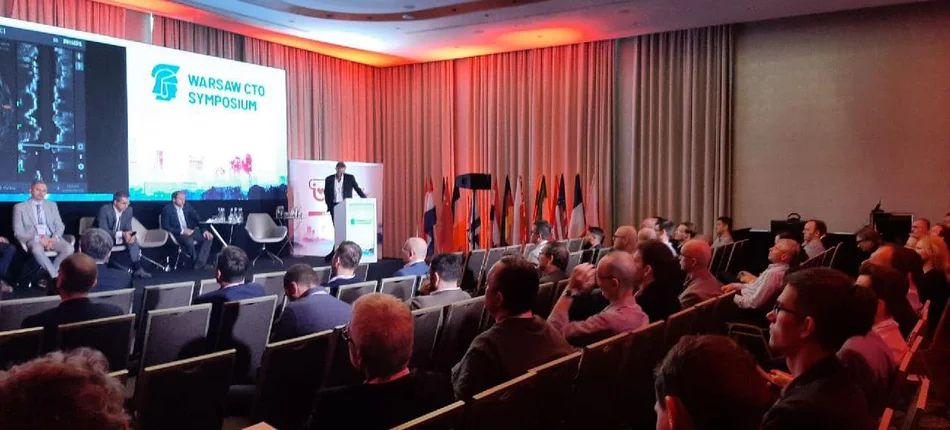
- A great success, which we are very pleased with, is the dynamic development and very good reception of two mini workshops for advanced operators held during WCCI - Warsaw CTO, dedicated to operators interested in training in recanalization procedures for chronic coronary occlusions, prepared by prof. Maksymilian Opolski (Warsaw) and Paul Knaapen (Amsterdam), as well as the Warsaw-CHIP workshop dedicated to complex high-risk procedures), whose directors are Prof. Tomasz Pawłowski (Warsaw) and Mirosław Ferenc (Bad Krozingen). - mentions Prof. Adam Witkowski, Past President of the Polish Society of Cardiology, Director of WCCI. - The halls were bursting at the seams at sessions devoted to the so-called nightmares of the invasive cardiologist, surprising situations, the most serious complications, spectacular procedures mostly with a happy ending. We, as practitioners, learn from the mistakes, including those of others, discussed in the workshop. We are happy that the stationary formula of our workshops worked for the first time since the pandemic, and we were visited by celebrities of cardiovascular medicine from around the world, including : Gary Mintz, Yves Louvard, ShaoLiang Chen, Patrick Serruys. - adds the professor.
CVD Syndemia
One in three Poles dies of cardiovascular disease. This includes as many as 85 percent of patients due to atherosclerosis, as indicated in the report "Incidence, Treatment and Secondary Prevention of Myocardial Infarctions in Poland," based on statistics from the National Heart Attack Database. The number of heart failure patients also continues to rise. The number of hospitalizations has increased by 43% over the past five years, reaching the highest rate among OECD countries - more than 2.5 times as often patients in Poland are hospitalized for heart failure as the OECD average, indicating the worst prognosis for patients. The European Society of Cardiology describes Poland as a country with high cardiovascular risk. After the pandemic, the health debt has increased even more, which cardiologists are trying to combat effectively through coordinated cardiology programs precisely.
- Health debt has always been there, while it has been latent. Patients were said to be waiting in long lines to see a doctor, especially cardiac and oncology patients, as these are the two main causes of death in Poland. The pandemic was superimposed on the underfunding of the health care system and the failure to provide all patients with treatment in a timely manner, under the right conditions and with the right drugs and tools, which highlighted the inefficiency of the Polish health care system. In 2020-21, there were more than 100,000 excess deaths, i.e. deaths that could have been avoided. In Poland, compared to the EU, we have more than twice as many so-called just avoidable deaths, which is already a very bad situation for patients. The health debt in Poland can therefore be called a syndemic, that is, an overlay of the past, the COVID-19 pandemic with new current problems in cardiology. - explains Prof. Adam Witkowski.
- The idea is to treat our patients in the best possible way, to increase access to the most modern technologies and pharmacotherapy in interventional cardiology and cardiology in general. - said during the Opening Ceremony of WCCI 2023, Prof. Przemysław Mitkowski, President of the Polish Society of Cardiology. - Recently, in cardiology, we have managed, among other things, to bring about reimbursement of optical coherence tomography, ahead of us are efforts to reimburse procedures for the unblocking of chronically narrowed coronary arteries and, of course, to improve the care of patients after coronary interventions in the KOS-infarction program, and this is especially dear to our hearts. KOS-infarction has greatly improved the prognosis in this group of patients, while we realize that not everything that could be done has yet been done. KOS-heart attack will certainly be a program that we will develop, as it needs to be developed for better care of our patients. - he argued.
KOS heart attack on the plus side
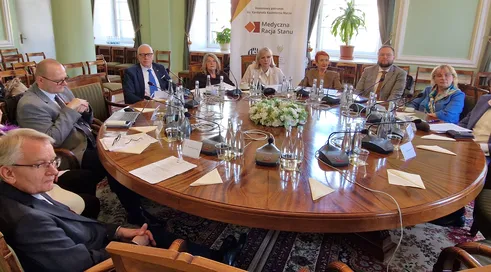
During the annual Cardiology Aware Media debate organized jointly with the Awareness Institute Foundation, the topic of care options for high and extreme cardiovascular risk patients was widely discussed by Ewelina Panczyk, President of the Awareness Institute Foundation in a debate with cardiologists and journalists. Experts agree that the KOS-infarction program should be a mandatory program because it has translated into a decrease in patient mortality, the toughest evaluation point imaginable when evaluating medical programs. Obligatory is likely to exist from the beginning of 2024. However, the program itself needs modifications and additions to make the implementation of the program more like European "managed care," i.e., supervised care, since post-MI patients need not only better coordination, but also supervision of the recovery process.
- KOS-infarction is a good investment in the future of Poland, because in the health of Poles and the financial system of the state. I am in favor of the obligatory nature of the program, which, however, requires development and modification of, among other things, the construction and expansion of post-infarction rehabilitation centers, and at the same time the so-called impoverished version of the KOS-infarction program for those who, for various reasons - professional, life, social - cannot undergo systematic rehabilitation, especially in rural areas with low population density, where there is a lack of rehabilitation centers. In addition, the patient should be able to move freely from one center to another, because patients who change their place of residence for various reasons are many, and they are assigned to rehabilitation at the original center even after changing their address. A patient who had surgery in Warsaw and moved to Szczecin is not able to commute to Warsaw for rehabilitation. Patients with this situation are, counterintuitively, many. An important step forward to fully utilize the program's potential would be to provide patients with free transportation to rehabilitation centers and to expand the option of hybrid rehabilitation, which the patient can perform at home after being coached by a doctor and his control over the implementation of therapeutic goals. - believes Prof. Gil.
- It is also necessary to raise the issue of supplementing KOS-infarction with the B.101 ministerial program for the treatment of hypercholesterolemia. Not all patients with high and extreme cardiovascular risk who meet the criteria are included in the B.101 drug program. This is due, among other things, to the fact that the program is conducted in a limited number of centers. This could be changed by implementing this B.101 drug program in all centers treating COS-infarction. This would increase the availability of modern hypercholesterolemia treatment under the B.101 program for our patients. - Prof. Witkowski states.
The year of hypercholesterolemia in Poland
The Polish Society of Cardiology, together with the Polish Lipid Society, has declared 2023 the year of the fight against hypercholesterolemia, as lipid disorders are the most common risk factor for cardiovascular disease in Poland and worldwide. The problem affects up to 21 million people in Poland, including more than 60% of the adult population. The scale of the problem is exacerbated by the fact that there is very low awareness of the prevalence of hypercholesterolemia among both patients and, unfortunately, doctors, who underestimate the importance of a basic test such as a lipidogram. At the same time, there is widespread misinformation on the Internet about treatment options and safety. Cardiologists have high hopes for a new idea - the KOS-Hypercholesterolemia+ program, a proposed supplement to the KOS-Hypercholesterolemia program for high-risk cardiovascular patients.
- It is important to realize that every patient after a first myocardial infarction is a high-risk cardiovascular patient, and hypercholesterolemia is one of the main factors of a sudden cardiac incident. It should be remembered that about 20 -25% of patients after an acute coronary syndrome, despite treatment with statins and ezetimibe, do not achieve the therapeutic goals of reducing "bad cholesterol" and need further reduction with modern pharmacology. Therefore, we want to expand the KOS-coronary program so that it can effectively monitor and treat patients with hypercholesterolemia with modern cholesterol-lowering drugs - no longer just statins and ezetimibe, but precisely the extremely effective PCSK-9 or small-molecule RNA inhibitors. Hence the idea of piloting KOS-infarct+, which, if approved by the Ministry of Health, would be implemented initially in 7 experienced centers in Poland. - Prof. Witkowski explains. - In the program, lipidogram determination would be more frequent and obligatory, and additionally the patient would be given the opportunity to enter the ministerial B.101 program despite not meeting the entry criteria set by the MZ for financial reasons. Then such a patient could be treated in accordance with the guidelines of the European Society of Cardiology. If it turned out that KOS-myocardial infarction+ further reduces mortality precisely by reducing cholesterol, this would mean that PCSK9 inhibitors should be available in open reimbursement for all post-myocardial infarction patients. - He adds.
- KOS-infarction+ is a huge opportunity for patients, because in the B.101 program, the target cholesterol standard is 100 mg/dl, and we know that this is twice too low to effectively avoid a second heart attack. The effectiveness of combination treatment, or ezetimibe with a statin, is 65 percent. - still too low. Only treatment based on modern therapies, including PCSK9 protein inhibitors, makes it possible to achieve 85 percent LDL reduction, a therapeutic goal in virtually every patient. With new drugs widely available, we would come closer to European standards for treating hypercholesterolemia and preventing heart attacks in our country," adds Prof. Gil.
Support from policymakers and the media
This year, the 27th Warsaw Course on Cardiovascular Interventions (WCCI) Workshop received a record number of Honorary and Media Patronages, the most in the nearly 30-year history of the congress. The event received support from the Speaker of the Senate of the Republic of Poland, the Sejm and Senate Health Committee, the Ministry of Health, the National Health Fund (NFZ), the Agency for Health Technology Assessment and Tarification (AOTMiT), the National Institute of Public Health-State Institute of Hygiene-Public Health Research Institute (NIZP-PZH-PIB), the Polish Academy of Sciences, the Economic Forum, the Awareness Institute Foundation, the Patient Ombudsman and the Supreme Chamber of Physicians.
- This year, in fact, we boast a record number of Patrons, both honorary and media. Thus, we are confident that the most important and interesting information coming out of our Workshop this year will be widely distributed thus encouraging and educating people to attend the WCCI 2024 Workshop now. We also hope that so much support from decision makers in terms of patronage will translate into good and fruitful cooperation with our specialty in the near future, we are positive. - says Prof. Robert Gil.
infra