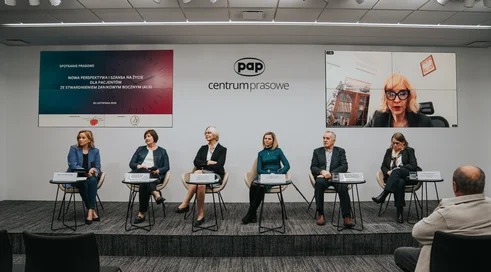
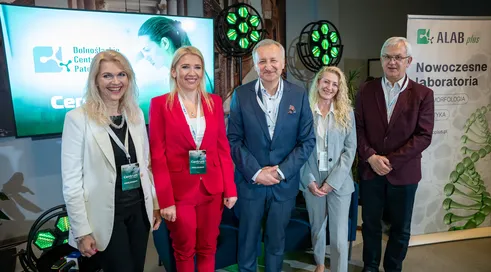
Every year, 25,000 women in Poland receive the same diagnosis—breast cancer. There is also one question they all ask themselves: Can I live a normal life? Today, thanks to advances in targeted therapies, many patients have a real chance at a permanent cure. What life is like with the disease, why knowledge provides a sense of security, and what patients need most were discussed during the “Omejka—a conference on breast cancer in young women.”
Medexpress Poll
“I thought my situation was hopeless.” What patients say after their diagnosis

Published June 24, 2026 16:31

At first, I thought my situation was hopeless...
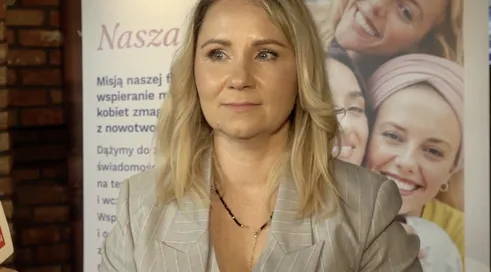
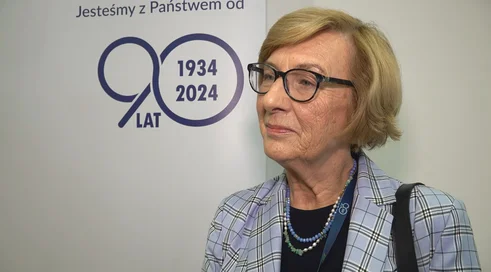
When a doctor tells a woman she has breast cancer, her thoughts turn to her children, her partner, and her job. For patients, a breast cancer diagnosis is a moment that divides life into “before” and “after.” For many participants in Omejka—a conference on breast cancer in young women—that moment was a turning point. But not the end. “At first, I thought my situation was hopeless.” It turned out that my ideas about cancer treatments were just things I’d heard from my aunt and neighbors when I was a teenager,” says a patient and conference participant. This statement was made during a survey conducted at the conference. And it describes what many women experience on the day of their diagnosis: fear fueled by outdated notions of cancer as a death sentence. Meanwhile, oncology—and this is precisely what initiatives like Omejka aim to demonstrate—has changed radically. This is also true for one of the most aggressive subtypes: HER2-positive breast cancer.
HER2+: What has changed?
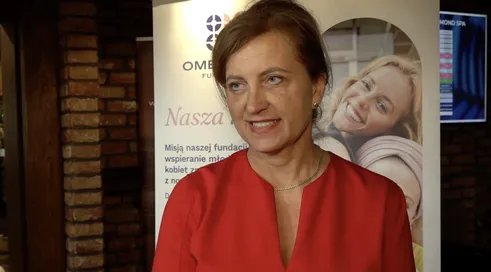
Just a dozen or so years ago, a diagnosis of HER2-positive breast cancer often meant an extremely poor prognosis. Today, thanks to advances in targeted therapies, many patients have a real chance at a permanent cure. Magdalena Kardynał, organizer of the Omejka conference, explains why this particular breakthrough occurred here. - HER2-positive breast cancer is one of the most aggressive subtypes of the disease, but it is also one of the best understood biologically. Thanks to many years of research, scientists have been able to thoroughly understand the role of the HER2 receptor, which is responsible for tumor growth and development. This knowledge has enabled the development of targeted therapies that act directly on the mechanisms driving the disease. However, the real breakthrough came with the introduction of combination therapies, or the so-called “double HER2 blockade,” she says. HER2 double blockade—the combination of pertuzumab and trastuzumab—is now the global standard of care for this cancer subtype. Administered both before and after surgery, it allows for more effective control of the disease and significantly increases the chance of a lasting cure. - Multicenter international studies indicate very clearly that every patient with this subtype who carries markers of an increased risk of disease recurrence should be treated with dual blockade. This regimen has long been recognized and implemented as the primary line of treatment in the United States. It is also used in centers across Europe. It is not available in Poland—and we must fill this gap in our treatment pathway,” emphasizes Magdalena Kardynał. Polish female patients with HER2-positive early-stage breast cancer and involved lymph nodes do not have access to complete postoperative therapy. This refers to dual anti-HER2 blockade in adjuvant therapy—treatment given after surgery.
Work, family, life—what I've managed to hold on to
The participants at the Omejka conference were eager to share their experiences—not only the difficult ones, but also what they had managed to preserve despite their illness. “I was the kind of person—and patient—who absolutely refused to let the disease take over my life. My employer made it possible for me to undergo proper treatment. Thanks to that, now that the disease is in a milder phase, I can continue to fulfill my role,” says the patient. This experience highlights something important: modern, appropriately tailored therapy allows women to function—to work, be with their families, and live their lives. But this requires well-planned treatment And access to all available treatment options.
“You’re Not Alone”—What to Say to a Woman After Her Diagnosis
One of the questions asked during the survey was: What would you like to say to a woman who has just received her diagnosis? The answers were simple—and very moving.
You're not alone. There are so many of us. Come join us, and you'll see that life goes on. It exists.
And remember that we can be cured.
What We Should Know but Don't
When asked what people don’t know about breast cancer, the conference participants agreed on several points. “We need to know that cancer detected early is curable in 99 percent of cases. That it’s possible to beat cancer. And that life goes on after cancer,” says one of the conference participants.
- We don’t realize that this disease—which is on the verge of becoming a disease of modern society—affects each and every one of us, and that any of us could get it. “I don’t get checked because I’m afraid I’ll find something else—absolutely not. People should get checked so that if something is wrong, it can be found,” the patient emphasizes.
- “An informed patient who understands their condition is better able to cooperate with their doctor. And we can derive far greater benefits from this cooperation,” admits conference participant Omejka.
Effectiveness and Quality of Life—We Don't Have to Choose
When asked what is most important in treatment, Magdalena Kardynał replies: “The most important thing is that we not have to choose between effectiveness and the patient’s quality of life. Modern oncology shows that it is possible—and necessary—to pursue both of these goals at the same time.”
This material was created in connection with the Omejka Conference—a conference on breast cancer in young women.
Topics
edukacja pacjentów / badania profilaktyczne / Fundacja OmeaLife / wsparcie pacjentów / profilaktyka raka piersi / rekonstrukcja piersi / HER2-dodatni / leczenie raka piersi / organizacje pacjenckie / konferencja Omejka / leczenie onkologiczne / rak piersi / inicjatywy edukacyj / walka z rakiem piersi / świadomość choroby / terapia skojarzona