Just a dozen or so years ago, HER2-positive breast cancer was considered a cancer with a very poor prognosis. Today, thanks to targeted therapies and modern methods of drug delivery, many patients can be cured, while others live with the disease for many years. Magdalena Kardynał, president of the OmeaLife Foundation, discusses the importance of education, building a patient community, and the benefits of modern forms of treatment.
Breast Cancer: A Dual Blockade in Adjuvant Therapy Is a Must-Have

Published June 22, 2026 13:01
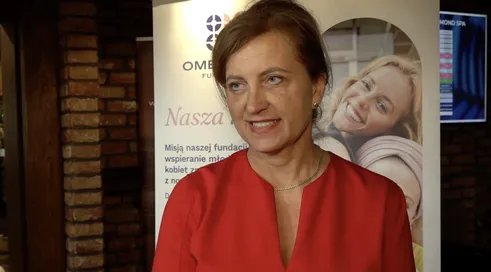
What is so appealing about the "Omejka—a conference on breast cancer in young women" event that you are organizing that so many women who are undergoing treatment or have just completed breast cancer therapy want to attend it?
Above all, it’s about building a community, fostering solidarity, and sharing experiences among patients. Equally important is providing knowledge tailored to each person’s individual needs—knowledge that helps them feel safe and well cared for during therapy, understand the next stages of treatment, and prepare for any changes in the therapeutic process. Such knowledge helps patients build a sense of emotional stability and become informed partners in their conversations with experts and doctors. This is particularly important because breast cancer treatment often lasts many months: half a year, a year, and in the case of patients undergoing radical treatment, even nearly two years.
We also have a group of patients living with chronic conditions, and in their case, the situation is even more complex and dynamic. This group requires special attention and sensitivity, as their treatment is a lifelong process. Our goal is to ensure that their lives are as long as possible and of the highest possible quality.
One of the most aggressive forms of breast cancer is HER2-positive breast cancer. Today we know that breast cancer is not a single disease but several different ones. Thanks to advances in medicine, each of them has a distinct treatment pathway. What led to the development of therapies specifically for this subtype that offer a chance for a permanent cure?
It is indeed something of a paradox. HER2-positive breast cancer is one of the most aggressive subtypes of the disease, yet it is also one of the best understood biologically. Thanks to many years of research, scientists have gained a thorough understanding of the role of the HER2 receptor, which is responsible for tumor growth and development. This knowledge has enabled the development of targeted therapies that act directly on the mechanisms driving the disease. However, the real breakthrough came with the introduction of combination therapies, known as “dual HER2 blockade.” Thanks to this approach, we can now control the disease more effectively and significantly increase the percentage of patients who have a chance at a complete cure. It remains an aggressive cancer, but with early detection, proper diagnosis, and well-planned treatment, we can achieve outcomes that seemed impossible just a dozen or so years ago. Multicenter international studies clearly indicate that every patient with this cancer subtype who carries markers of an increased risk of recurrence should be treated with dual blockade, whether in preoperative regimens, as postoperative adjuvant therapy, or in a purely postoperative regimen—that is, as adjuvant therapy. This is a must. This treatment regimen has long been known and implemented as the primary line of treatment in the United States. It is also used in centers across Europe. It is not available in Poland, and we must expand our treatment pathway in order to increase the number of patients who are cured.
If you could change one thing about the postoperative treatment of Polish HER2-positive patients, what would be most important—the effectiveness of the treatment itself, or making the treatment less burdensome and better suited to their daily lives?
The most important thing is that we should not have to choose between treatment efficacy and the patient’s quality of life. Modern oncology shows that it is possible—and necessary—to pursue both of these goals simultaneously. Of course, the foundation remains treatment efficacy and increasing the chances of a lasting cure. That is why I would consider the most important change to be ensuring that all patients who can benefit clinically have access to comprehensive treatment in line with current medical knowledge, including dual HER2 blockade in postoperative therapy. This is not some breakthrough that was suddenly discovered. Its effectiveness is confirmed by data from the largest U.S. centers. And that is, in fact, what matters most, because this isn’t some whim—we’re not suddenly wanting to administer a therapy that’s unwarranted just because we know the factor, without knowing whether it will actually prolong time to progression or patient survival. We must fill this gap in Poland.
At the same time, the way the therapy is administered plays a huge role. We must not forget that before a woman became a patient and walked through the doors of a doctor’s office, she was an active participant in social life and fulfilled various social roles. That is why solutions that limit the time spent in the hospital and reduce the burdens associated with treatment are so important. Subcutaneous forms of HER2 therapy are an excellent example of this approach. They reduce the administration time to just a few minutes, are more convenient for patients, and do not compromise the effectiveness of treatment. And what I consider clinically very important about these subcutaneous forms is the shorter adjustment period after starting this therapy. For the patient, this means less time spent on treatment, less strain on the body, and a greater ability to function normally. Let’s not take that time away from her. Besides, the cancer is already doing that for us, so if we can give her that time, let’s do so in a truly sensible way.