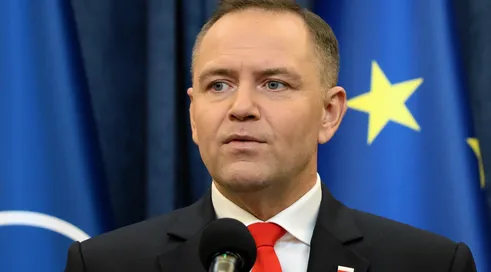
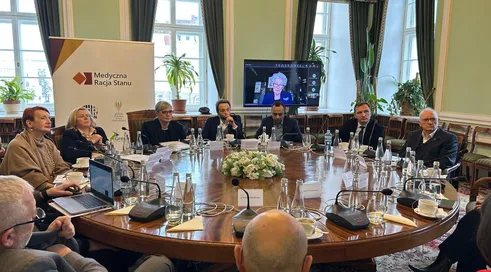
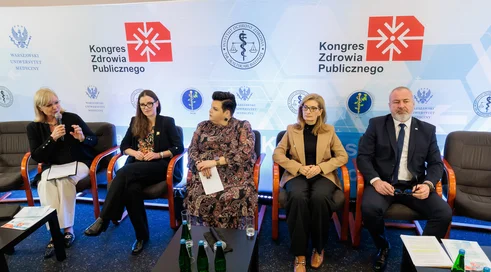
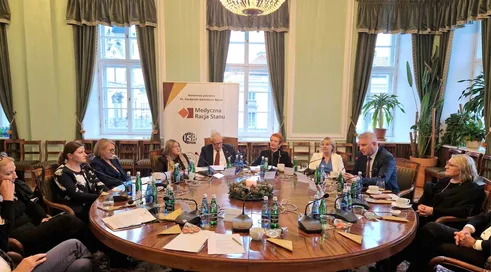
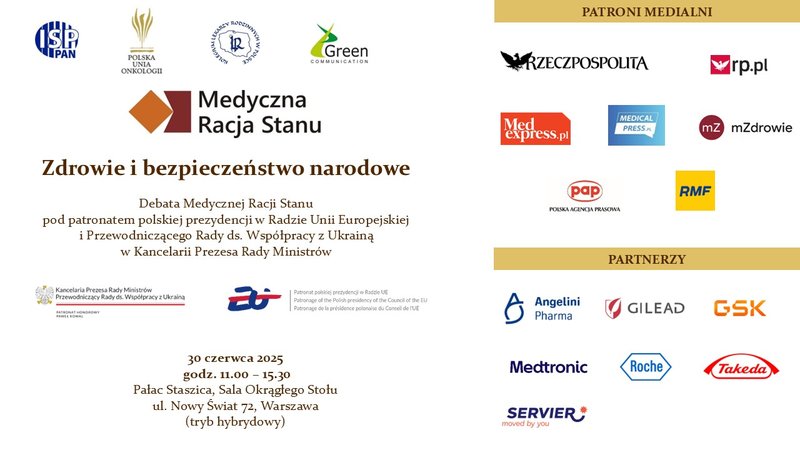
- The Polish presidency's agenda for health - understood as the health of the EU population, the efficiency and effectiveness of health systems, as well as unimpeded access to medicines - has set the priorities of the European Commission's work for the current term. And, most importantly, we are already seeing its first effects," summed up the Polish presidency of the Council, Adam Jarubas, chairman of the European Parliament's Public Health Committee, during the Medical Rationale of State on June 30.
Medical Rationale of State summarized the Polish presidency in the area of health

Published July 22, 2025 12:00
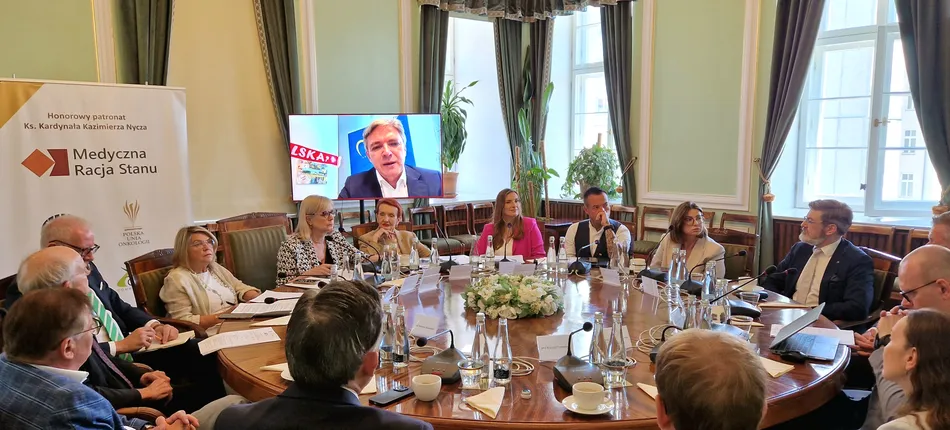
Adam Szłapka, Minister for European Union Affairs, counted progress in the work on European integration of the health security system, the continuation of the European Health Union and support for initiatives on the digitization of health systems and the exchange of medical data in the EU among significant achievements.
Adam Jarubas pointed to the compromise on the Pharmaceutical Package - the largest reform of the drug market in the Union in 20 years, aimed at improving the availability of medicines, including those for unmet medical needs, rare diseases, antibiotics at prices that European patients and EU countries' budgets can afford.
According to Magdalena Sobkowiak-Czarnecka, Undersecretary of State of the European Union Division of the Chancellery of the Prime Minister, the Polish presidency has succeeded in raising the issue of the mental health of children and adolescents to a level not previously seen in the EU. She noted that the mental health of children and adolescents depends not only on EU health ministers, but also on cooperation with ministers of economy and technology. The undersecretary also referred to the issue of drug security, pointing to the fact that Europe is dependent on external markets, which was vividly verified by the health crisis caused by the COVID-19 pandemic - The geopolitical situation means that the EU can count primarily on itself. We have already started to do this in the arms industry - this is the first time in the EU that there is such money for armaments (...), but this is also happening on critical substances," she explained.
According to Prof. Pawel Kowal, chairman of the Parliamentary Committee on Foreign Affairs and co-founder of the think tank (MRS), it is important not to separate health and security issues in a broader context. - Security starts with health. From drug security, to the mental health of children and young people, to the digital transformation of care systems and independence from Russian raw materials, he argued.
New health challenges - rise in HIV infections
MEP Adam Jarubas also spoke about the challenges posed by the 12% increase in HIV infections in Europe. He pointed to the urgent need to strengthen prevention efforts, which were one of the priorities of the Polish presidency, including the spread of pre-exposure prophylaxis.
Dr. Anna Marzec-Boguslawska, director of the National AIDS Center, recalled that in June of this year, the US Food and Drug Administration approved an injectable form of HIV prevention. According to her, it will bring great benefits to many people. - These are people who, for various reasons, are unable to take medications or their lifestyle prompts them to use the injectable form, she explained. She added that pre-exposure prophylaxis is a huge boon. - Equally important as raising awareness and countering stigma and discrimination against people living with HIV is implementing therapeutic advances. Ending the HIV epidemic by 2030 is possible, but requires decisive political action, investment in prevention, and partnership with community organizations, MEP Adam Jarubas added.
Prof. Milosz Parczewski, national consultant in infectious diseases and president of the European Aids Clinical Society (EACS), pointed out that HIV infections in Poland have also increased in the last two years, and not just through the war in Ukraine, but through very widespread transmission in our society. - We don't have access to very good prevention, which is within reach. And we could reduce by many times the number of new infections with this virus. Most European countries have such programs," he lamented. The monthly cost of a drug used to prevent HIV infection is 5,000 zlotys.
Dr. Anna Marzec-Boguslawska reminded of the possibility of HIV testing by PCPs and antiretroviral treatment under the Minister of Health's program, which is currently used free of charge by more than 21,000 patients, including 3,400 refugees from Ukraine. She informed that the National AIDS Center has issued a publication, Modern HIV Prevention, which health education instructors in schools will be able to support.
Lack of adherence costs money
Adam Jarubas, in the context of the Polish presidency, stressed that adherence is a key pillar of secondary prevention. - Non-adherence to therapeutic recommendations non-adherence is one of the most underestimated and costly health challenges in Europe. European Commission estimates indicate that up to 50% of patients with chronic diseases do not adhere to medical recommendations, leading to some 200,000 premature deaths annually, thousands of hospitalizations and generating costs in excess of 125 billion euros, he calculated. - Adherence determines the effectiveness of treatment in areas such as cardiovascular disease, diabetes and COPD. Without ensuring continuity of treatment, even the best-designed early detection programs will fail, he added.
Prof. Krzysztof Narkiewicz, head of the Department of Hypertension and Diabetology at the Medical University of Gdansk, pointed out that a 30-year-old in Poland diagnosed with hypertension, hypercholesterolemia and the beginnings of diabetes has a 20% probability of continuing therapy after a year. Which means that he will soon have a heart attack, stroke, failure, kidney failure, etc. - Therefore, we must do everything to make this patient interested in his own health," he appealed. He pointed out the need to involve family physicians and pharmacists, to use computerization and extensive education. - Family physicians already have the tools: My Health, electronic systems and the availability of information on how patients are buying their medicine. Computerization has also made a lot of things easier and the doctor has time to ask what medications the patient is taking, does he have any concerns? - he said.
Denmark, which took over the presidency after Poland, also places adherence among its priorities. Bogi Eliasen, director of the Department of Health, Copenhagen Institute for Future Research, spoke about studies showing that 30% of the burden of chronic patients who end up in the hospital could be avoided with good adherence. - We will be addressing secondary adherence, i.e., the correct approach to managing chronic diseases by increasing patient self-care and managing diseases at home, he pointed out.
- The goal is to keep the patient as far away from the hospital as possible by offering digital tools. The key is personalization, as well as shared decision-making together with the patient, removing administrative barriers to maintain a close relationship between the patient, clinician and pharmacist, he added.
Vaccination part of prevention
One of the health priorities of the Polish Presidency of the Council of the EU was prevention, a key element of which is immunization. During the presidency, the availability of recommended vaccinations was increased, educational campaigns were launched, and cooperation with local governments and the medical community was strengthened. The Ministry of Health is working on streamlining the patient pathway for immunization, including the introduction of more flexible solutions allowing vaccination at pharmacies or POZs.
- However, are we doing enough to implement these vaccinations? Because just because they're on the list doesn't mean everyone is vaccinating," noted Professor Krzysztof Tomasiewicz, president of the Polish Society of Epidemiologists and Doctors of Infectious Diseases.
He regretted that the National HCV Elimination Plan has not been implemented.
- We are one of the few countries that does not have such a program. The My Health program has great prospects and chances for success. But what is needed is testing not only in PCPs, but also in EDs and hospitals, possibly in AOS. This is a test that costs a dozen or so zlotys, and from the perspective of a practitioner who sees a patient lying in the hospital several times, where no one has given him an anti-HCV test, and in whom he is suddenly diagnosed with cirrhosis or primary liver cancer, his hands are falling off," he lamented.
Poland getting heavier
Senator Agnieszka Gorgoń-Komor reminded that Polish children are gaining weight at an alarming rate. - And once an obesity-related disease occurs, it should be treated, as it is prevention over 211 other disease entities. And it's not just a matter of drug reimbursement, but to make the KOS-BAR program available to these patients," she pointed out.
She reported that the Health Minister's Anti-Obesity Team is developing some guidelines and KOS-BAR is expected to enter the guaranteed benefits.
Prof. Leszek Czupryniak, head of the Department of Diabetology and Internal Diseases at WUM, reminded the audience that Poland has 9 million obese people and another as many overweight. According to him, GLP-1 drugs will be taken by almost everyone, because they not only reduce body weight, but also cardiovascular risk, they also have nephroprotective effects. And additional studies show that they inhibit memory loss in early areas of dementia, and will have applications in the treatment of alcoholism. He noted the need for the system to prepare for reimbursement of these drugs for all indications. - We should reimburse drugs for obesity, although the opinion will be that all a fat person has to do is not eat, he will lose weight. But that doesn't work. Obesity is a serious chronic disease and requires chronic therapy. And it is much better to treat it at an early stage than its consequences later," he recommended. He stressed that the KOS-BAR pilot programs of two-year surveillance of patients who are qualified for surgical treatment of obesity have worked.
Mental health
Mental health of children and adolescents was an important issue during the Polish presidency.
Dr. Aleksandra Lewandowska, national consultant in child and adolescent psychiatry, pointed out that child and adolescent mental health care must be embedded in public health. - Without this, we absolutely cannot lay out further strategies and policies, she stressed.
Among the activities undertaken during the Polish Presidency, the active participation of young people in the work of experts deserves emphasis. They took part in conferences, and the end of the presidency was held at the Gdynia Naval High School with the participation of young people. - Young people said: adults, we are your victims, because you are only shaping future consumers for yourselves. Often not having the support of our families, we are helpless and defenseless. We can very easily enter sites that are a threat to us, experience aggressive content that shapes us. Do everything in the context of legislative solutions so that we have less access, so that adults know what health is holistically and how to take care of each other, so that the subject of health science is not optional, but mandatory. Students from the High School in Gdynia showed how extra-curricular activities are extremely important, pulling young people out of the online space into the offline space, she said. The fruit of the Polish presidency is a report created together with the WHO on the impact of technology on the mental health of children and adolescents.
Agnieszka Leszczynska, CEO of Angelini Pharma Poland, pointed out that in 5-7 years depression will be the most prevalent disease in the world, and it is necessary to prepare for this. - We launched a campaign last year under the title "Straighten up your outlook" to fight the stigma of brain diseases. We need to educate the public, and here we see a very big role for the general practitioner, because he is the only doctor that 90% of Poles deal with. As part of the new school year, we wanted to do an Olympiad for children on mental health with the Ministry of Education and Health," she informed.
Oncology priorities
Colorectal cancer is the third most common cancer in terms of incidence in both women and men. Metastatic colorectal cancer has a low survival rate. Treatment goals focus on prolonging life, delaying progression while maintaining quality of life. Prof. Tomasz Kubiatowski of the Department of Clinical Oncology with the Gynecologic Oncology Subdivision at the F. Chopin University Clinical Hospital in Rzeszow pointed out that in stage four cancer, longer survival depends on the availability of new therapeutic options in the second and subsequent lines of treatment. - This is all the more important because these are often patients who are in good general performance status, and therefore the fight to extend survival time is a priority. But it is important to remember that this must not come at the expense of a significant deterioration in quality of life. It's not about keeping the patient in the hospital and having him go to the Emergency Room all the time with complications. He should function in his environment, with his family or friends. And this is the absolute priority of oncology," he said.
The expert reported that there is a new drug fruquintinib, which is a blocker of receptors for vascular endothelial cell growth factor, receptor one, receptor two and receptor three. It has the effect of prolonging the disease progression-free time, but also the overall survival time.
Drug safety
MEP Adam Jarubas recalled that Europe today imports 80% of medicines or substances for their production. - We have to ask ourselves what if, as with energy from Russia, we come to face an overnight cutoff of imports of these drugs. There is a certain level of drug production on which the health and lives of Europeans depend, which draws that line between business as usual and safety.
We need to secure this level in the Union, pulling production and supply chains to Europe, diversifying supply based on certain partners sharing our value system and our vision of the world on secure trade routes, he recommended.
Prof. Monika Raulinajtys-Grzybek of the Warsaw School of Economics (SGH), co-author of the report Drug Supply Security and the Military Security of Poland and Europe, reported that in Ukraine, problems with the availability of essential medicines emerged within a week of the start of Russia's attack.
- If we have money to fund munitions and tanks, there should also be money to fund drug production. We need powerful financial support to support the production of active substances within the EU. Of course, we won't produce everything. But we have European and national Critical Drug Lists, and we can distribute production among countries," pointed out Katarzyna Piotrowska-Radziewicz, director of the Department of Drug Policy and Pharmacy.
- We should establish with other countries to exchange substances. Our drugs are available in 140 markets and we have 3 substance factories. This is quite enough to secure 140 markets in active substance," noted Joanna Drewla, CEO of Servier Polska
- The first swallow of appreciation for local production appeared in the reimbursement law. And we convinced the head office to move the production of all our reimbursable drugs to a plant in Poland. At the moment 86% is produced here. Next year it will be practically 100%," she informed. In her opinion, there is no mechanism to encourage new investments. - We need to have a guarantee of the sale and price of the drug to invest resources and time. Assistance is also needed to remove administrative barriers to new investments. We are starting a large investment and environmental decisions, development conditions are some nightmarish processes with no deadlines. Some kind of administrative fast track and such a round table of many ministries would be useful, so that we can talk together about how we can attract these investments to Poland," she pointed out.
Topics
Medyczna Racja Stanu / Pakiet Farmaceutyczny / Unia Europejska / Europejska Unia Zdrowotna / integracja europejska / adherencja / leczenie HIV / cyfryzacja / HIV / zdrowie publiczne / profilaktyka / Adam Jarubas / zdrowie psychiczne / polska prezydencja / choroby rzadkie / testy HIV / dane medyczne