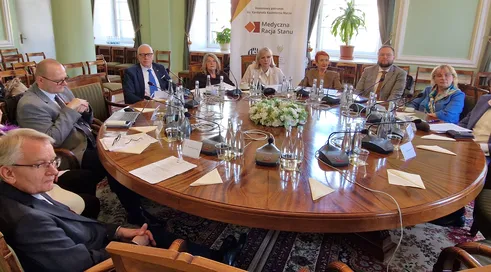
According to experts in the Medical Rationale of State, 2025 saw an increase in the importance of health challenges in public discourse. The Dec. 18, 2025 debate summarized changes in the health care field in the ending year and identified challenges for 2026. - demographics related to reproduction, to civilization diseases, especially obesity, as well as to improving the quality and availability of services and the effectiveness of systemic measures taken.
Medical Rationale: We count our health

Published Jan. 14, 2026 06:47
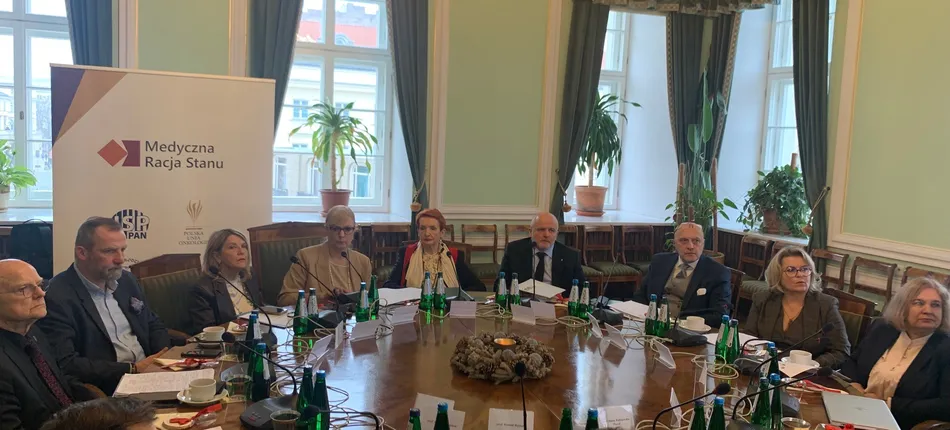
The "We Count Our Health" debate was a continuation of the "Power of Women" campaign, implemented under the patronage of Monika Wielichowska, Deputy Speaker of the Sejm.
Parliamentarians on the strategic role of health
Prof. Pawel Kowal, co-founder of the Medical Ration of State, referred to the strategic dimension of health, pointing out that health policy should be an integral part of state security and a tool of Polish diplomacy. According to the chairman of the Sejm's Foreign Affairs Committee, investment in the health of the population strengthens Poland's position on the international stage and is a condition for long-term stability, including economic stability.
Adam Jarubas, chairman of the European Parliament's Committee on Public Health (SANT), referring to the title of the event, explained that we count our health when we provide quick help for suffering and, given the opportunity, prevent its recurrence in time. The MEP paid particular attention to the growing importance of brain diseases, including neurodegenerative diseases. - The emergence of new therapies offers a real chance to change the prognosis and improve the quality of life of patients, he explained. He also pointed out that it is crucial to ensure, including in diseases of civilization, rapid and equal access to innovative treatments and to strengthen early diagnosis and prevention at the system level.
Cardiovascular diseases, the number one cause of premature death worldwide, and neurological conditions, which have direct social and economic consequences across the European Union, have recently been the subject of the SANT Commission's work. - A public hearing, broadcast in all EU languages, on neurological health has been scheduled for February 1, 2026, MEP Adam Jarubas encouraged online participation.
In the context of demographic challenges, MP Urszula Koszutska pointed out the value of the in vitro program supporting the treatment of infertility, which is becoming a growing problem among both women and men. The chairwoman of the Parliamentary Group for Poland's Demographic Future pointed out that the program brings measurable results, and infertility is a disease of civilization requiring systemic support. - Thanks to modern medicine, we are increasing the fertility rate of our country, in addition to allowing the realization of the need for parenthood in many Poles, she added from the perspective of a psychologist.
The importance of prevention and lifestyle was emphasized by Dr. Agnieszka Gorgoń-Komor of the Senate Health Committee, noting that these are the factors that most determine the health of the population. - Health neglect at an early stage of life translates into increased morbidity and treatment costs in the future, she explained. The problem of low health awareness of obesity disease and metabolic disorders was pointed out by MP Małgorzata Niemczyk. - Patients often, due to lack of knowledge, do not seek help from specialists, which results in delayed diagnosis and ineffective treatment, she lamented, seeing opportunities to improve the situation in strengthening health education, making physical education classes more attractive from an early age and developing modern sports infrastructure that will benefit Poles of all ages. Senator Jolanta Piotrowska also spoke about the need for a holistic approach to health, stressing that the illness of one family member affects the functioning of the entire family environment, which should also be supported, sometimes psychologically. - Effective health policy requires the cooperation of many ministries, as health condition consists of, among other things: air quality, sports, education, gainful activity," concluded the vice-chairwoman of the Senate Committee on Family, Senior and Social Policy.
Prof. Alicja Chybicka of the Parliamentary Health Committee drew attention to the groundbreaking role of innovative, gene-based therapies in the treatment of cancer and rare diseases. - Modern therapies today make it possible to save the lives and health of children who had no chance to do so just a few years ago, the MP pointed out, calling for the need to put the patient, not economic values, at the center and to ensure continued access to treatment within the health care system.
Infertility treatment a state health priority
As of June 2024, couples facing infertility problems have equal access to IVF under a government program that will last until the end of 2028. 2.5 billion zlotys have been allocated for the program. The program funds the entire IVF procedure - couples' qualification, mandatory testing and all procedures. Most countries do not provide patients with this number of cycles, nor do they fund oocyte donation. For the first time, the program protects the fertility of patients with oncological disease.
Prof. Rafal Kurzawa, head of the Department of Gynecology and Procreative Health, Faculty of Health Sciences, PUM, president of the Polish Society of Reproductive Medicine Embryology, spoke about the achievements of reproductive medicine. - This is space medicine. A father can become a man whose sperm count is less than the number of cycles in women per year or over a lifetime. Healthy babies are born to people who have genetic defects," he enumerated. He stressed that the staff in Poland is the best educated in Europe. It is more than 140 specialists in gynecological endocrinology and reproduction. He informed that in Israel 10% of children are born after IVF, while in Poland so far 2-2.5% are born. - I think this program will make it about 5%," he announced.
In 2025, the health ministry distributed PLN 600 million for the program. More than 41,000 couples have qualified, more than 8,000 children have been born, more than 10,000 cryotransfers have been carried out from embryos created prior to the program's entry into force, more than 1,500 people have signed up for fertility preservation under the program, and more than 1,300 have frozen gametes under fertility preservation.
Experts pointed out that initial calculations indicate that funding is too low. At 800 million zlotys a year, tens of thousands more children would be born than before the ministerial program was run. Prof. Rafal Kurzawa added that care is not yet coordinated and comprehensive, and unfunded at every stage, such as intrauterine insemination. - Comprehensive care is needed for women and men with fertility problems from simple diagnostics to the use of the most specialized methods, he pointed out. He regretted that in Poland there are many centers and doctors who use unproven therapeutic methods. Eliminating single women is also a problem. He pointed out the need to build adequate knowledge about reproduction, fertility, human sexuality from an early age. - This should be taken out of the ideological debate in Poland, he noted.
Prof. Robert Spachinski, national consultant in gynecological endocrinology and reproduction, stressed that IVF will not reverse the unfavorable downward sloping curve regarding birth rates and the number of women willing to start relationships and have children, but it is a significant contribution and couples who want to have offspring get valuable support.
Unmet medical need in the treatment of plasmocytic myeloma
Prof. Krzysztof Giannopoulos, president of the Polish Society of Hematologists and Transfusiologists, stressed that modern therapies are improving treatment outcomes in hematology, including in the treatment of myeloma. - Together with the Ministry of Health and the National Health Fund, we have done an updated analysis of patients included in therapy after 2015. Considering the reimbursement decisions of recent years, we can see tremendous progress in the survival of both transplant-eligible and ineligible patients. Patients who previously lived 3 years now have a median survival of more than 10 years. And recent reports indicate a projected median time to progression of 17 years, he reported. He added that two regimens are currently in the reimbursement process for first-line treatment: daratumumab in combination with lenalidomide, bortezomib and dexamethasone for transplant-eligible and ineligible patients. The myeloma community is waiting for the CAR-T technology to be reimbursed. The reimbursement process for the first molecule only began in January this year. Reimbursements for new therapies will also be needed in the second line. - Two reimbursement processes are underway - belantamab in combination with pomalidomide and deskamethasone or belantamab with bortezomib and dexamethasone, he pointed out. - This is especially important, because patients after the first line of treatment have very effective therapies, but exhaust their therapeutic targets. And in the second line of treatment and subsequent relapses, we have to look for new targets. That target is the BCMA antigen. Registration trials have shown tremendous efficacy of this therapy. In one, it showed prolongation of overall survival, and in the other it showed twice the efficacy in terms of progression-free time. We look forward to reimbursement decisions next year for plasmocytic myeloma patients to further observe the clinical benefits, which are already quantifiable," he added.
New therapy in glioma
Prof. Rafal Stec, head of the Department of Oncology at WUM, pointed out that glioma is an incurable disease, even if it is initially a milder disease over time it comes in a more aggressive form and despite intensive treatment - chemotherapy, radiation therapy, surgical treatment - it has not been cured so far. - We want the disease to become chronic. We won't cure it, but we can control it, achieving a very good quality of life for patients," he pointed out. He explained that the new therapy is linked to an abnormal gene that produces a substance that drives cancer cell growth. - The drug vorasidenib for those having a mutation in the isocitrate dehydrogenase gene inhibits the activity of this gene. This is such a key to the lock, because the drug blocks the gene and thus the activity of the tumor, he explained. This results in long-term remission with maintenance of quality of life. Until now, patients after incomplete surgery had to receive radiation therapy or have a second surgical intervention, possibly boosted with chemotherapy. This worsened their neurological and mental functions. - They were alienating themselves because they were unable to form sentences properly. Not to mention that they were not performing social, family and professional roles," he pointed out. - The new drug is taken in pill form. It is very well tolerated, has few side effects, and is taken as long as it works. However, this is the first therapy in more than 30 years. In other cancers, recommendations change 2-3 times a year and there is a dynamic development. In contrast, gliomas, like pancreatic and biliary cancers, are the Achilles heel of modern oncology. Meanwhile, this therapy has emerged," he stressed. Vorasidenib has breakthrough therapy status from the FDA.
Treatment of patients with chronic migraine
Prof. Marta Waliszewska-Prosół of the University Center for Neurology and Neurosurgery in Wroclaw recalled that migraine is the second cause of disability, and the first among young women. Approximately 6 million people in Poland have the disease. Chronic migraine affects up to 0.5 million people, primarily young people.
- A cohort study we conducted 2 years ago showed that 40% of Polish migraine patients abuse painkillers, including opioids, which are not recommended for migraine and are available over-the-counter. Perhaps with the opioid crisis in the US, it's worth looking into this problem. Record holders take 700-800 pain pills a month," she lamented. She pointed out that migraine is a huge burden on family physicians and psychiatrists who treat the complications, which are depression, anxiety disorders, increasing social isolation. - We have a whole host of patients who can have children but consciously choose not to, because their head hurts 30 days a month and they are afraid to get pregnant because they don't know how they will cope with motherhood," she added. She stressed that it is not a temporary disease and passes after menopause. It is a chronic disease for life. She recalled that there are already effective biologic drugs that help migraine sufferers get rid of their headaches 30 days a month. - However, the drug program for chronic migraine is limited. It provides for two cycles of treatment. And yet we don't cure migraine patients. They require treatment for the rest of their lives," she lamented. She added that effective migraine treatment is a social benefit, because patients can work, do not use healthcare resources and will not develop complications. - We already have more and more scientific studies that confirm that migraine structurally changes the brain. So we will generate costs for ourselves," she pointed out.
Prof. Konrad Rejdak, head of the Department of Neurology at the University of Lublin, added that migraine is the most costly neurological disease in terms of society, as about 15% of patients have episodic migraine, which can turn into a chronic form affecting 1% of the population. - It is a lifelong disease, but we can stop it," he pointed out. He regretted that the drug program assumes a one-year follow-up period after achieving remission thanks to botulinum toxin, and if the disease returns - instead of starting biological treatment - one has to return to the first therapy, which had only a partial effect. - We hope for flexibility," he urged.
Treatment of diabetes and obesity
Prof. Malgorzata Mysliwiec, head of the Department of Pediatrics, Diabetology and Endocrinology, Faculty of Medicine, GUM, advocated research into the early detection of type one diabetes in children and reimbursement for the use of continuous glycemic monitoring systems and automatic insulin pumps even after the age of 26. - By the time the typical clinical symptoms of diabetes appear and we have to turn on insulin, all the beta-6 cells are destroyed. On the other hand, diabetes develops over the years, and today we can determine the level of antibodies and intervene through lifestyle changes and education, because 50% of children who end up in diabetes centers are already in a ketone coma, and this is a life-threatening condition. Meanwhile, we have the opportunity within the framework of clinical trials to use modern therapy with regulatory T cells and rituximab, which came out of the Gdansk center. By detecting diabetes at earlier stages, we will not lead to the development of full-blown diabetes, or we will slow down the rate of its onset. There will be no acute complications, use of insulin and medical devices," she argued.
Prof. Lucyna Ostrowska, president of the Polish Society for the Treatment of Obesity, called for the implementation of a treatment pathway for the obese patient and reimbursement of drugs for these patients.
- We all say that obesity is a disease, but it's hollow knowledge, because nothing has followed it. Patients with obesity disease are effectively treated in Poland by only 4%, and all responsibility for treatment has fallen on the family doctor. Some patients have managed to be included in coordinated care, but it is in the POZ only for a patient with obesity disease, complicated by diabetes, for example. Besides, only 50% of POZs have taken up coordinated care," she lamented. She added that the KOS-BAR program, which ceased to function as a pilot in March 2025, has been suspended. - It now only treats patients whom bariatric surgeons have managed to qualify and are already post-operative. We are at the stage of evaluating this program, but this does not change the fact that we were promised that it would be a guaranteed benefit from January 2026. Now we know that this will not happen," she informed.
Prof. Leszek Czupryniak, head of the Department of Diabetology and Internal Medicine at WUM spoke about diabetes therapy. - There is a new drug thiothrombotide. - It is slightly better tolerated. It is making an absolute splash. Studies have been released showing that, like semaglutide, it reduces cardiovascular risk," he pointed out. Thiothiopatide was the first and only drug with this mechanism of action - a GIP and GLP-1 receptor agonist - to show higher efficacy than GLP-1 analogs in terms of glycemic control, greater weight reduction, and at higher doses (10-15 mg) resulted in improved lipid profile and blood pressure reduction. Unfortunately, it is not reimbursed. - We should start making these drugs more available for the treatment of obesity as well, for the reason that the benefits will be colossal. It's not just happy citizens, but simply far fewer diseases that result from obesity. I hope that competition will work to bring prices down and, in dialogue with the ministry, we can find a way to make these drugs more accessible," he said.
Expanding reimbursement for adult vaccinations
Prof. Krzysztof Tomasiewicz, president of the Polish Society of Epidemiologists and Doctors of Infectious Diseases, summarizing the year, listed achievements in the field of vaccinations: reimbursement of the hepatitis vaccine, RSV vaccine and, earlier, pneumococcal vaccine, as well as vaccinations that can be carried out by pharmacists. - What's missing is the availability of reimbursed vaccinations in pharmacies, tools that allow pharmacists to verify a patient's eligibility for vaccine reimbursement. And the idea is to make this pathway as simple as possible," he pointed out. He called for expanding the availability of reimbursed vaccinations for patients who are in hospitals, nursing facilities, dialysis stations, simplifying the reporting procedure and further digitizing vaccination cards, automatically generating referrals for population-based vaccinations, and creating a proactive adult vaccination strategy, especially with comorbidities, immunocompromised and wherever it would be cost-effective to prevent infections that can even lead to death for patients treated with very expensive drugs in drug or therapeutic programs.
How to improve adherence?
Prof. Krzysztof Narkiewicz, head of the Department of Hypertension and Diabetology at GUM, pointed out that the cost of non-adherence to medical recommendations reaches up to PLN 12 billion a year. According to him, improving adherence requires training of medical personnel. - We are moving early next year with pre-graduate and post-graduate education, and among students in the next academic year, he informed.
Another condition for improving adherence is the use of electronic tools. - We believe that these tools will be ready in April next year, and this will create the possibility of monitoring adherence to the recommendations of the family doctor and specialist. The electronic tools we use on a daily basis in our work will provide detailed insight into prescription adherence. However, we would not like them to be used only for supervision, but to support and remind patients of the time to buy their next prescription. We believe that pharmacists will also be willing, because they have the knowledge and tools to make many things happen in pharmacies. But there are legislative changes needed, which will take a little longer," he pointed out, adding that when every doctor in Poland has information in a database about all the medicines a patient has taken, the diagnoses he or she has received, the medical events that have happened over the past year, he or she will have significantly more time to communicate and talk to patients.

Topics
Medyczna Racja Stanu / choroby cywilizacyjne / in vitro / demografia / wyzwania zdrowotne / opieka zdrowotna / medycyna / otyłość / niepłodność