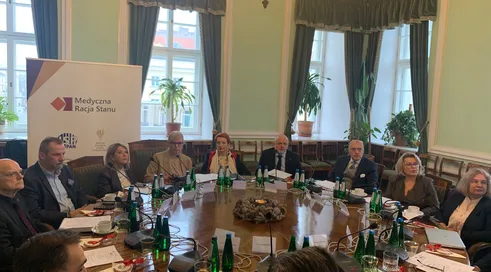
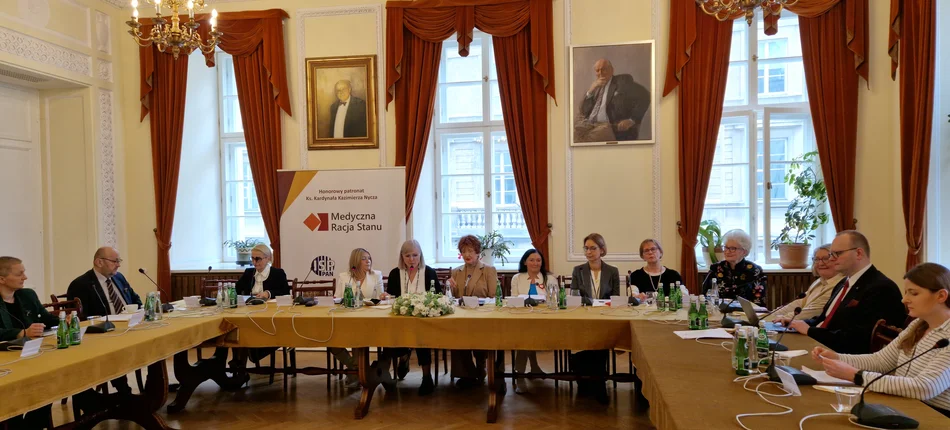
The 8th Meeting of the MRS Rare Disease Expert Council was held on February 28.
Medical Rationale: Rare diseases

Published March 6, 2024 10:38
The need to level the playing field
"We do not expect special treatment for patients with rare diseases, but we call for leveling the playing field for them, reminding that:
- making a diagnosis, not without reason, has lived to hear the term - a diagnostic odyssey, and the protractedness of this process worsens the condition of patients and the prognosis even in those, still few, cases where there is a therapeutic option
- working on a drug for a small number of patients is a clinical and financial challenge, with all its consequences - for researchers, the system, and most importantly, for the patient
- in many cases, the disease is a threat to life, and in chronic conditions - physical and mental suffering
- proper care of our residents experiencing multi-organ injuries is a task for interdisciplinary teams and highly specialized centers, which are in short supply
- if we add to this the frequent cases of traffic exclusion, the impoverishment of the entire family by the disease, the lack of social support, the nonsense and callousness of the regulations that make people with permanent injuries systematically appear at committees to check their motor skills - one can understand the level of frustration and helplessness of themselves, their loved ones and us doctors."
This is how the specifics of the challenges were described by clinicians attending the eighth meeting of the Rare Diseases Expert Council of the Medical Council of State on February 28.
In unity strength
- There are about 350 million patients living with a rare or ultra-rare disease worldwide. In the EU it's 30 million, and in Poland it's 3 million. Recalling, however, the diagnostic problems already mentioned, I would not be surprised if there are twice as many," said Prof. Alicja Chybicka, chairwoman of the Parliamentary Group on Rare Diseases, adding that it is the duty of conscience to find such systemic solutions that will save every life at risk and effectively protect patients from suffering in all cases where this is possible thanks to the progress of medicine.
- We were among the first to call for attention to the most vulnerable. We have been publicizing issues related to the plight of patients suffering from rare diseases since the establishment of the Medical Rationale of State, so that they have become a positive obsession for politicians. Growing access to modern therapies is proof of our effectiveness as well. Long before the pandemic, which proved the validity of our demands, we were pointing out the necessity of establishing and cooperating within the European Health Union. A hard motivation in the context we are discussing today is also the fact that many of these diseases are so rare that research on them can only be conducted on a European scale. A natural consequence of all these arguments, then, will be an effort to include the challenges of rare diseases in the priorities of the Polish presidency in 2025. - added Prof. Pawel Kowal, initiator of the establishment of the Medical Rationale of State and chairman of the Parliamentary Foreign Affairs Committee.
- On February 10, 2024, an appeal from the patient and expert communities to support this idea was submitted to Health Minister Izabela Leszczyna. As Chairman of the Expert Council on Rare Diseases of the Medical Rationale of State and a signatory to this document, I would like to remind you that this is the eighth year that we, among specialists, admonish the fate of our charges, supporting all systemic and clinical solutions that can serve to improve it. More than 100 new available molecules mean for many of them - life and its much better quality. It is gratifying to see the growing awareness and strength of patient associations and the willingness of decision-makers to engage in constructive dialogue. However, the diagnosis and implementation of the updated Rare Disease Plan remains a challenge," said Prof. Zbigniew Żuber, president-elect of the Polish Society of Rheumatology.
Responding to the concerns of patients and clinicians, including a group of experts who have worked pro bono to create guarantees for the proper functioning of the patient care system, Dominika Janiszewska-Kajka, deputy director of the Department of Treatment at the Ministry of Health, announced that the Plan for Rare Diseases should be adopted by resolution as early as March 2024 and will be extended for 2 years, and that expert demands related to access to modern diagnostics, separation of expert centers and proper financing will be taken into account.
Daniel Rutkowski, Acting President of AOTMiT, and Joanna Parkitna, Director of AOTMiT's Medical Technology Assessment Department, emphasized the effort that the agency, in close partnership with clinicians, has put into working on the Rare Disease Plan and evaluating specific therapies. - Last year, while meeting statutory deadlines - and sometimes faster - we performed more than 200 drug evaluations with great commitment from experts and our team. The real challenge facing all of us is the coming time of joint HTA evaluations, which in 2025 we are starting with rare diseases. All drugs that will be registered by the European Medicines Agency will be in joint assessment mode at the same time. What is needed here is the involvement of experts, the Ministry of Health and industry to develop a fast and efficient evaluation model. We will receive a joint clinical assessment in the form of a clinical report, which will give insight into how decisions are made in other countries based on the same clinical document.
Hematology is mainly rare diseases
- Modern, standardized diagnostics is the foundation of modern hematology, and genetic testing is the basis for diagnosis, including of most blood cancers. What is needed is a guarantee of the highest quality of these tests and the ability to properly account for them. The effectiveness of treatment depends on this. In adult hematology, 75 molecular indications have been reimbursed, which means that we are following world standards. In view of the fact that new modern drugs are appearing, it is worthwhile, following the example of recent years, to supplement registration reports from the world with reimbursement reports," said Prof. Ewa Lech-Marańda, national consultant in hematology.
Among these expected additions, hematologists see: access to ivosidenib for the treatment of acute myeloid leukemia, teclistamab for patients with refractory and relapsed forms of myeloma, and ibrutinib in combination with venetoclax for the treatment of adult patients with previously untreated chronic lymphocytic leukemia.
Prof. Krzysztof Giannopoulos, Vice-Chancellor for Doctoral School and Clinical Research at the Medical University of Lublin, also pointed out that the growing number of possible oral and subcutaneous administrations is of inestimable value, allowing patients to have an active professional and family life, also serving to rationalize public spending.
- To plan the right therapeutic path, in this fast-changing world, you need qualified staff with open minds. Meanwhile, data from the end of 2023 says that there are only 593 hematologists in Poland. This is far too few, which also has organizational implications. So it's a good idea to shift the burden of care from inpatient to specialized, outpatient care. Improving the safety of our patients may be helped by the creation of a National Hematology Network, added Prof. Ewa Lech-Marańda.
Rare eosinophilic diseases
Eosinophilic granulomatosis with vasculitis (EGPA) is a systemic vasculitis in the respiratory tract area, lower and upper. The picture of the disease is: allergic rhinitis, asthma, eosinophilia in the peripheral blood, eosinophilic infiltrates in the respiratory system, but also outside it in: the kidneys, circulatory system, nervous system, gastrointestinal tract and skin. Hypereosinophilic syndrome (HES), on the other hand, is a group of rare diseases with marked, persistent hypereosinophilia in the blood. Both diseases are most often diagnosed in 30-40 year olds. They belong to a group of chronic conditions, with periods of remission and exacerbation. The exacerbation phase is life-threatening. Early detection of the disease allows the implementation of treatment that can prevent severe damage to the lungs, respiratory tract, heart muscle, gastrointestinal tract or kidneys. Thanks to advances in medicine, we are now able to effectively treat these diseases, which were fatal until recently. - Unfortunately, in Poland, the basic therapy is steroids, the intake of which is associated with many side effects: the risk of sepsis, thrombosis, pathological fractures... Meanwhile, biological drugs have already appeared in the world, much better tolerated, allowing the patient to return to an active life. They have received a positive opinion from the AOTMiT, so I hope that soon they will also change the fate of our patients," expressed the hope of Professor Piotr Kuna, head of the Department of Internal Medicine, Asthma and Allergy at the Medical University of Lodz.
Congenital angioedema (HAE)
The first signs of this severe, life-threatening disease appear as early as childhood or adolescence as white, confined, non-itchy swellings of various locations, lasting up to three days and recurring with variable frequency. It is estimated that at least half of patients with hereditary HAE will develop, at least one, attack involving the larynx. The risk of death in this case, in the absence of appropriate treatment, is 30%. Even a dental procedure can cause laryngeal edema. Swelling of the genital area, abdomen and face are also considered life-threatening. Treatment of this disease is in the form of emergency and preventive treatment. It is difficult to overestimate the importance of the latter, which consists of constant medication with the intention of minimizing the strength of seizures or eliminating them. The indication for prophylaxis is the frequency of seizures and their location, causing the most serious risk.
- Patients with access to this effective method of preventing dangerous seizures are virtually free of them. However, this is true for only 10% of the group likely to benefit. An effort to change this statistic by also making lanadelumab available to patients with localized facial and genital disease is worthwhile, providing safety for patients and tangible budgetary benefits.
The guidelines of the Polish Society of Dermatology and the Polish Society of Allergology, as well as international guidelines, position lanadelumab as a first-line preventive treatment in the group of patients experiencing the most severe course of the disease and do not indicate the localization of edema, Professor Zbigniew Zuber reminded.
Rare diseases in neurology
Rare epileptic syndromes pose a formidable systemic challenge due to their diversity and difficulty of treatment. Dravet syndrome and Lennox-Gastaut syndrome are among the most severe and drug-resistant epileptic seizures, accompanied by intellectual disorders, motor and behavioral delays, including autism, developmental delay and speech comprehension, autism spectrum disorders, hyperactivity or motor dysfunction. The risk of sudden, unexpected death in the course of epilepsy is also more common here.
Effective seizure treatment is needed to avoid injury, prevent disability and life-threatening complications, but also take care of the patient's quality of life. Cannabidiol and fenfluramine - drugs that have EU registration for use in rare epilepsy syndromes - provide such a solution.
Cannabidiol has been reimbursed since January under two drug programs, as an adjunctive therapy in combination with clobazam. In one of them - in the Medical Fund mode, as a drug technology with high clinical value. The challenge here today is to efficiently contract both drug programs for the sake of patients. Fenfluramine has registration in both syndromes, as an adjunct to treatment with other antiepileptic drugs in patients aged 2 years and older, and is awaiting reimbursement.
According to neurologists, Prof. Konrad Rejdak, president of the Polish Neurological Society, and Prof. Katarzyna Kotulska-Jóźwiak of the Department of Neurology and Epileptology at the "Pomnik" Institute of the CZD, such a severe course of rare epileptic syndromes requires efficient diagnosis and the fullest possible therapeutic range, but also rehabilitation efforts.
Prof. Anna Kostera Pruszczyk, who heads the Department of Neurology at WUM, cited the huge success of modern SMA therapies and access to them in Poland, allowing to change the fate of patients, but also to prevent the development of the disease.
- The challenge, however, remains in the group of neuromuscular diseases of myasthenia gravis, a rare autoimmune disease involving disruption of neuromuscular transmission. The formation of abnormal antibodies here leads to muscle weakness. The first symptoms include facial muscle paresis, drooping eyelids, double vision, difficulty speaking and trouble swallowing. Over time, the disease undergoes generalization. The most dangerous is the involvement of the respiratory muscles. This is how myasthenic breakthroughs develop, threatening death. Great hope for effective and less burdensome treatment than that currently available is offered by two myasthenia gravis therapies registered in the EU in recent months, the availability of which has been called for by Prof. Anna Kostera-Pruszczyk for her patients.
Disagreement with the bad fate of our patients and the need to level the playing field for them - this is the declaration of all participants in the Medical Rationale of State meeting.
It can be hoped that this disagreement will be effective and widespread since the representatives of the Patient Ombudsman, the Ombudsman for Children and the Ombudsman for Civil Rights have also declared their full support, and systematic participation in the dialogue and openness to expert opinions have been declared by representatives of AOTMiT and the MZ.
Professor Maciej Niewada, assistant professor in the Department of Experimental and Clinical Pharmacology at WUM, provided important arguments to decision-makers, proving that it is more expensive than treatment not to treat rare diseases. He also pointed out that the calculated costs in the US for delays in making a diagnosis of a rare disease are sums of up to half a million dollars.
- There are, of course, big differences in the effectiveness of therapies. We have those that have a meager effect, but also those that allow a complete cure. From the perspective of a pharmacoeconomist, I can point to cost-effective therapies with a price tag of tens of millions of zlotys.
Adam Chmura, Deputy Ombudsman for Children's Rights, declaring support for all activities aimed at strengthening the sense of security of patients with rare diseases, pointed out the difficult to accept situation in which an effective therapy exists, but the manufacturer itself does not apply for reimbursement, without which access to it cannot be ensured for those whose fate it could change. - In cooperation with the Ombudsman for Patients' Rights and the Ombudsman, we will take all measures for the welfare of such groups of patients.
From the perspective of the Ombudsman's Office, a serious problem is the malfunctioning of emergency access to drug therapies. - There has been a perversion of the essence of this institution here, due to increasing exemptions in the ability to bring in emergency drugs to save lives. I fear that financial rationale is taking precedence here over responsibility for the fate of the patient. From this perspective, RDTL is becoming a dead institution. The progress of medicine means that we cannot evade the question of whether the State should make the effort to provide effective assistance. It is worth taking into account in this calculation of overcharges and effects the fact that a YES decision will pay off in terms of the patient's regained professional activity, reduction of pensions and expenses for suboptimal medical assistance," said attorney Piotr Mierzejewski, director of the Administrative and Economic Law Team at the Office of the RPO.
Prof. Anna Kostera-Pruszczyk, while calling for access to innovative therapies, also pointed out that an efficient diagnostic process makes it possible, in certain clinical situations, to achieve a satisfactory effect also with well-known and inexpensive therapies. The condition - is a precise diagnosis.
As an important signal to policymakers, Dr. Jakub Gierczynski, a health system expert, cited data from the National Orphan Forum's 2023 audit:
- 85% of rare disease patient organizations say their needs are not being prioritized
- 80% believe that their situation has not improved since the creation of the Medical Fund
- 97% expect improvements and optimization of patient care model
- 90% favor the establishment of expert centers
- 87% indicate the need for access to modern diagnostics, including expansion of the newborn screening program to include new disease entities
- 77% indicate the need for reimbursement access to new drug technologies.
Referring to these data, Prof. Jolanta Sykut-Cegielska, national consultant in metabolic pediatrics, affirmed the importance of the shift in patient care, as advocated by patients, from the hospital to the home environment, which is allowed today by medical advances and is justified in the treatment of Fabry and Gaucher syndromes.
If we remember that it is more profitable to treat than not to treat, if we can reduce bureaucracy in favor of careful listening to the rationale of each side and during roundtable meetings really be partners in discussions that are not easy after all, we are more willing to believe that rare diseases will not be forgotten and patients will be taken care of as well as possible," concluded Prof. Zbigniew Żuber.