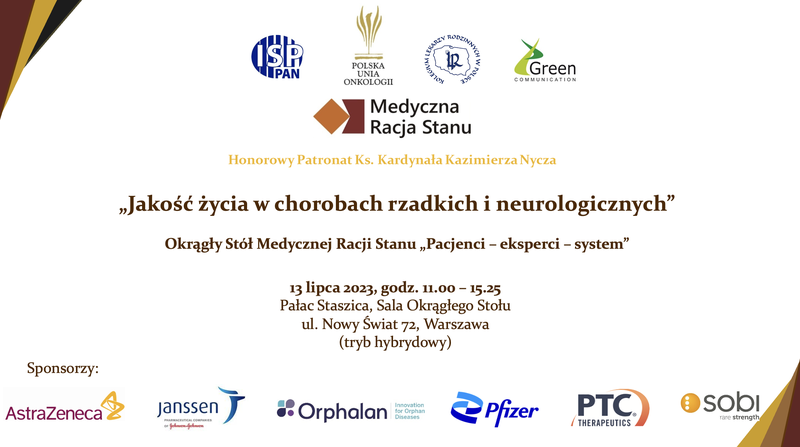
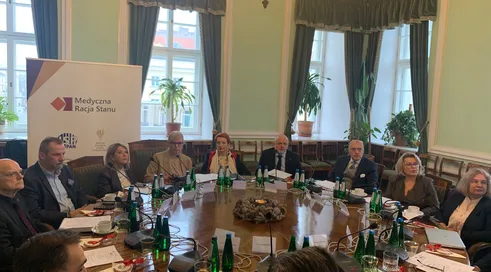
- Diagnosis in rare diseases is the basis in order to support patients systemically and offer them dedicated treatment," emphasized Barbara Dziuk, chairwoman of the Parliamentary Group on Rare Diseases, during the Medical Rationale of State, held on July 13. The discussion focused on the implementation of the Plan for Rare Diseases and the challenges in treating these conditions.
Medical Rationale: Quality of life in rare and neurological diseases

Published July 18, 2023 12:30

The Medical Rationale of State has been supporting the improvement of the situation of patients with rare diseases for several years. In 2021, the Plan for Rare Diseases 2021-2023 was adopted by the Council of Ministers, which provides for the establishment of national reference centers, identified for a selected rare disease or group of such diseases, which will play a key role in integrating care, as well as expert centers working together. Access to diagnostics - including molecular diagnostics - is to be improved. In addition, medical registries for individual rare diseases, an information platform and a rare disease patient passport are to be established. Approximately PLN 130 million has been allocated for the implementation of the Plan for Rare Diseases.
Diagnostics key to diagnosis
Prof. Anna Latos-Bieleńska, national consultant in clinical genetics, spoke about the role of genetic diagnostics, which can shorten the diagnostic odyssey and allow patients' procreative plans to be realized. She informed that at the end of this year, modern methods of genetic diagnosis will be introduced into the basket of guaranteed services, and within three months there will be a new specialty - genetic nurse, thanks to the work of which a geneticist will be able to receive twice as many patients. Work on a specialization program in molecular genetics is also nearing completion. She pointed out that the law on genetic testing is lacking.
Prof. Krystyna Chrzanowska, who heads the Department of Medical Genetics and the Genetic Outpatient Clinic of the "Pomnik-CZD" Institute, pointed out the difficult access to specialists. In the field of clinical genetics, we have 150 specialists nationwide, of which 1/3 are already retired. - Therefore, it is necessary to encourage doctors to choose this specialty. We will also strive to establish a network of expert centers in Poland with staff of the highest qualifications. They will provide guidance for the implementation of certain sentences in facilities closer to the patient's residence," she informed.
Each new one is a breakthrough
As Medical Rationale expert Dr. Jakub Gierczynski stressed, in rare diseases each new drug is a breakthrough expected by patients and clinicians.
According to the Health Ministry, 115 new molecules were reimbursed in 2022, including 37 in rare diseases, and by July 2023, 31 new rare disease molecules had been reimbursed out of a total of 97 new molecules.
As Stanislaw Maćkowiak, president of the Federation of Polish Patients, pointed out, patients with rare diseases are very positive about the operation of the Medical Fund, to which PLN 4.2 billion is allocated annually, including PLN 720 million for reimbursement of drugs for rare diseases and oncology. I hope this trend will continue," he pointed out.
Prof. Anna Kostera-Pruszczyk, who heads the Department of Neurology at WUM, spoke about the multidisciplinary care of patients with rare diseases. She thanked the possibility of dispensing some drugs available in drug programs not only in the hospital setting. She pointed out the problem of patients transitioning from pediatric to adult care.
Enzyme Therapies
Prof. Jolanta Sykut-Cegielska, president of the Polish Society of Congenital Metabolic Defects, head of the Department of Congenital Metabolic Defects and Pediatrics, Mother and Child Institute, talked about the ultra-rare, progressive, life-threatening multisystem disease LAL-D.
Appearing in the first weeks of life, symptoms include persistent vomiting, hepatosplenomegaly, leading to restricted breathing due to mechanical compression of the chest, intestinal bloating, anemia, calcified and enlarged adrenal glands. The clinical course of the disease is dramatic, leading to death of the child within the first 12 months of life. The late form, which occurs in children and adults, is characterized by a milder and slower course. Almost 100% of patients show liver enlargement, elevated total and LDL cholesterol, reduced HDL cholesterol fraction and elevated transaminase activity. Atherosclerosis at a young age with cardiovascular complications occurs, and 50% of patients develop fibrosis and cirrhosis. In the late form, premature death usually occurs as a result of myocardial infarction and stroke, as well as liver failure. In Poland, current treatment is based on adjuvant therapies aimed only at controlling symptoms and treating complications of the disease. Sebelipase alfa is the first and only enzyme replacement therapy for patients with LAL-D deficiency, unfortunately not reimbursed in Poland. - It addresses the cause of the disease by restoring enzymatic activity, improves existing symptoms, and minimizes further disease-related disorders by halting disease progression, the expert pointed out.
Benefiting from such treatment, Natalia Rospara, who suffers from LAL-D, recounted how her health deteriorated as a result of the interruption of treatment due to the pandemic. - It made education impossible, and mentally ruined me and my family," she recalled.
Prof. Jolanta Sykut-Cegielska also spoke about hypophosphatasia - a genetically determined, ultra-rare disease. As a result of it, patients experience dental anomalies, rheumatological symptoms or complications from the muscular and respiratory systems, as well as the kidneys. Patients' lives are associated with tremendous pain, hence the need for strong painkillers. In addition, they are troubled by recurrent fractures, premature tooth loss, bone deformities, rickety changes in long bones, difficulties in mobility, as well as stunted growth and delayed motor development.
In Poland, the mainstay of symptomatic treatment is pain management, the use of calcium, vitamin D and K preparations and bisphosphonates in combination with rehabilitation, surgery and orthopedic procedures.
Asfotase alfa is the first enzyme replacement therapy. The treatment has spectacular results: it increases patients' 5-year survival to nearly 85% and improves quality of life - treated children can function like their peers. - In Poland, the therapy is not covered by reimbursement.
And the earlier the treatment undertaken, the better the results and prognosis," stressed Prof. Jolanta Sykut-Cegielska.
Kamila Anna Dratkowicz, president of the HypoGenek Foundation, who has suffered from hypophosphatasia since childhood, told us that patients wake up every day with bone, muscle or joint pain. - We know that the drug makes life easier, and immobilized patients can walk. We are waiting for the drug to be reimbursed so that we can start living normally," she appealed.
Drug program that no one benefits from
Prof. Piotr Socha of the Department of Gastroenterology, Hepatology, Nutritional Disorders and Pediatrics at the Memorial CZD Institute spoke about rare liver diseases in children and problems with access to their diagnosis. He recalled that there is a drug program for the treatment of Wilson's disease, the results of which is the accumulation of excess copper in the body's tissues, particularly in the liver, brain and organ of vision. However, access to this treatment depends on doctors, who must inform patients of this possibility. In pediatrics, this is the case, but not in adults. In Poland, the treatment of Wilson's disease is penicillamine in the first line of treatment and trientine for patients intolerant to penicillamine. At the moment, adult patients are not being treated in the program.
Prof. Konrad Rejdak, president of the Polish Neurological Society, said that while accessibility to the program is there, patients don't always know about it. And that is why there is no adult patient treated with trientine, which causes fewer side effects.
Katarzyna Lisowska from the "Per Humanus" Foundation pointed out that all patients with Wilson's disease end up in Warsaw because they receive misinformation that there are no drug programs elsewhere. - There has been a drug program for two years now, and no adult patient uses it because no one talks about it, she lamented.
The Medical Rationale of State decided to develop a consensus on the matter within a multidisciplinary team so that the drugs available in the program would be used.
Prof. Zbigniew Zuber, chairman of the Expert Council on Medical Rationing, announced the work of an interdisciplinary roundtable on the issue.
Rare diseases of the lungs and heart
Prof. Grzegorz Kopeć from the Department of Heart and Vascular Diseases at the Jagiellonian University CM and the Center for Rare Cardiovascular Diseases from the John Paul II Specialized Hospital in Krakow spoke about pulmonary arterial hypertension and chronic thromboembolic pulmonary hypertension. - Patients' quality of life is dramatic, as the disease manifests itself in fatigue, and diagnosis is often very late, he pointed out.
In Poland, there are restrictions in the drug program regarding the initiation use of two-drug therapy and the possibility of sequential use of three-drug therapy and macytentan in all three-drug therapies. In the future, after registration, patients will be able to benefit from a new oral drug that contains two active substances (ERA+PDE5i) in one tablet, which should improve patients' compliance with the drug.
Prof. Marcin Kurzyna from the Department of Pulmonary Circulation, Thromboembolism and Cardiology, CMPK, ECZ Otwock added that before there are new drugs, the ones that are already in the program should be used effectively. - For cheaper drugs that have already been in the program for a long time, there should be the possibility to use them more flexibly. We have the possibility of drug combinations," he pointed out. He added that drug therapies available in drug programs should be received by patients not at the hospital, but also at the pharmacy or nearest clinic.
Prof. Jacek Grzybowski, who heads the Cardiomyopathy Unit at the National Institute of Cardiology, spoke about the treatment of transthyretin amyloidosis. He explained that the accumulation of amyloid in the heart causes dysfunction of heart cells, as well as infiltration of its structures, resulting in cardiomyopathy - a disease of the heart muscle leading to cardiac dysfunction and the development of circulatory failure. Poland remains one of the few European countries without access to effective treatment. Access to tafamidis, which reduces mortality and the number of urgent hospitalizations among these patients, is already provided in 19 countries. - The drug helps prevent the development of heart failure, which leads to transplantation of this organ. We are using it in only 65 patients under the early access offered by the manufacturer," he pointed out.
Zbigniew Pawlowski, president of the Association of Families with Amyloidosis TTR, who was qualified for a heart and liver transplant because of the disease, talked about the symptoms and life with the condition. - I am the lucky one who caught the early access program. Having this drug, I can work and, most importantly, I am alive," he said. - The cost of treatment, hospitalization would have been less if the drug had been widely available. Especially since so much has already been invested in the diagnosis of this disease," he explained.
Therapy and the patient's quality of life
Prof. Maria Szczepanska, who heads the Children's Dialysis Subdivision of SUM Katowice, spoke about atypical hemolytic uremic syndrome, an ultra-rare life-threatening disease whose symptom is impaired kidney function. It begins with an infection and quickly leads to deterioration of health. About 20-48% of patients experience damage to non-kidney organs, involving the central nervous system, cardiovascular system, lungs or gastrointestinal tract, leading to strokes, seizures, myocardial infarction, pulmonary hemorrhages, or pancreatitis. Currently, only eculizumab therapy is reimbursed in Poland, which is administered to patients every two weeks in a hospital setting by intravenous infusion. As a result, the lives of patients and their caregivers are subordinated to the disease. Unreimbursed rawulizumab is a long-acting C5 inhibitor of the complement system with a half-life more than 4 times longer than that of eculizumab. Its administration schedule is much more favorable than that of eculizumab, as it is given by intravenous infusion every 8 weeks.
Paul Dreschel of the Association for aHUS patients, whose 14-year-old son suffers from atypical hemolytic uremic syndrome, spoke about life with the disease. He pointed out that current treatment involves the child's absence from school every two weeks and his parents' absenteeism from work. He called for reimbursement for the drug, which is administered every eight weeks and would change the quality of life for the patient and his family.
Rare diseases in hematology
Prof. Ewa-Lech Marańda, national consultant in hematology, spoke about time-limited therapies; venetoclax with obinutuzumab and venetoclax with ibrutinib, and CAR-T therapies of last resort. She noted that reimbursement of venetoclax with ibrutinib is an unmet need in the 1st-line treatment of chronic lymphocytic leukemia in patients without risk factors. Prof. Krzysztof Giannopoulos, Vice-Rector for Doctoral School and Clinical Research at the University of Lublin, pointed out that ibrutinib in combination with venetoclax is a time-limited, all-oral therapy used for 15 months. - The reimbursement benefit will also be financial for the system, as the therapy lasts only one year and three months and can be used on an outpatient basis, he said.
The national consultant also spoke about the treatment of nocturnal paroxysmal hemoglobinuria. In the absence of an effective therapeutic option for patients for whom eculizumab therapy is suboptimal or ineffective, an unmet need is reimbursement for pegcetacoplan. Eligible for such treatment are severely ill patients who remain excluded from professional and social activities despite available treatment, and the failure to optimize therapy is associated with life-threatening thrombotic episodes.
Prof. Marek Hus, who heads the Department of Hematooncology and Marrow Transplantation at the Medical University of Lublin, admitted that eculizumab has changed the face of nocturnal paroxysmal hemoglobinuria. However, 30% of patients are treated suboptimally, and for them pegcetacoplan would be an effective therapy.
Prof. Christopher Giannopoulos also spoke about the unmet need for 1st line treatment of plasmacytoma. Daratumumab in combination with lenalidomide and dexamethasone is a breakthrough regimen and the answer to an unmet medical need for patients who do not have access to the most innovative treatment. Daratumumab in subcutaneous and oral forms added to the current standard of care enhances its efficacy with a similar safety profile and is well tolerated by patients. The regimen, when used as first-line treatment, offers the chance for longer remission times and improves patients' quality of life.
Rare mutations in cancer
Dr. Janusz Meder, president of PUO, recalled that thanks to molecular diagnostics, many cancers are becoming chronic diseases, but ulcerative diseases will also increase. In the case of lung cancer, mutations in the EGFR gene are found in about 10% of patients, much more often in non-smokers or former smokers and in patients with adenocarcinoma. Insertion in exon 20 of the EGFR gene is an ultra-rare mutation, and the percentage of patients is 5-10% of all EGFR mutations. Amivantamab is the only registered therapy targeting insertions in exon 20 of the EGFR gene. The drug is recommended in the latest European and American guidelines: ESMO (2023) and NCCN (2022).
Aleksandra Wilk of the It Cures Foundation reported that patients are awaiting reimbursement for amivantamab.