Every person who pays a health contribution in Poland is entitled to free dental care under the National Health Fund, but as an audit by the Supreme Audit Office (NIK) has shown, for some treatments this is only theory. It turns out that at the root of the problem were small outlays for free dental treatment, which in real terms, taking into account the level of inflation, had not been increased for a decade. A significant increase - by almost 25 percent. - occurred only in 2022, and yet the cost of services reimbursed by the National Health Service at that time per capita amounted to about PLN 60. As a result, only a handful of surgeries sign a contract with the NFZ, and even few patients choose to receive care under guaranteed services.
NIK: Free toothache treatment can give you a headache.... headache

Published May 7, 2024 09:00
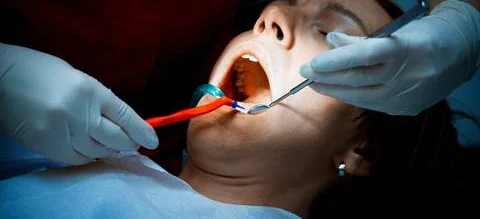
Fot. Thinkstock/Getty Images
Valuations of these services, which are out of line with reality, caused the number of dental clinics accepting patients under the contract signed with the NFZ to drop by 13 percent during the period covered by the audit (2021-Q1 2023), and by as much as more than 38 percent compared to 2009, which was covered by the previous NFZ audit. The NFZ data shows that during the period covered by the audit, queues of people waiting for dental advice lengthened in most clinics across the country, and in some clinics the waiting time also increased. As a result, there were situations in which even patients with a toothache who should have been admitted on the day they reported to the dentist were sent away.
Another problem identified by the NIK was a significant reduction in the scope of publicly financed services. Adult patients, for example, could only receive free root canal treatment from "three to three" and only once, as the National Health Service did not pay for repeated root canal treatment of the same teeth. Meanwhile, the lack of reimbursement for root canal treatment of lateral teeth (premolars and molars) and the high cost of the procedure mean that instead of undergoing treatment, Poles often opt for tooth extraction.
The NIK also notes that the Minister of Health failed for more than four years to bring Polish law into compliance with European Union regulations, which prohibited the use of dental amalgam in the treatment of children under 15 and pregnant and lactating women. Although the Minister's task should be first and foremost a concern for the health of patients, in this case economic interests were more important - the consumption of stocks of this material.
Reimbursement of only some treatments, long queues, and treatment with inferior materials and using outdated techniques resulted in few insured Poles taking advantage of free dental treatment during the period under review. Data from the National Health Service shows that only 17 percent in 2019, even less in 2021. - 14.4 percent, and even though such people increased in 2022, it was still only a little over 15 percent.
The education of dentists is also an important issue. Although the number of dentists per 1,000 residents in Poland is analogous to the average in European countries, the fundamental problem is that only about one-third of them provide services within the public health care system. Thus, state spending on their training, does little to improve the functioning of public health care.
The NIK inspected the Ministry of Health, the headquarters and four provincial branches of the NFZ ( Warmińsko-Mazurskie, Wielkopolskie, Mazowieckie and Dolnośląskie), as well as nine dental offices providing reimbursed services. The period covered by the audit is 2021-2023 (until the end of Q1).
Due to the low valuation of dental procedures in 2021-2023, the number of providers with contracts with the National Health Service declined successively. In 2021 it fell by 23 percent, in 2022 by another 13 percent compared to the previous year, and in 2023 by another 7.4 percent. As a result, there was a significant deterioration in access to publicly funded dental care. In the case of general dental procedures, the largest decline occurred in the Lublin province. In 2021, there were 38.6 percent fewer offices where they could be used than in 2019, and another 5.6 percent fewer in 2022.
Throughout the period covered by the NIK audit, the number of municipalities in which the NFZ did not contract general dental services was also growing. In 2021 there were 134 such municipalities (5.4 percent), in 2022 there were already 198 municipalities (8 percent), and in 2023 (Q1 alone) there were already 233 such municipalities (9.4 percent).
In areas of so-called "white spots," the National Health Service provided reimbursed dental care by, among other things, increasing funding for services at offices located in neighboring communities.
In the case of access to orthodontics and general dental services for children and adolescents, restrictions resulted from both the introduction of age criteria for eligibility for certain services and the materials used in treatment.
The findings of the NIK confirm the annual reports of national consultants in pediatric dentistry and orthodontics. They point out, among other things, that the materials and methods used in publicly funded treatment are significantly limited compared to those used in the private sector, while the age criterion included in orthodontic treatment entitles patients to receive these services only up to the age of 12 and follow-up visits up to the age of 13, meaning that young patients maturing later have limited treatment options, despite the fact that their malocclusion is an absolute indication for orthodontic treatment.
In addition, fewer and fewer students had dental treatment provided at schools during the period under review. Between 2021 and 2023 (Q1), the number of such offices fell by about 4 percent, while the number of offices that provided dental services reimbursed by the National Health Service after signing agreements with the local governments running the schools increased by 2.4 percent.
We should add that the scope of services provided by school-based clinics changed in April 2021. The Minister of Health indicated that the introduced solution: "will ensure a real improvement in the availability of these services for children and adolescents, and their quality." Despite such declarations, the minister did not check whether this was indeed the case, and this despite alarming data provided by the Mother and Child Institute, which reported that in 2021-2023 more than half of schools failed to provide dental care to students.
According to official records, at the end of 2021 we had more than 39.6 thousand dentists practicing their profession in Poland, and at the end of 2022 by more than 1 thousand more - about 40.6 thousand. Of these, only 36.6 percent provided services under the National Health Fund in 2021, and in 2022. - 34.6 percent.