Patients are and must share responsibility for their condition, but there is a special group where this principle doesn't quite work. These are people with rare, genetically determined diseases. Rare, although, as experts point out, not at all rare.
KZP 2023
Rare diseases - a growing social problem and a challenge for the system

Published Dec. 29, 2023 11:22
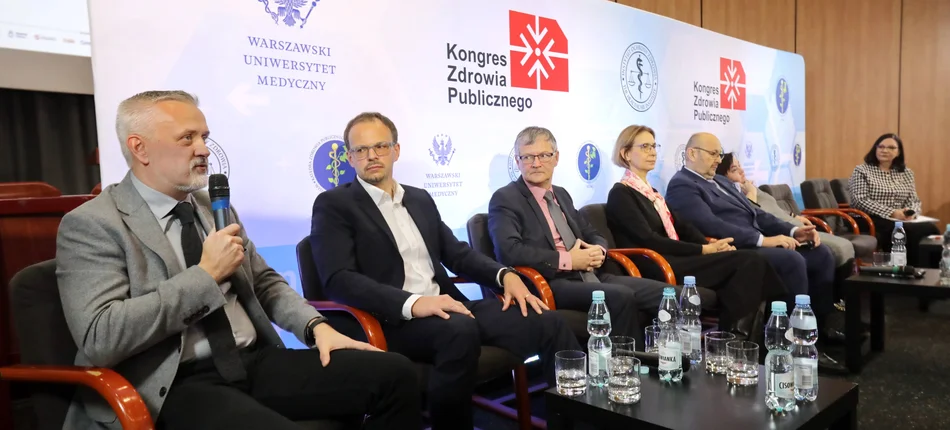
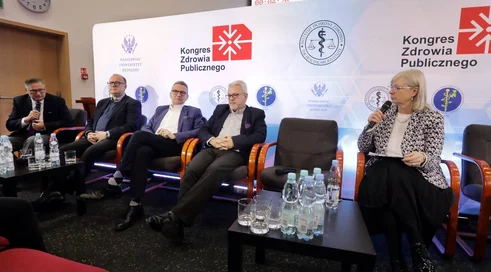
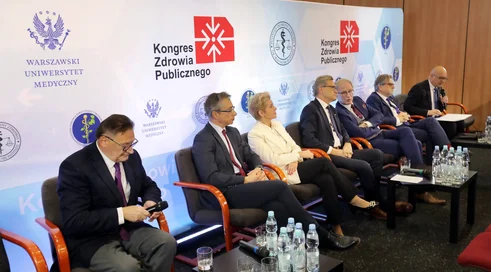
Public health is usually associated with population diseases, infectious or so-called civilization diseases - but rare diseases, of which some 10,000 have already been identified, already affect 2-3 million Poles, so it is difficult to abstract from them, even if individual diseases are a problem of a very narrow group. 10 thousand, already affect 2-3 million Poles, so it is difficult to abstract from them, even if individual ones are the problem of a very narrow group. During the Public Health Congress, experts considered "where we are and where we are going" in this area.
Looking at the big picture, we are again in a moment of uncertainty. On the one hand, there is the National Plan for Rare Diseases, but, as Stanislaw Maćkowiak, president of the Federation of Polish Patients, said, there is a problem with its full implementation in each area. - There is no dot over the i, therefore both from the point of view of the system and from the point of view of the patient there are no results, he stressed. What's more, there's a problem because the Plan is in effect until the end of the year, and if it is not extended, formally the work on it (which has been going on for many years) will have to start from scratch. Last but not least from the perspective of the patients themselves - the document regulates only the medical area, health-related topics, neither the education dimension nor the issue of social support is included.
And what does it look like through the prism of specific diseases? Prof. Karina Jahnz-Różyk, national consultant in allergology, cited angioedema as an example of a rare disease. As she said, there are about 400 patients struggling with this disease in Poland, dozens of whom (about 50) are covered by a drug program launched in 2021 that provides preventive treatment. - Lanadelumab, administered to patients, is an effective and safe drug. After a relatively short period of administration, we have patients who are almost healthy, i.e. without symptoms," said Prof. Jahnz-Różyk. According to the expert, there should be a discussion - in fact, a decision - to expand the indications to include another group of patients, especially those in whom the disease even means life-threatening. The national consultant in allergology, who, she stressed, deals with adult patients with rare diseases, reminded that in the case of people struggling with such conditions, the responsibility of public institutions for their health, safety and comfort of life is significantly greater, because these diseases are genetically determined.
Experts pointed out that although a great deal has changed in recent years for the better in the availability of treatment for rare diseases, still a small percentage of patients can count on pharmacotherapy, because drugs for the lion's share of diseases simply aren't there. And if there are - the availability of them depends first on registration, and then - on reimbursement decisions. - Plasmocytic myeloma, which may be an example of a rare hematooncologic disease, shows the scale of progress, as patients' survival time has tripled over the past two decades. But this progression is directly proportional to the rate at which new therapies are registered and covered by reimbursement," said Prof. Krzysztof Jamroziak, deputy head of the Department of Hematology, Transplantation and Internal Medicine at WUM. - Myeloma is a disease that relapses many times during a patient's life, so we need access to more and more new treatment regimens, such as, for example, the combination of carfilzomib with daratumumab or new bispecific antibodies (like teclistamab) - reimbursement processes are underway here. However, new regimens are badly needed right now, as patients are resistant to available therapies.
Using the example of another disease, or rather a group of diseases, namely amyloidoses, the expert pointed out a kind of lottery - patients diagnosed with light chain amyloidosis have had access to reimbursed therapy for several months, but in transthyretin heart amyloidosis specialists and patients are still waiting for such a decision.
Progress has been made not only in access to drugs, but also, for some diseases, in the area of systemic solutions. An example of success is certainly the treatment of spinal muscular atrophy (SMA), which was revolutionized by the decision to widely reimburse nusinersen (2018), supplemented subsequently by a newborn screening program and the decision to reimburse all available therapies, including gene therapy. - Half a million newborns have been screened, and more than 80 have been diagnosed with SMA and started pre-symptomatic treatment, emphasized Prof. Anna Kostera-Pruszczyk, head of the Department of Neurology at WUM. And although not all the demands of experts and the patient community have yet been met, the treatment of SMA in Poland can even be considered exemplary.
However, as Prof. Kostera-Pruszczyk said, when it comes to rare diseases, we still have many tasks ahead of us. One of the most important is the establishment of expert centers. Admittedly, some of them - those included in the European network - are already in operation, but there is a lot of work to be done with them as well, starting with the proper tariffing of services, because at the moment the payer does not differentiate between valuations and treats services as given in other single-name hospitals, while the treatment of patients with rare diseases is much more costly. The environment is also waiting for a law on genetic testing - despite efforts, it was not possible to pass a nearly ready draft in the previous term of the Sejm.
The high hopes physicians have for the new research-related possibilities were discussed by Prof. Jaroslaw Ćwikła, vice president of the Polish Society for Personalized Medicine, giving the example of neuroendocrine tumors, which in themselves are no longer - due to the general increase in the incidence of cancer - rare diseases, but individual cases, belonging to the same disease entity, can differ dramatically from each other. - We don't know, for example, why small intestinal carcinoma, which has no mutations, has a fulminant course in one patient and literally devastates the body, while other patients live with it for twenty years, he admitted.
The expert also advocated that in the case of cancers, which often elude, he said, the system and reimbursement decisions that do not keep pace with dynamically changing medical knowledge, specialized centers - centers of excellence for the treatment of specific conditions - should have somewhat greater capacity to provide patients with therapy.
Prof. Maciej Niewada (WUM) also followed in the footsteps of reimbursement decisions, still lagging behind medical knowledge, and assessed that, although recently there has been a lot of talk about successes in improving access to innovative therapies in rare diseases, but in fact this progress is due to individual diseases in which positive decisions have been made, because when you look at Poland's place in recognized rankings, we are still very far behind. - The average waiting time for drug reimbursement was more than 900 days in 2021," he recalled. In the same year, of the newly registered drugs, only one was covered by reimbursement.
Topics
KZP 2023