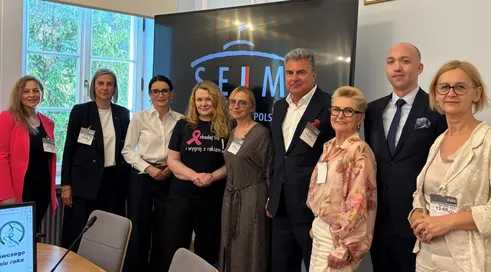
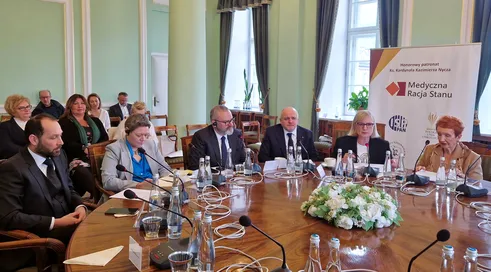
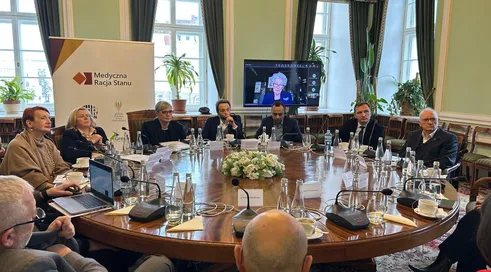
Molecular diagnostics in oncology is too little. There is little investment in it, as it is only 0.5 percent of oncology spending. Few patients use it - only a dozen percent of patients, while in some cancers it should be standard. These were the conclusions of the Roundtable for Molecular Diagnostics, held in early February at the Staszic Palace in Warsaw.
Roundtable for Molecular Diagnostics: What can be done to make it better?

Published Feb. 21, 2024 09:41

fot. Piotr Wójcik
- We strive to ensure that all patients in Poland, especially those with lung cancer, for whom the performance of molecular tests is crucial, have equal access to such services, so that it is not the case that only some patients have treatment in accordance with current medical knowledge, and the rest do not. This is not why we are trying to get modern therapies into the drug program, so that patients don't benefit from them. Very few people benefit from innovative therapies, precisely because molecular testing is not done. It's also increasingly the case that patients have tests ordered, but doctors don't wait for the results, they just give chemotherapy," said Aleksandra Wilk, director of the Lung Cancer Section at the To Się Leczy Foundation.
- We have a strange paradox in which there are tools for genetic testing and there are targeted therapies, and the problem is that the two cannot meet. The patient, instead of benefiting from modern therapies, is held back at some point. He can't take advantage of modern therapies because he can't do genetic testing. One would have to wonder why this problem is there and why access to testing varies so much regionally," added Dorota Korycinska, CEO of the National Federation of Oncology.
Meanwhile, as Anna Kupiecka, president of the OnkoCafe Foundation, emphasized, if a null patient in a family is tested well and comprehensively, the consequences of detailed molecular testing also translate to the patient's family. This is because it gives knowledge of what mutations the patient's relatives may be carrying. This is also gigantic knowledge for doctors for the future. In turn, Krystyna Wechmann, president of the Polish Coalition of Oncology Patients, pointed out that the patient's diagnostic path is currently too long. If the pathomorphologist reported the material for further examination, it could be shortened significantly.
Clinicians addressed the demands made by patient organizations. Prof. Piotr Rutkowski, chairman of the Polish Oncology Society, stressed that molecular diagnostics is a very important test, but one that can be used to a limited extent.
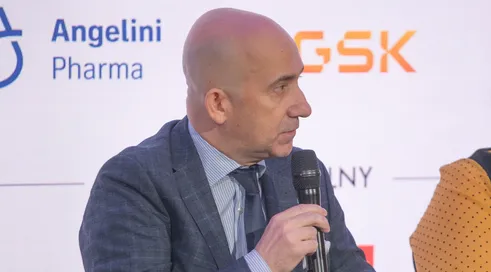
- It has its indications and AOTMiT has sanctioned it. We are at the stage of the Health Ministry's decision on this test. We are finishing preparing an application for doctors to help order molecular tests in a simple way. It is also worth remembering that to order such a test there must be a patient's signature. Thus, the mere possibility of issuing a referral for a molecular test by a pathomorphologist is not enough, unless consent is collected already at the level of the outpatient clinic from each patient," Professor Piotr Rutkowski pointed out.
He also draw attention to the role of the coordinator in this system. He should be the contact person for diagnostics. The time between now and the entry into force of the law on the National Cancer Network must therefore be used to ensure that coordinators are trained in, among other things, how to help monitor diagnostics. According to Prof. Rutkowski, it is difficult to accept that we have a drug program and no public funding for diagnostics. It has to be tied together.
- For years, the health care system has failed to take into account what is most important: that the patient is the focus. Instead, it is interested in two things: the efficiency of diagnosis and treatment, and the correctness of the procedure. In effect, it's all about quality, and that quality is not controlled by anyone in Poland.
The deficiency in the functioning of molecular diagnostics is also due to the rather complicated and for many incomprehensible system of financing these tests, staff shortages, including within the support staff," noted in turn Prof. Maciej Krzakowski, national consultant in clinical oncology.
Prof. Maciej Krzakowski also pointed out that currently the cost is not only to perform the procedure, but also the equipment. We don't have enough centers, and hospitals often use laboratories offering the cheapest service, even if it means sending the material to a unit even hundreds of kilometers away, which is not conducive to the speed of the result. There is also a lack of awareness of the importance of such tests in the medical community. On the other hand, if we look at lung cancer patients, for example, their diagnostic odyssey is far too long, as it involves many stages that are not well coordinated with each other.
Prof. Anna Latos-Bieleńska stressed the problem of shortage of specialized staff. As she pointed out, about 300 genetic nurses are needed in Poland. Genetic counselors are also needed. However, it is also a problem that issues related to solutions to serve molecular diagnostics are not treated by the health ministry as something that is urgent.
- All matters related to genetic diagnosis are in the Treatment Department at the Ministry of Health. Decisions are made there. I urge that this issue be given priority, because it is extremely important," said Prof. Anna Latos-Bieleńska.
- Financial constraints often block the use of tests of a method. It is extremely important to introduce new services and their valuation," added Prof. Andrzej Tysarowski of the Genetic and Molecular Cancer Diagnostics Laboratory of the Maria Sklodowska-Curie National Cancer Institute in Warsaw, coordinator of the National Cancer Strategy's molecular diagnostic guidelines, who also said that if the postulated changes come into force, the choice of the best method of diagnosis will be decided by those performing the test.
On September 30, the Agency for Health Technology Assessment and Tarification recommended qualifying comprehensive genomic profiling in the diagnosis of patients with malignant tumors as a guaranteed benefit of inpatient and AOS treatment. The condition is to clarify the indications in which the method would be used, implement diagnostic and therapeutic guidelines and an organizational standard. The conditions have been met. Now a decision is needed from the Health Ministry.