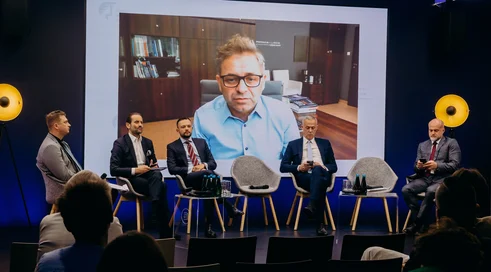
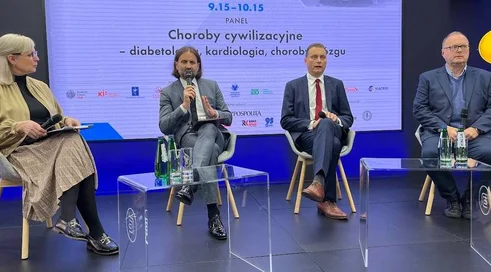
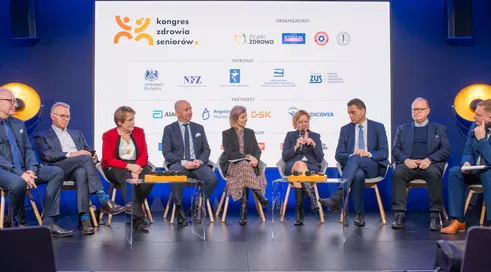
- Thanks to innovative therapies, patients undergoing palliative treatment can live with their disease for many years, argued experts participating in the panel "Palliative treatment - how medical advances are changing patients' perspectives" at the 2nd Men's Health Congress.
Men's Health Congress
What really is palliative treatment?

Published June 30, 2023 11:01
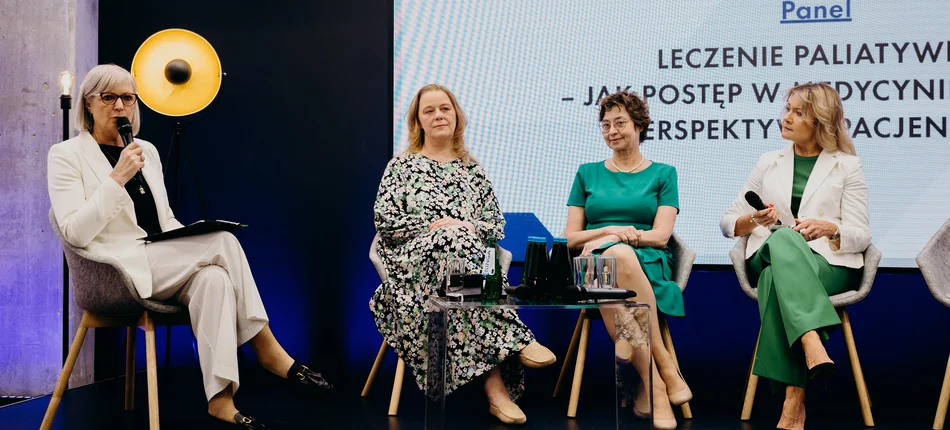
Prof. Maciej Krzakowski, national consultant in clinical oncology, stressed that palliative treatment is not at all limited to oncology. And it does not at all mean treatment at the end of life. - We deal with palliative treatment when the therapies used are unable to cure the causes of the disease, he explained. In this sense, palliative treatment is used, for example, for patients suffering from diabetes or hypertension, for whom medicine can currently offer "only" to slow down the progression of the disease and prevent the appearance of complications, but in their case palliative treatment has "better PR" and absolutely no inappropriate association. In oncology, on the other hand, it is common. - When we talk about palliative treatment in oncology, we are actually talking about two different stages. In the first, where the goal is to halt the progression of the disease or achieve remission, surgery, radiation therapy, systemic therapy and pharmacotherapy come into play. In the second, it is primarily about alleviating the symptoms of the disease, not strictly anticancer treatment. But also in this stage, all the methods mentioned above are used, but there is also supportive treatment, including psycho-oncological support," he explained.
Palliative treatment affects the vast majority of patients in some cancers, the expert said. - In the case of pancreatic cancer, 80 percent of patients already have generalized disease at the time of diagnosis, when there is no question of a cure, the only option is to prolong life. In this cancer alone, that's 3,000 patients. In the case of lung cancer, one in two patients has no chance of radical treatment, 10,000 people a year. Patients with progression of the disease are also eligible for palliative treatment, he calculated. Palliative treatment from the moment of diagnosis also applies to 60 percent of patients with stomach cancer and 30 percent. - with kidney cancer.
- We need to change the perception of palliative treatment in social, patient and also medical terms," admitted Prof. Krzakowski. Because while in oncology thirty years ago, palliative treatment really came down to keeping the patient alive for 3-5 months, modern medicine offers the possibility of achieving remission calculated not only in many months, but even, depending on the diagnosis, in years. - For example, patients with generalized lung cancer are now living for years, and are socially and professionally active, the expert stressed.
In a similar vein spoke Prof. Barbara Radecka, head of the Department of Oncology with Day Episode, Prof. Tadeusz Koszarowski Oncology Center of Opole, who stressed that although the advances in medicine are not "fair", because in some cancers practically every year brings either new therapies, or at least their real and close to realization announcements, and in some this waiting time is much longer, they are visible to the naked eye. - Since the beginning of the 21st century, survival times for women with double HER-negative breast cancer have doubled. Thirty years ago, the average survival time for a patient diagnosed with colorectal cancer was six months; today it is more than thirty months, and in some cohorts even longer, she calculated. The opportunity for patients is the emergence of new therapies and the possibility of sequential treatment. - The fact that treatment has to be terminated is often not determined by a lack of therapeutic options, but by the patient's condition, the degree of cachexia, and the lack of social resources, i.e. loved ones who can support the patient in such matters as transportation to the center, she explained. She admitted that immediately after the pandemic-related lockdowns, oncologists clearly encountered situations more often in which they could offer virtually nothing to patients, even though if they had shown up a few months earlier - treatment would have been possible.
- As for the term "palliative treatment" itself, there is some semantic confusion, because we wrongly and incorrectly equate it with palliative care and even with hospice care. Meanwhile, palliative oncology treatment is simply chronic treatment," she stressed. In her opinion, the efforts of doctors, but also of manufacturers of innovative therapies, are focused on offering patients the opportunity to wait until the next treatment option, even in small steps. - When I started working, there was one drug available for colorectal cancer. Then more started to appear, today it's a whole range of drugs - cytostatics, biologics, combination drugs," she pointed out. An example of a new therapeutic option based on combination treatment, bringing tangible benefit to patients, are the findings of the SUNLIGHT study, which Prof. Radecka cited. Treatment with trifluridine-typiracil (FTD-TPI) has already been shown to prolong overall survival in patients with metastatic colorectal cancer. The recently published results of a new study showed that the addition of bevacizumab to this regimen prolonged patients' median survival from 7.5 to 10.8 months; patients receiving the additional drug also remained significantly longer in good health.
As the expert said, in recent years not only the progress of medicine is visible to the naked eye, but also the progress visible in accessibility, i.e. reimbursement of treatment. - It can be said that in terms of real treatment options we are already at the European level, although there are undoubtedly areas where work on reimbursement decisions is still ongoing, she stressed.
Like a mantra, however, the message returned that even full reimbursement and full access will not improve treatment outcomes if patients arrive at doctors in poor condition, at an advanced stage of the disease. An additional problem, the expert said, is that some such patients give up on entry and either refuse any treatment or opt to use alternative treatments. - In this case, there can be no talk of alternative treatment!
Prof. Radecka appealed not to underestimate worrying symptoms. - Unintentional weight loss of 3-4 kg in a month is already such a symptom with which you should see a doctor, she pointed out. The sooner we do this, the more we increase our chances. If only for the inclusion of such innovative and desirable treatments as immunotherapy. - Immunotherapy takes time for the body to have a chance, an opportunity, to respond. In many patients we could use it, but their condition determines the lack of such an opportunity, because there is no time for a response," she stressed.
This time is in short supply, Iga Rawicka, president of the EuropaColon Poland Foundation, said, especially for men. - They avoid preventive examinations," she stated plainly. This is also why it is men who are diagnosed more often with advanced pancreatic, stomach or colon cancer. Paradoxically, the vast majority of patients, when they hear a diagnosis - even the most inauspicious one - want to live and think about a cure. - Even when there is not only no possibility, but even real hope. If we took care of ourselves and our health in the initial stage, the final stage would be much longer," she concluded.
The problem, said Anna Elzbieta Alichniewicz, MD, from the Department of Bioethics, Faculty of Health Sciences, Medical University of Lodz, is, among other things, the length of this "end stage." Decision-makers, in her opinion, have doubts about investing in innovative therapies at the palliative treatment stage, because they have the cost-effectiveness of the drug and the QALY indicator in the back of their minds all the time. - Patients who are able to live many years thanks to the treatment always win out over those for whom the drug extends life by a few months or even a year, she said, stressing, however, that "a few months is also life."
Especially for patients for whom medicine has little to offer, such life extension time is downright priceless. - Even if it's only three months," stressed Dr. Malgorzata Galazka-Sobotka, director of the Institute of Healthcare Management at Lazarski University and vice chairwoman of the NFZ Council. In her view, this is a logical consequence of the solidarity system we agreed to. - It is our civilization's success that we collectively make sure that the end of life is simply humane.
However, in her opinion, the biggest challenge is to "disenchant" and redefine the concept of palliative treatment. Since decades-long therapies are given to patients with MS, Parkinson's disease, diabetes, hypertension, diagnosed cardiac problems - why should it be any different in the approach to oncological diseases, which, when diagnosed in time, are increasingly becoming simply chronic diseases? - Each of these diseases is really about the same thing: that it should not take over the patient's life, so that they can pursue their private and professional dreams. The strategic goal, on the other hand, is to extend the lives of Poles," she explained.
The expert stressed that the regulator of the system - the Ministry of Health - and the payer understand very well the relationship between the money invested in health and the effects that can be achieved. - The Minister of Health, when making reimbursement decisions, is literally a bridge builder, because he extends patients' lives by adding more options, more segments, she said figuratively. There are more and more patients to whom doctors used to give a year of life, and they are already living a dozen years - all the while maintaining social and professional activity. - In fact, we are limited in this by health expenditures. We need to increase them. Seeing the results brought by the use of modern therapies, it is worth agreeing to a slightly higher health premium," she argued.
It is the development of civilization that is at stake. - A patient dies the hardest when he knows that treatment is there for him, but it is unavailable because it is not reimbursed," stressed Iga Rawicka. Meanwhile, patients with even the most serious cancers - such as pancreatic cancer - show great determination and will to live. - We have such patients with pancreatic cancer who travel the world and talk about living for eight or nine years with the disease.
The experts also considered whether it is worth informing patients about existing, but not available therapies. And the conclusion was one: definitely yes. Also because the hope of surviving to therapy in itself increases the patient's chances.