- The Da Vinci robot eliminates the surgeon's hand tremor, provides three-dimensional visualization of the surgical field and 40x magnification to see structures previously invisible. When operated on for prostate cancer, it allows surgeons to maintain sexual performance and avoid incontinence, and shortens recovery time. The robotic procedures reimbursed by the National Health Fund were discussed by experts at the seminar "Robotics in urology."
Where will robotic evolution in medicine take us?

Published Oct. 30, 2023 10:39

Fot. iStock/Getty Images
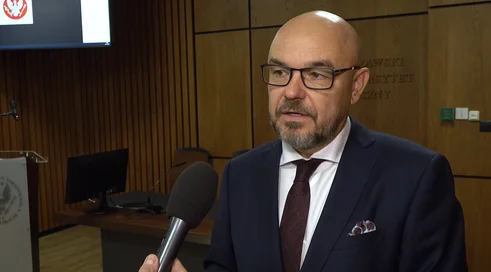
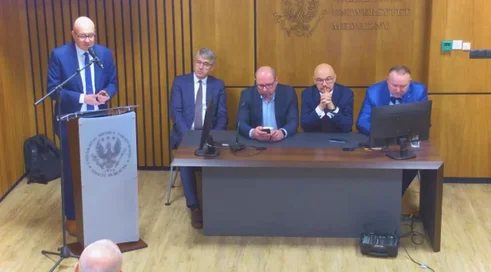
The seminar was organized by the Department of Public Health of the Warsaw Medical University in cooperation with the Institute of Health Care on October 25. During the discussion moderated by Prof. Mariusz Gujski, head of the Department of Public Health at the Faculty of Health Sciences of the Warsaw University of Medical Sciences, experts pointed out the directions of development of robotics in medicine.
22 years of Da Vinci in Poland
Artur Ostrowski, managing director of Synektik, presented the development of the Da Vinci robotic surgery market worldwide. By 2022, 3,000 scientific publications on Da Vinci had been written, 4,200 technologies used by the robot had been patented, and 10 million procedures had been performed using it.
Today, there are already 8285 Da Vinci systems in use worldwide, with 65% in the US, 17% in Europe and 13% in Asia. Robotics is used primarily in urology, colorectal surgery, bariatric surgery, gynecological oncology, but also in orthopedics.
Artur Ostrowski recalled that the first such device came to Poland in 2011, and it was already a third-generation robot. In 2017. AOTMiT issued a positive recommendation for the use of Da Vinci in the treatment of bowel, prostate and uterine cancers, but not until 2022. The National Health Fund began reimbursing radical robotic prostatectomy. According to Artur Ostrowski, NFZ reimbursement plays an important role in the development of robotic surgery in Poland. He pointed out that although the procedures are not cheap, the use of Da Vinci avoids complications and reduces the number of in-hospital infections, which can reimburse the cost of maintaining the robot.
He pointed out that there is a circulating opinion that there are too many robots in Poland. - This is not true. The largest number is used in France - 340, in Germany - 330 , in the UK - 200, in Italy 195, and in Spain more than 105. Meanwhile, in Poland only 34," he pointed out. According to him, the problem is the small number of trained operators. - On average, a single system performs one procedure a day, and could even perform four, he pointed out. He recalled that reimbursement is expected for more procedures using Da Vinci - partial nephrectomy, thoracic surgery, liver and pancreas surgery.
Precision and 3D visualization with 40x magnification
Prof. Tomasz Szopinski of the Mazovia Group, where procedures using Da Vinci have been performed for the past five years, spoke about his experience using the system. Of the thousands of surgeries performed at Mazovia, he has performed 600 himself. He explained that the Da Vinci system consists of a console at which the surgeon sits, a computer center that operates the system, and a set of four arms equipped with multiple tools. - The advantage of procedures using Da Vinci is the ideal combination of open surgery, because we have freedom of movement with miniaturization and very good visualization, or laparoscopy. The system eliminates hand tremor, gives three-dimensional visualization of the field, is integrated with ultrasound, and allows the use of indocyanine green to look for involved lymph nodes. The 10-40x magnification allows us to see structures that are inaccessible laparoscopically or by opening. We can see what we couldn't see before. The system allows preparation with a precision unavailable with any other technique. Plus the diversity of the integrated instrument system, freedom of movement in the field unavailable in laparoscopy and open surgery," he enumerated.
Is the robot safe?
Prof. Tomasz Szopinski reported that with more than 1,000 operations performed at Mazovia, only one conversion to open surgery and one to laparoscopic surgery occurred. There were no fatal complications in the first three months after surgery, nor any damage to internal organs. He talked about the Retzus sparing technique he uses, which, instead of a 40-centimeter incision to reach the prostate gland, allows surgery with only a 7-centimeter peritoneal incision. The technique achieves a 20% improvement in erectile function, allows a faster return to continence and eliminates total incontinence. The patient returns to work after 2 weeks. The expert also pointed out the advantages of the systems in the removal of kidney tumors and radical cystectomy. This is primarily a reduction in the risk of complications.
Patient benefit
Prof. Igal Mor of the Mazovia Group listed the benefits of Da Vinci for the operated. He reported that his facility monitors the fate of its patients, which allows it to evaluate the effectiveness of its work. - The robot in the surgical treatment of prostate cancer provides the patient with safety, short recovery time and comfort. Our data shows that postoperative bleeding did not happen to us with robotic surgeries, and occurred in 10% of open surgeries and 0.8% of laparoscopic surgeries. Complete incontinence occurred in 10% of those operated on classically, 2% laparoscopically and 0.2% robotically. Our hospitalization time for open surgeries averaged 7 days, for laparoscopic surgeries 4.5 days, and for robotic surgeries 2.1, he calculated. He stressed that Da Vinci reduces the time of catheter use, which is a huge discomfort for patients, by five times. It also reduces recovery time from 10-12 weeks to 2. - The use of Da Vinci allows sexual function to be maintained in almost 90% of those treated, which was almost impossible without robotics, he stressed. He added that the return to complete continence is also shorter - in 90% of those operated on after 3 months. - And this is the absolute success of this method. And a shorter recovery is of great importance to the patient after the trauma of prostate cancer diagnosis and treatment, he pointed out.
From the payer's perspective
Filip Nowak, president of the National Health Service, recalled that the OSR (regulatory impact assessment) of the inclusion of the robotic system procedure for radical prostatectomy in the basket of benefits from April 2021 assumed that 14 centers would be performing it after three years, while in the meantime, in 2023, we already have 33 of them - The pace of development is enormous. In 2020, there was 1 application in IOWISZ to buy a robot, and in 2022. 23," he informed. The cost of the benefit is PLN 32,144, in comparison, the laparoscopic procedure was valued at PLN 21,810. - This seems to be a satisfactory valuation, as evidenced by the large increase in these centers, he assessed. By Q4 2023, 2,458 procedures had been performed for PLN 71.85 million, 88% of which were in the oncology package. For the payer, the beneficial effect is a reduction in hospitalization time by an average of about 2 days. Filip Nowak recalled that as of September 1, 2023, the guaranteed benefits using the robotic system were expanded to include surgical treatment of endometrial cancer and colorectal cancer. He stressed that the payer appreciates the benefits for patients.
What's next?
Prof. Piotr Radziszewski, head of the Department of Urology at Warsaw Medical University, outlined the future of robotics. - There will never be full robotization, because it is impossible to perform surgery without an operator doctor. But robots are a natural development in medicine, and wondering whether we should use them makes no sense, because it's like asking the question whether you should use disposable needles," he said.
He pointed out the possibility of intuitive learning to work with Da Vinci on a video game basis. He announced that at WUM, students will learn the basics of robotics.
He noted that in Poland the time has come to take advantage of the capabilities of robotic systems in kidney treatment. - We are 20 years behind the rest of the world. And if we don't want to have an epidemic of dialysis or transplant eligibility, we need to take care of every single kidney. And that means performing even very difficult partial nephrectomies, rather than a priori radical nephrectomies," he pointed out.
- We currently have 220 validated procedures, but we probably won't reach these values without additional insurance. However, 3-4 procedures in each specialty is a viable future. The payer will have to reckon with the fact that soon we will have robots that will enable endoluminal surgery, bariatric surgery through natural orifices, nanotechnology, floating nanomachines that will work at the level of blood vessels," he enumerated.
Register of treatments and evaluation of effectiveness
NFZ President Filip Nowak noted that technological advances should be balanced, as the potential in the form of new equipment poses challenges in training operators. He called for a reduction in the "robot in every hospital" phenomenon.
Dr. Michal Dzięgielewski, director of the Health Ministry's Treatment Department, pointed out that a limitation on the use of robotic systems is the number of patients being operated on. Meanwhile, facilities buying robots have not noticed this condition. And the guarantee of patient safety is the facility's experience. It is also important to qualify patients, so as not to operate on everyone just because it is profitable.
Dr. Michal Dzięgielewski also spoke about the need to compare the results of treatment between centers. And for this, registries are needed. The National Health Service has all the data, but the registry does not.
He also pointed out that if the market is fragmented, individual centers will have too few patients, which will not allow surgeons to gain the necessary experience.
It's worth reading
Jakość w medycynie