As many as 40% of Polish women do not know the exact start date of their last period, and 63% do not monitor their cycle at all, a Huawei CBG Poland survey showed. Those surveyed who do keep track often use the support of technology - more than half of them use relevant calendars in smartphone apps on a daily basis (54%), and nearly 20% do it on a smartwatch. One in four cycle monitors record parameters manually in a paper calendar, which turns out not to be an entirely good solution. Why is cycle monitoring crucial to any woman's good health? Endocrinologist Magdalena Jagiello, MD, explains.
40% of Polish women do not know the exact date when their last period began

Published Dec. 5, 2023 09:42
Fot. Getty Images/iStockphoto
2 out of 5 Polish women do not know the date of their first cycle day - what does this mean?
Modern Polish women still do not know enough about their ovulation cycle. A very large percentage do not even know the exact date when their last period began - which is the first question when visiting a gynecologist or endocrinologist. This ignorance applies to as many as 40% of Polish women, half of whom (19%) declared that they never remember what day it was specifically, and the other half (21%) that they do not remember, but only know the approximate date. Respondents who know the exact date, the parameters are written down in a calendar - in an app, on paper or in a special function of a smartwatch, and this applies to 36% of Polish women. One in four doesn't make a note of it, because she relies on her memory - which, as it turns out, is sometimes unreliable.
As many as 63% of Polish women say they do not need cycle monitoring. This percentage increases with age: among the youngest, up to 24 years old, it is 36%, among 25-34 years old it is already 44%, among women between 35 and 49 years old - 49%, and after 50 it is 84%. Only 37% of Polish women monitor their cycle, and considering only women under 49, the figure is 50%. It is comforting that 6% of female respondents want to be more aware and would like to start doing so.
According to the observations of endocrinologist Magdalena Jagiello, M.D., many women are not able to give a date for the first day of their cycle and have little knowledge of its phases and the symptoms associated with them, which they perceive as something disturbing. It is useful to know the date of menstruation for a number of reasons - to be aware of the phases of the cycle she is in, to know when to start trying for a baby and when to avoid pregnancy, when to be ready for discomfort from discomforts such as menstrual pain, irritability, PMS, trouble concentrating, breast pain or swelling from water retention during a particular phase. By knowing their cycle, women can better plan their activities and, for example, not make important appointments or plan vacations for days when they know a symptom will occur.
- One of the most common symptoms that patients present to an endocrinologist or gynecologist with is irregular menstruation or fertility problems, and often the patient is not sure if she is bleeding every month, when her last period was, because she is not monitoring it. When she starts to do so, it turns out that the cycle is not irregular at all. The peri-menopausal period, which affects a huge number of active women before the age of 50, is recognized by, among other things, an irregular, increasingly infrequent cycle. The doctor also prescribes tests to be performed at given points in the cycle, so if the patient has no knowledge of the cycle, the doctor is limited in his ability to effectively diagnose and help," says Magdalena Jagiello, M.D., an endocrinologist.
What do we monitor during the cycle and why?
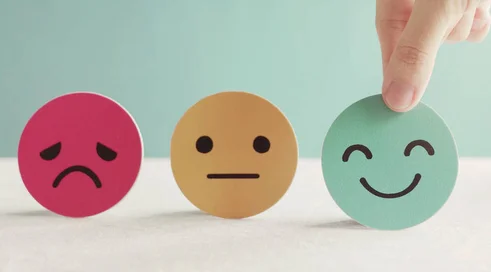
Among the most important symptoms that Polish women record in their cycle calendars are, first of all, parameters directly related to the onset of menstruation, i.e. physical symptoms such as abdominal pain, breasts, mucus (50% of women monitoring their cycle), bleeding levels (44%). Other important ones for awareness of one's health and well-being are mood (42%), weight (25%), temperature (21%) and symptoms related to cravings (20%).
What motivates respondents to enter measurements and various parameters into the calendar? The most important turns out to be the reminder of the upcoming first day of menstruation, as indicated by more than half of the respondents who monitor their cycle (52%). Other reasons include the desire to be aware of when infertile and fertile days occur (42%) and to keep track of changes in the body and periodic discomforts (32%), as well as to gather information needed when visiting the doctor (31%). All of this constitutes valuable knowledge for the gynecologist or endocrinologist, extremely important for diagnostics or routine periodic examinations.
- I recommend my patients to monitor their cycle and most use the appropriate calendars-apps or features. We always have our phone or smartwatch with us, and we can at any time write down a given symptom or check - even for many months back - when how we felt, what our cycle looks like. It also gives us comfort with reminders, such as the upcoming start of a cycle or a particular phase. The cycle calendar is therefore an important tool to help the doctor in diagnosis, which also makes it possible for a woman to take better care of herself and her well-being," says medical doctor Magdalena Jagiello.
Smartwatch for our health
In order to monitor the menstrual cycle and its parameters, it is advisable to enlist the help of a smartwatch, such as the HUAWEI Watch GT 4, designed with women in mind. The watch has a Smart Cycle Calendar - an advanced cycle analysis function that is even more perfect than in previous models. One can enter into the calendar not only numerous symptoms, but also the results of ovulation tests or the amount of water drunk on a given day. The cycle prediction function combines data from the calendar with results from the device, such as body temperature and heart rate, as well as past menstrual cycle trends, to generate even more accurate predictions. The smartwatch will send a notification according to the calendar, such as when the first day of menstruation is approaching. All data is recorded in the Huawei Health app, where you can keep track of your parameters in real time and, if necessary, return to them and share them with your doctor.
About the study
The survey was conducted in October and November 2023 on behalf of HUAWEI CBG Poland by SW Research using the CAWI method on a representative sample of 531 women.
Source: Press Mat.