In summer we often hear announcements about deaths due to heat waves. In Europe, several hundred people die every year because of it. Children most often die in sun-heated cars, but also adults, such as those standing in long traffic jams. Heat stroke can affect anyone, including a healthy person in the prime of life.
Heat and sunstroke

Published June 20, 2023 11:32
Fot. iStock/Getty Images
Heat stroke or sunstroke?
Heat stroke, or overheating, threatens us when we stay for a long time in a heavily heated and poorly ventilated room or in a car, for example, standing in traffic. In such conditions, the body begins to have a problem with thermoregulation - it stops cooling itself.
But overheating can also threaten us if we put on tight clothes made of artificial fabrics that don't allow our skin to breathe during hot weather. It can also happen if we don't drink enough or overuse liquor.
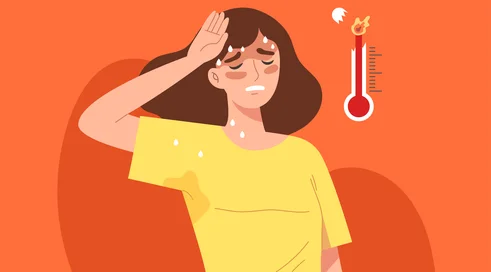
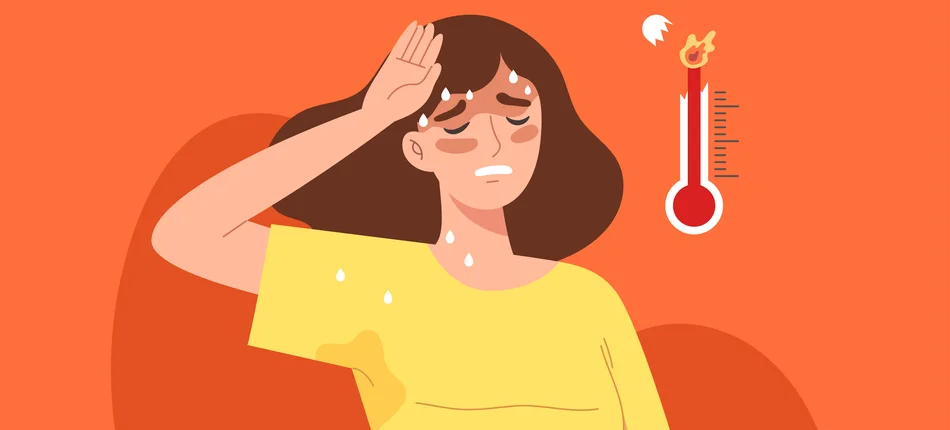
Symptoms: elevation of body temperature up to 40 degrees C, accelerated heart rate, headache and dizziness, dry, inflamed skin, disturbance of consciousness that can lead to hyperactivity and hallucinations, and fainting.
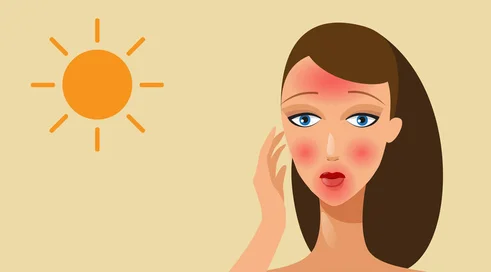
Sunstroke, or sunstroke, is a variant of heatstroke. It most often affects us during prolonged exposure to the scorching rays of the summer sun, such as at the beach, while hiking in the open air or working on a plot of land. More often it happens after heavy physical exertion. With sunstroke, it is primarily the nervous system that suffers. The sun's rays, falling on the scalp, cause congestion of the brain and meninges, which leads to electrolyte disturbances and dehydration of the body.
We are most vulnerable to sunstroke on sunny days when the temperature in the shade exceeds 30 degrees C. But the danger is also high on hot cloudy days with high humidity and no wind. In such weather, our thermoregulatory system can break down.
Caution: for infants and children, as well as people with cardiovascular conditions suffering from diabetes, it becomes dangerous already at temperatures above 25 degrees C. in the shade.
Symptoms: general weakness, nausea, vomiting, headache, tinnitus and dizziness, cold skin, chills, fainting, sometimes nosebleeds, especially in children. In mild paralysis, the skin may be red and sweat profuse, while in severe paralysis the skin becomes pale, while sweating is inhibited.
Who is particularly vulnerable
Overheating and sunstroke are more common in the elderly (the body's natural thermoregulation weakens with age) and in infants and children (thermoregulation has not yet been fully formed and their bodies absorb heat more easily). People taking allergy medications (including over-the-counter medications), certain preparations used to treat Parkinson's disease and irritable bowel disease, and many medications used in psychiatry may also have problems with thermoregulation. People with chronic cardiovascular disease, who are overweight or who abuse alcohol are also at risk.
First aid
When you notice signs of heat stroke or sunstroke in someone, you should call for medical help. What can you do until the ambulance arrives?
- Move the patient to a shady or shaded airy place, but not too cold, as sudden and severe cooling can cause heart problems. Entering cold water, for example, is forbidden.
- Lay the person with the stroke on his back, with his legs slightly elevated to a height of about 30 cm. When he or she has a reddened face (milder stage of stroke), he or she can stay in a semi-sitting position, while when the face is pale (severe heat stroke), he or she should lie so that the head is lower than the torso.
- When the patient faints, you need to lay him on his side, preferably on the right side, so as not to strain the heart. You need to constantly monitor the heart rate and breathing. When it fades, start CPR.
- Remove tight, non-permeable clothing from the patient.
- It is a good idea to moisten the room in which it resides, such as hanging up wet sheets or towels.
- Cool compresses can be placed on the forehead and neck, such as those made of cloth soaked in cold water or ice cubes wrapped in a towel. It is also advisable to dampen the face with water, wet the hair, and spray the skin all over the body.
- A person affected by a stroke must be given something cool to drink - the best is lightly salted water drunk in small sips, but often. It can not be cold beer or other alcoholic beverage, even the smallest portion of alcohol will significantly worsen the condition of the patient. We also do not give drinks with caffeine. When a person with a stroke loses consciousness, he must not be given anything to drink.
- In severe cases, it is necessary to gently cool the patient's entire body, such as wrapping him in a wet sheet, a towel.
- The affected feet should be massaged to restore proper circulation.
- Sometimes many of the symptoms of sunstroke (nausea, vomiting, headaches, cold skin, chills, fever) can resemble food poisoning or a cold infection. In such a situation, do not try to lower the temperature or give painkillers, as they will not only help, but may even harm. If such ailments occur on a hot day, you should assume that it is a stroke and call for professional help," advises Dr. Alicja Lorens, a specialist in internal medicine.
How to avoid heat stroke?
- Try to keep all physical activity to a minimum during the sun's greatest impact, that is, between 11 a.m. and 4 p.m. During this time, do not engage in any sports involving heavy exertion.
- During the most intense heat, look for shade.
- Protect yourself from the sun by using an umbrella, airy and light headgear - a hat or a baseball cap.
- Wear light-colored clothes (they attract the sun's rays less), made of natural air-permeable fabrics: cotton, linen, silk.
- Drink at least 1.5 liters a day (preferably mineral water), but the warmer it is, the more. when sweating profusely, drink up to 3.5 liters a day. It is best to drink it in small sips, in short intervals. Light herbal (such as mint) or fruit teas are recommended. If we have to leave the house, let's take bottled water with us.
- If you like juices, drink acidic ones from citrus and vegetables (tomato is the best), dilute them half and half with water. Avoid juices made from sweet fruits, they do not quench thirst and are diuretic.
- Let's take cool baths or showers during the day. Let's cool off with water available on the street - sit near a fountain or spray our face and hands with water from a faucet.
- Let's not eat hot meals. In hot weather, a cooler is better than broth!
- When staying indoors, windows facing the sunny side should be covered and closed. It is best to open them at night. Use fans and air conditioners indoors if possible.
- Let's plan the route and travel time to avoid traffic jams. If we see a sitting child in a heated car, let's break the window in it! We will not suffer any consequences because of this!
- Do not get into a heated car, the temperature inside can be as high as 60 degrees C!
- Before you set off, air out the car and lower the temperature by using air conditioning.
- Let's not overeat. A light diet, consisting primarily of vegetables, as well as melons and watermelons, and avoiding heavy meat dishes is best.
- Do not drink alcohol and caffeinated beverages, i.e. cola and coffee. Alcohol and caffeine promote fluid loss, which on hot days can end in life-threatening dehydration.