Fragrances have an amazing ability to influence our emotions, mood and even the decisions we make. Although we are not always aware of it, the aromas that surround us can induce positive feelings, evoke memories or build our image in the eyes of others. Scientists have been studying for years how smells affect the human brain and body. Discoveries show that what we smell can have a much greater impact on our lives than we ever thought.
Fragrance: An invisible force affecting our emotions and memory

Published Sept. 2, 2024 08:02

Fot. Thinkstock / Getty Images
How do smells affect the brain?
The sense of smell is one of the most primal human senses. Smells are processed by the olfactory bulb, which directly connects to the limbic system - the part of the brain responsible for emotions, memory and behavior. This explains why smells can have such a strong effect on our emotions and trigger intense memories. In fact, one of the most well-known effects in psychology is the so-called Proust effect, which relies on the fact that a smell can recall very detailed memories of the past, often in combination with strong emotions.
Studies have shown that some scents can have a soothing effect, helping to reduce stress and improve mood, while others can stimulate and increase concentration. For example, the scent of lavender is known for its relaxing properties, while peppermint can improve our ability to focus. What's more, scents can also affect hormone levels in the body, which can alter our mood and emotions at any given time.
Pheromones: The invisible chemistry of attraction
Fragrances also have the remarkable ability to influence our interpersonal relationships through so-called pheromones. Pheromones are natural chemical compounds secreted by the body that affect sexual attraction and communication between individuals. It is thanks to them that the same perfume can smell completely different on different people, creating a unique, personal aura. Thus, choosing a perfume becomes an intimate experience that enriches our personality and can affect how we are perceived by others.
Some studies suggest that a well-chosen perfume can amplify our body's natural signals, adding depth and multidimensionality to a fragrance composition. Pheromones influence subconscious levels of the senses, which means that scent can play a key role in the process of attraction and building interpersonal relationships.
How does the fragrance structure work?
Perfume is not just one fragrance, but a complex composition of many fragrance notes that develop over time. These notes fall into three main categories: head, heart and base notes.
- The head notes are the first impression of the fragrance. They are light, fresh aromas that quickly evaporate and give the fragrance its initial character.
- The heart notes develop right after the head notes and are the heart of the fragrance composition. They are the ones that give the fragrance its depth and character, lasting for several hours.
- Base notes are the foundation of a perfume, remaining on the skin the longest. They are heavier, more intense and stabilize the entire fragrance composition, adding to its longevity.
How to choose the right fragrance?
Choosing a fragrance is a very personal decision that can depend on many factors, such as the time of year, the occasion and even your mood.
"Each composition is carefully developed with the highest quality ingredients to ensure the intensity of the fragrance. Made in Lab perfumes reflect the latest trends, and their essence is a fragrance that speaks more than words. For this reason, all of our fragrances are enclosed in identical-looking flacons. Made in Lab products are created for those who appreciate authenticity and excellence at a very affordable price." - says Matthew Wojda, Made in Lab perfume consultant.
Fragrances Made in Lab: Find your unique composition
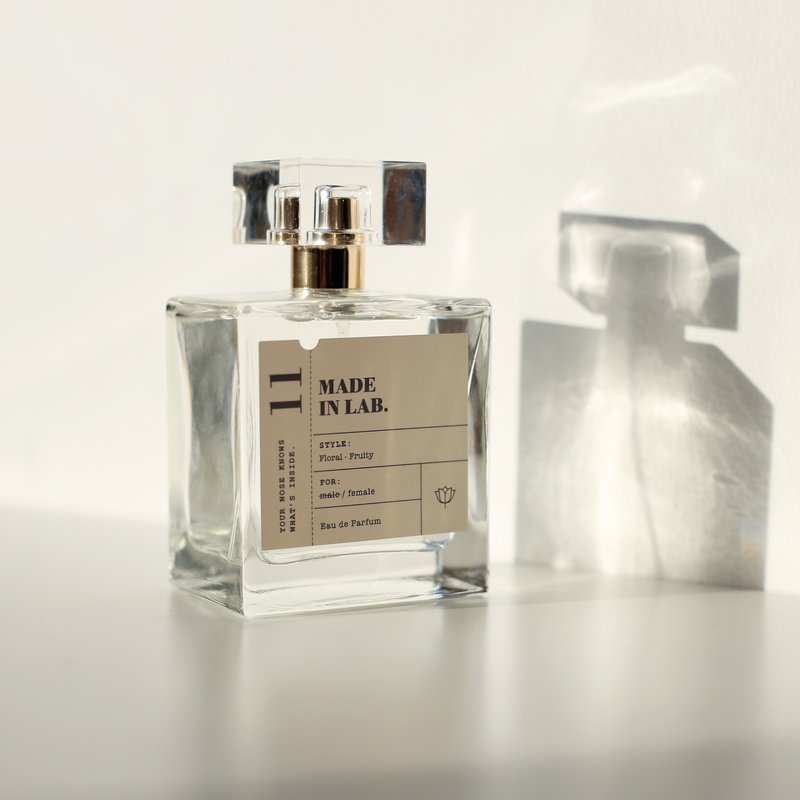
- Made in Lab 11 is a light, floral fragrance inspired by Dior J'adore. Ideal for those who appreciate elegance and femininity, it combines notes of magnolia, violet, orchid, freesia, lily of the valley and rose with fruity accents of melon, peach and tangerine. Notes of musk, vanilla, cedar and blackberry provide longevity and warmth.
- Made in Lab 70 evokes the intensity and sensuality of the Armani Sì Passione fragrance. Fruity accords of black currant, pear, pink pepper and grapefruit transition into romantic notes of rose, heliotrope, jasmine and pineapple, finishing with warm notes of vanilla, cedar and patchouli.
- Made in Lab 08, a replacement for Chloe Nomade, is a fresh, musky fragrance that is associated with hiking in the woods and getting in touch with nature. It begins with sour notes of mirabelle, bergamot, lemon and orange, which move into a floral heart of freesia, rose and jasmine, and ends with woody notes of amber, patchouli, sandalwood and white musk.
The world of fragrances is rich and full of possibilities. Choosing the right perfume is not just a matter of aesthetics, but also deeply rooted biology and psychology. Whether you're looking for something to emphasize your personality or want to experiment with new aromas, fragrances can become an invisible calling card.
Source: Based on press mat.