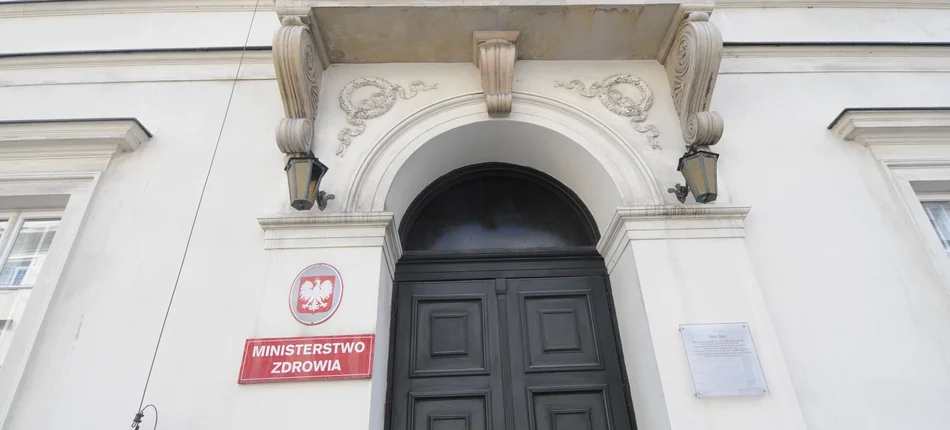
Shortening postgraduate internship, new rules for recruitment to specializations, compulsory oral part of PES, State Competency Examination during specialization - these are just some of the changes to the Law on the Profession of Physician and Dentist proposed by the Ministry of Health. The ministry has sent the draft amendment to public consultations.
Largest changes to physician training in years. The draft amendment has gone to consultation

Published June 8, 2026 17:28
Fot. Jacek Sielski
The consultations, it is to be expected, will be tumultuous - most of the changes the ministry wants to introduce are not supported by the medical self-government or organizations of young doctors and medical students. There is consensus only around one issue, namely changes to LEK and LDEK. The issue is the elimination of the question base, because after its introduction the exam ceased to fulfill its function in the recruitment of specialties - the results are too even. It also ceased, as both officials and doctors admit, to verify the level of actual knowledge gained from studies.
This unites, everything else divides, albeit with varying degrees of emotion. The biggest are around plans to reduce postgraduate internship to six months for both physicians (seven-month reduction) and dentists (six months). Since last fall, when the first signs of the planned changes appeared, the idea has been consistently criticized by both medical chambers and organizations of young doctors and students. However, the Ministry's position is that the medical internship in its current form is inefficient and that the not inconsiderable funds - about PLN 1.4 billion - could be spent in a much better way. The ministry also points out that almost all EU countries that focus on making medical training more practical have already abandoned internships. The ministry's position was supported during Monday's meeting with journalists by Prof. Leszek Domanski, rector of the Pomeranian Medical University (PUM), who stressed that medical universities are implementing the education standards developed in 2023 by the ministries of health and science and place great emphasis on practical skills, so that from the first year students can prepare themselves to solve practical problems through the use of modern technologies. Medical simulation centers are to play a huge role in this process.
However, shortening the postgraduate internship is only part of the revolutionary changes. Large ones will also apply to recruitment for medical and medical-dental specializations. As Deputy Minister Katarzyna Kęcka explained, the residency spot is to be assigned by the governor to specific subjects in each procedure, and it is from among them that doctors will indicate their preferences.
Prior to each qualification procedure, governors will determine a list of accredited units that have been granted either residency or non-residency places, and an important criterion for determining the allocation of places will be the shortage of personnel in a particular field in each province. In determining the list, each provincial governor will take into account data from health needs maps and the ministry's guidelines on the number of residency and non-residency places.
A key - and already objectionable - change is to be a restriction on the transferability of residencies between units. A doctor will be able to transfer, in practice, when he or she decides to continue his or her specialization in a non-residency mode. The residency spot will be assigned to the unit where he got his residency (exceptions are to be made for situations at the fault of the hospital).
There will also be a new exam in the course of specialization - the National Competency Examination (after the basic module or, in the case of specializations that do not have a basic module, conducted at another set time). As a result, doctors in the course of specialization who pass this exam will be able to be included in billing with the payer.
The change will also apply to the PES. The ministry wants to return to the compulsory oral part of the exam (at the moment, those who get at least a good grade in the written part are exempt from the oral part). The argument is to change the rules, the oral part is to be more practical. - It will not be a further part of a test-based examination of a doctor's knowledge, the health ministry assures.
The consultation will last 30 days.