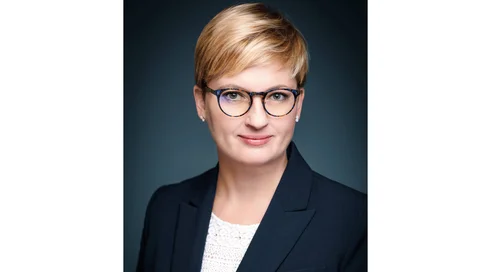
- Footnotes that have nothing to do with the subject of the law, but hit the pharmacy market directly, have been added to the draft amendment to the law intended to support Polish companies in the reconstruction of Ukraine, which should be the subject of consensus among all political parties, Jakub Binkowski, a board member and director of the Law and Legislation Department of the Union of Entrepreneurs and Employers, said at a Thursday press conference in front of the Sejm. At issue is a "throw-in" to the insurance law aimed at sealing the "Pharmacy for the Pharmacist" rule.
Pharmacy chain owners protest: sealing of "Pharmacy for the Pharmacist" will lead to mass revocation of licenses

Published July 13, 2023 18:44

fot. Piotr Wójcik
A few days ago, an amendment was added to the law on export insurance guaranteed by the Treasury to regulate the Polish pharmacy market. According to it, a pharmacy could only be taken over by a sole proprietor pharmacist, a general or partnership company with pharmacists who have the right to practice, as well as a university providing pharmacy education. The acquiring entity or related other entities cannot own or be a partner in more than four community pharmacies nationwide.
Such a solution is not accepted by owners of pharmacy chains, according to whom the solution will lead to the mass revocation of pharmacy licenses. On their behalf, three organizations: The Union of Entrepreneurs and Employers, the Lewiatan Federation and the Employers of the Republic of Poland have issued an appeal, whose addressees include Prime Minister Mateusz Morawiecki, Development and Technology Minister Waldemar Buda and Health Minister Adam Niedzielski. They expect the provisions sealing the regulations to be withdrawn.
- Since 2017, we have had one of the most regulated pharmacy markets in Europe. As a result, hundreds of pharmacies are disappearing. At the moment, we already have a thousand fewer pharmacies than just a few years ago, which means that patients have limited access to medicines," Jakub Bińkowski points out.
According to the organization, part of the pharmacy community is leading the effort to further clarify these regulations, which will result in further limiting the availability of medicines for patients. In their view, there is only one beneficiary of the legislative moves that have been observed for several years.
- In the official narrative, we hear that the aim of the regulation is not to lead to excessive concentration, and in practice - since 2017, the partner networks of one wholesaler have grown to the size of the de facto largest pharmacy network in Poland. One-third of the market is concentrated within the partner networks. At the same time, the group has a 30 percent share in wholesale. Any further changes tightening the screw on the pharmacy market will result in increased market concentration around this one player. This means that later, with one transaction, you can get rid of, for example, to a foreign entity, more than one-third of the affiliated pharmacies on the market in Poland, more than one-third of the wholesale market share and still your own drug production," explains Jakub Binskowski.
According to Kacper Olejniczak of the Lewiatan Confederation, the change under way will, in practice, make it more difficult for patients to access medicines and pharmacies, as well as newly emerging health-promoting services in pharmacies.
- If the amendment passes in this form, it could be the basis for the gradual expropriation of Polish entrepreneurs who have spent years building their pharmacies. It makes it more difficult to sell a pharmacy or even pass it on as an inheritance, Kacper Olejniczak stresses.
In turn, Jacek Cieplak, vice president of the Employers of Poland, draws attention to the process of introducing the amendment voted on at the Public Finance Committee - as a "throw-in" to the law on export insurance.
- This is a way that should not exist at all in Polish legislation: quietly and, above all, without consulting us, that is, the organization of all or most pharmacy entrepreneurs. We are the ones who should have the final say and also be able to participate in public consultations on such an important problem," says Jacek Cieplak.
Pawel Kempfi, a pharmacy entrepreneur from Lodz, is of a similar opinion.
- We are a family business, built for 30 years. I believe that the change in these regulations is extremely harmful to us. It will limit our ability to operate and grow, and most importantly, our ability to pass the company on to our children. It also prohibits us from selling pharmacies. The introduction of such regulations without wider consultation is scandalous," believes Pawel Kempfi.
The pharmacists announce that if the government does not take their view into account, they do not rule out taking more industrial action.