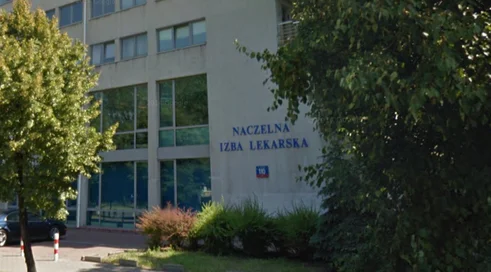
At a joint meeting of the Presidium of the Supreme Medical Council and the Presidium of the Supreme Council of Nurses and Midwives, important issues concerning the medical professions they represent were discussed. Among others, the draft position on criminal liability, referring to the implementation of the so-called "higher good clause" advocated by the medical self-government.
Self-governments of nurses and doctors about the higher good clause

Published Feb. 15, 2024 13:32

Fot. Thinkstock/Getty Images
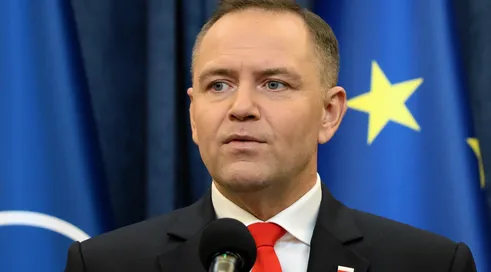
- I am very happy that we can talk in this group. For today's meeting, President Mariola Lodzinska and I have planned four topics. There are many more of them, of course, but these four are absolutely crucial for our professions. The system is changing. Today, our joint effort is to make the system patient-centric, so that the patient is surrounded by medical professionals, both nursing specialists and specialist physicians," said the NRL president, opening the meeting.
One of the main topics on the agenda was the position on changing the rules of medical personnel liability for adverse events. The project under discussion was the basis for a discussion on protecting the interests and well-being of patients and setting limits on medical treatment in controversial situations. The self-governments - medical and nursing and midwifery - expect to restore the possibility of safe treatment and declared their joint efforts to implement the higher good clause.
- We have a lot of ongoing criminal cases in the medical community, and the same goes for the nursing and midwifery community. These cases are ongoing. We already have the first data that says that a medical worker, only sued for a medical error, has twice the risk of professional burnout, 1.6 times the risk of suicide and 1.8 times the risk of risky behavior, including alcoholism. These criminal proceedings are exhausting our medical staff, and nothing comes of it. We have requested information from the Minister of Justice about the proceedings - 93% of these proceedings are dropped, only 7% are concluded with an indictment to the court and individuals are convicted. That's about 2,300 proceedings in the previous year, of which two people were convicted, and about 100 cases ended with an indictment. For a long time we have been talking about a no-fault system, that is, a system that would abolish criminal liability from medics and leave civil and professional liability. We call it a higher good clause, because the welfare of the patient is the highest good for our professions," the NRL president explained.
Another important issue was the position on the education of doctors, dentists, nurses and midwives. According to the local governments, it is necessary to adapt the process of medical education to current needs and requirements in order to ensure high quality education and adequate preparation of specialists. In unison, they stressed the need to maintain appropriate teaching standards for future medics, including the need to close or extinguish medical and medical-dental faculties that have not received a positive opinion from the Polish Accreditation Commission and to use the potential of medical universities and accredited units to educate medical personnel. On the other hand, with regard to the education of nurses and midwives, it is necessary, among other things, to determine the levels of professional competence after completing particular types and fields of postgraduate education, and to indicate the authorization to provide specific health services,
One of the issues was the obligation of those obtaining the right to practice in the medical field to speak Polish. Representatives of the local governments cited examples of pending cases in the professional liability divisions of doctors and nurses who, by not understanding and speaking Polish in their profession, put patients at risk of losing their lives and health. The position taken indicated that knowledge of the Polish language is indispensable for effective communication with patients and to ensure the safety and quality of medical services.
The last item on the agenda was a proposal to adopt rules for the performance of aesthetic medicine health services. Local governments are keen to regulate this area of medicine, and for doctors and nurses and midwives working in it to create clear and specified guidelines.
Among the issues discussed in the free motions were self-improvement of the medical profession, including the award and enforcement of educational credits, anesthesia in perinatal care, and transplantation and how to talk to patients about organ harvesting for transplantation.
The two presidencies stressed the importance of cooperation between local governments, both for the safety of treatment and the protection of the rights of the medical profession. At the same time, it was decided to continue the dialogue in order to determine further actions for the development of health care and to raise the standards of services provided. It was decided that joint meetings would be held every six months.
Source: NIL
Topics
położne / NIPIP / język polski / pielęgniarki / NIL / klauzula wyższego dobra / błędy medyczne