Easter is one of the most important Christian holidays, celebrated almost all over the world with great joy and rich culinary traditions. Each country has its own unique dishes that have been hosted on festive tables for generations, symbolizing joy, rebirth and togetherness, and the victory of life over death. Easter menus abound with flavors linked to a country's history, culture and religion.
Culinary Easter traditions in Poland and around the world

Published April 18, 2025 10:01
Fot. Thinkstock/Getty Images
Poland - the kingdom of eggs, white sausage and mazurka
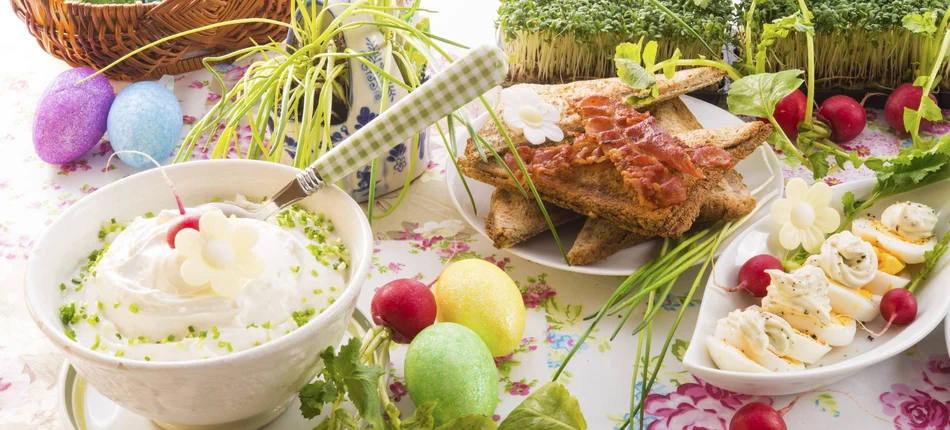
In Poland, it is impossible to imagine Easter without a święconka - a basket filled with symbolic products such as bread, eggs, sausage, salt or horseradish. The holiday table is dominated by eggs in various forms - stuffed, in mayonnaise or in salads. Also inseparable is sour soup or white borscht, often served with eggs and white sausage. Among meats, baked ham and pates dominate. Potato salad is also not to be missed. For dessert, mazurkas - short cakes with icing and nuts - are served, as well as fluffy yeast babka and cheesecake.
Easter traditions around the world
Other countries also have no shortage of unique Easter specialties.
Regardless of the country, Easter dishes are always closely linked to local traditions and beliefs, with the common element being the joy of spring rebirth and the opportunity to spend time with loved ones.
Easter flavors of Europe
- Italy - A traditional Easter dish is Colomba Pasquale, a yeast cake in the shape of a dove, symbolizing peace, and Torta Pasqualina, a dry puff pastry stuffed with spinach, ricotta and eggs. Roast lamb (Agnello Pasquale) is often served for dinner.
- France - A very popular lunch dish is Gigot d'Agneau, or roast leg of lamb with garlic and herbs, while Easter breakfast often includes Oeufs Mimosa (eggs stuffed with mayonnaise and mustard). Traditional French sweets served during this holiday include chocolate figurines and Pâques au Chocolat, or chocolate desserts.
- Spain - A popular Easter delicacy is Torrijas, oil-fried bread sprinkled with sugar and cinnamon. Many regions also prepare Hornazo, a type of stuffed pastry with meat and eggs.
- Germany - German Easter specialties include Osterlamm, a lamb-shaped cake, and Osterzopf, a braided yeast challah. Some regions also serve roast lamb and eggs in various versions.
- UK - Brits indulge in Hot Cross Buns, sweet buns with spices and raisins, decorated with a cross. Roast lamb with mint sauce is served for lunch.
Easter traditions outside of Europe
- USA - In the United States, a popular Easter dish is Glazed Ham, this is ham baked in a honey or maple glaze. Children look for hidden chocolate eggs, and Carrot Cake, a carrot cake with cream, is served for dessert.
- Mexico - Mexicans don't have many distinctive Easter dishes. On Good Friday, they eat mostly meatless dishes, such as Capirotada, which is a bread casserole with cinnamon, cheese and nuts. Bacalao, or cod in tomato sauce, is also a popular dish.
Orthodox Easter
In the Orthodox Easter basket are dyed red eggs, because this color is a symbol of resurrection, as well as bread and salt, as symbols of wealth and also various cold meats, horseradish (usually in root), babka or kulich. There should also be a candle in the basket, which is only lit at home and must burn to the very end. The candle symbolizes Christ, who gave his life for people.
Ukraine - the Easter menu is very similar to the Polish one. A typical dish is the "święconka" salad, which resembles Polish potato salad, but various cold cuts are added. The table cannot miss Ukrainian pork fat (salo) and dried fish. Popular sweet dishes include kulicz and paska, similar to the Polish yeast baby.
Greece - In Greece, Easter is the most important religious holiday. The traditional dish is Magiritsa, or lamb offal soup, and Lamb Kokoretsi, roasted lamb tripe. For dessert, Tsoureki, a sweet braided challah, is served
In non-Christian countries, Christians often combine Easter traditions with local flavors. In places where Easter is not popular, you can only find commercial touches, such as chocolate eggs in stores. Here are some examples:
Middle East (Israel, Turkey, Lebanon, Egypt).
- Israel - Christians celebrate Easter by eating foods inspired by Middle Eastern cuisine, such as roast lamb, hummus, falafel and Ma'amoul, and for dessert, shortbread cookies stuffed with dates or nuts.
- Turkey - Armenian and Greek Christians in Turkey bake Paskalya Çöreği, a yeasty bread similar to Greek tsoureki, often with the spice mahlep (made from cherry seeds).
- Egypt - Coptic Christians celebrate Easter as the "Feast of the Resurrection" and prepare Feseekh, a salted and fermented fish traditionally eaten during the Sham El-Nessim holiday, which often coincides with Easter.
Asia (India, Indonesia, Philippines, China, Japan)
- India - In Goa and Kerala, Catholics prepare Fugias (fried bread doughnuts) and Sanna, which are fluffy steamed rice buns served with curry. Sorpotel, a pork stew, is also popular.
- Indonesia - In Bali, Christians eat traditional rice dishes, and some families serve roasted Bebek Betutu duck.
- Philippines - Easter is a big holiday, and Filipinos prepare Lechón (roasted piglet), Pancit (noodles symbolizing long life) and Bibingka (rice cake).
- China - In Hong Kong, you can find the British influence in the form of Hot Cross Buns, but local Christians also eat dim sum and other traditional Chinese dishes.
- Japan - Easter is not celebrated religiously, but Easter Pudding, the Japanese version of flan, and Easter versions of mochi and dorayaki can be found in stores.
Africa (Ethiopia, Nigeria, Kenya)
- Ethiopia - Doro Wat, or spicy chicken stew, served with injera bread, reigns supreme on the Christian Easter table in this country.
- Nigeria - An Easter breakfast might include Jollof Rice, rice cooked with tomatoes and spices, and Moi Moi, or bean pudding.
- Kenya - Kenyan Christians eat Nyama Choma, or grilled meat, often served with ugali (corn porridge).
Prepared by Agata Mitera, MD, Department of Public Health Policy, Department of Health Policy, Faculty of Public Health, Bytom, Poland
Source: Silesian Medical University