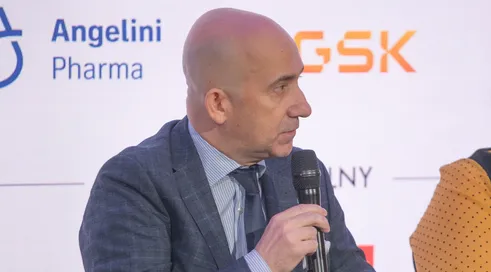
- We all see the need for pharmacists and other health professions to be actively involved in the system, in order to relieve the burden on doctors and serve the patient's welfare. The main subject to whom we should devote our time should be the patient, not as someone to whom we only need to dispense medicine, but also to give advice," said Elżbieta Piotrowska-Rutkowska, president of the Supreme Pharmaceutical Chamber, in an interview with Medexpress.
Elżbieta Piotrowska-Rutkowska: Pharmaceutical care should be included in the basket of guaranteed benefits

Published March 23, 2023 13:33
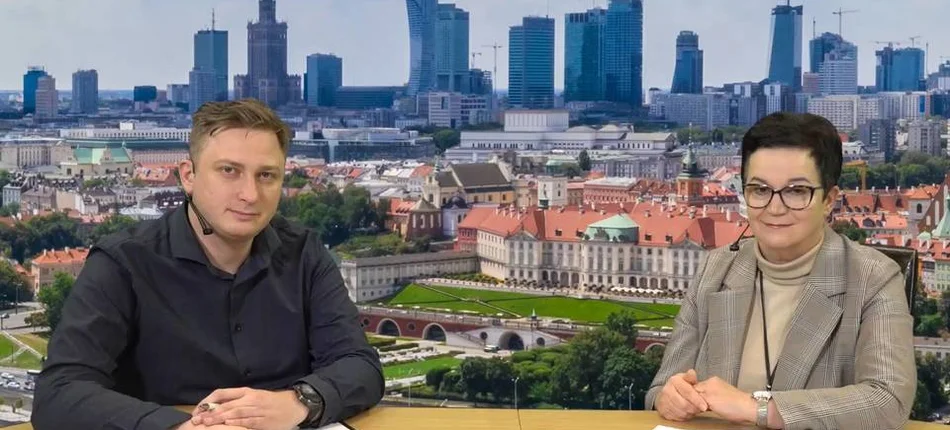
Patients hold pharmacists in very high regard. They often seek advice from them because, for example, they can't remember how to dose their medications. There was a time when the perception of this profession was moving dangerously towards being just a salesman. Now this situation is changing, and the competence of pharmacists is being increasingly recognized and used by those in power.
Pharmaceutical care is very popular in other European countries and beyond. It brings very great benefits, first of all for the patient. This model of pharmacist work should be implemented in Polish pharmacies and Polish hospitals. The hospital or clinical pharmacist should participate more in the life of the hospital. Public pharmacies, on the other hand, are already ready to provide pharmaceutical care. We have been calling for this for a long time, actually for 20 years. Now these opportunities have increased. We have a law on the profession, and the favor of the health ministry is definitely greater. The situation in the health care system, that is, the shortage of doctors and nurses, should also encourage such a solution. We all see the need to actively include pharmacists and other health professions in the system to relieve the burden on doctors and serve the welfare of the patient. The main subject to whom we should devote our time should be the patient, not as someone to whom we only need to dispense medicine, but also to give advice. We often leave the doctor and do not remember his recommendations. The pharmacist should play an important role in improving the conduct of pharmacotherapy and supervising its effectiveness. New services such as drug reviews and the "New Drug" service respond to this need. In the near future, we will also define the principles of the "Minor Ailments" service.
Let's also add that during the pandemic, patients were also included in the vaccination program. However, let's return to the services you mentioned. The summary of the pilot of drug reviews is behind us. It turned out that an average of seven drug problems were detected during them. So we see a great deal of pharmacists' knowledge of drug chemistry, and I think the service is much needed.
We have always known that such a service is needed by patients. Feedback to the doctor is also essential. Patients are treated by different specialists and sometimes they don't tell them. So there is often poly-pragmasy, and there is also the problem of non-adherence. The implementation of drug review is therefore needed, and this is confirmed by studies conducted in other countries as well. I hope that this service will soon be priced and implemented in the basket of health benefits, as the pilot is already completed.
A big problem for patients is that they often do not know how to use a newly coordinated drug. The answer to this is the "New Drug" service. The Supreme Pharmaceutical Chamber has issued recommendations on how it should be used. What should such a service look like?
Unfortunately, between 30 and 50 percent of patients who are prescribed a new drug take it incorrectly. The role of the pharmacist is to introduce the patient to the course of pharmacotherapy, recommendations, dosage regimen, during a conversation with the patient, and also tell him about possible side effects and how to avoid them. During this conversation, the patient gets the information necessary to feel safe. This service is offered primarily to those who receive a new drug. The pharmacist will supervise the course of pharmacotherapy for 30 days and will meet with the patient three times during this period. The first meeting, an informational one, will involve consent to participate. He will also be given all the necessary information about the therapy he is starting. After 7 to 14 days, the pharmacist will meet with the patient either in person or via teleinformation systems and ask him a series of questions. A third meeting will take place after the 14th and before the 21st day of taking the drug.
There is also a third project, "Minor Ailments." What can we already say about it?
This is a new service we will want to offer patients. Importantly, we don't want to step into a doctor's shoes, but we notice that patients often ask us how to handle minor issues such as cuts, malaise or gastrointestinal complaints. We are developing a policy on how to proceed when providing information on just these matters. This service will be subject to reviews, both by the academic, pharmaceutical and medical communities. So it will be a service of established value.
We are talking about the services that make up pharmaceutical care, which in turn we have been talking about for 20 years. This is care that pharmacists de facto provide, but in a somewhat perhaps less formal way. There seems to be a need to value these services. If a pharmacist does something beyond just dispensing a drug, then it would be appropriate to pay for it.
We are practicing a medical profession and these services should be publicly funded, as is the case with other medical professions. This is crucial for the pharmacist, but also for pharmacies, whose economic situation is not the best. An amendment to the reimbursement law is being processed, which will not improve these realities to any great extent. The key, therefore, is to price these services, in order to develop both the pharmacist and the pharmacy where he works. The pharmacy should be the center of medical services. We operate in a system of communicating vessels, and a facility that is in a bad economic situation cannot provide additional services. We are in the medical profession and expect financial support for health services, which include pharmaceutical care.
The Ministry of Health acknowledges that these are needed services and should be priced, but we do not yet know the mechanisms for doing so. For the time being, such services are made available only on a goodwill basis to pharmacists.
The declarations are there, but we expect concrete solutions. From declarations to the fulfillment of these promises is some way off. We only hope that it will be a short one.
Thank you for the interview.