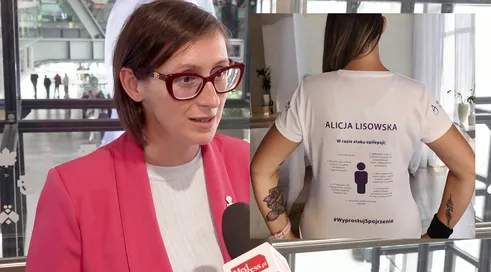
Although epilepsy affects hundreds of thousands of people in Poland, the public's knowledge of the disease is still surprisingly low. We talk to Alicja Lisowska - president of the EPI-BOHATER Foundation - about dangerous myths that can threaten health and life, and about simple but effective ways to educate the public and break down stereotypes.
More than half of Poles still believe harmful myths about epilepsy. How to change it?

Published May 21, 2025 13:25
Medexpress: How would you rate public awareness of epilepsy and first aid skills?
Alicja Lisowska: Unfortunately, I have this feeling that the longer I work with patients, the more I see that Poles' knowledge about epilepsy is still insufficient. This was shown, among other things, by the report prepared as part of the "Straighten Up Your Gaze" campaign, which we carried out together with the Foundation You Can't See Past Me.
As part of this report, we surveyed public opinion. It turned out that more than 50 percent of Poles believe that people with epilepsy should be isolated. Let me remind you that we isolate people with infectious diseases or those who threaten themselves or others - and epilepsy is not one of them.
When it comes to first aid, as many as 52 percent of respondents believe that during an epileptic seizure, something should be put in the patient's mouth. This is a very harmful stereotype that can do more harm than good - we can knock someone's teeth out, break bones and even lead to death.
Medexpress: What can help? For example, is an instructional T-shirt a good tool for a social campaign?
Alicja Lisowska: I believe that each of us should, to the best of our ability, take on the role of an ambassador for our disease. Paradoxically - there are plenty of opportunities around us to spread awareness. We don't need big budgets to do something.
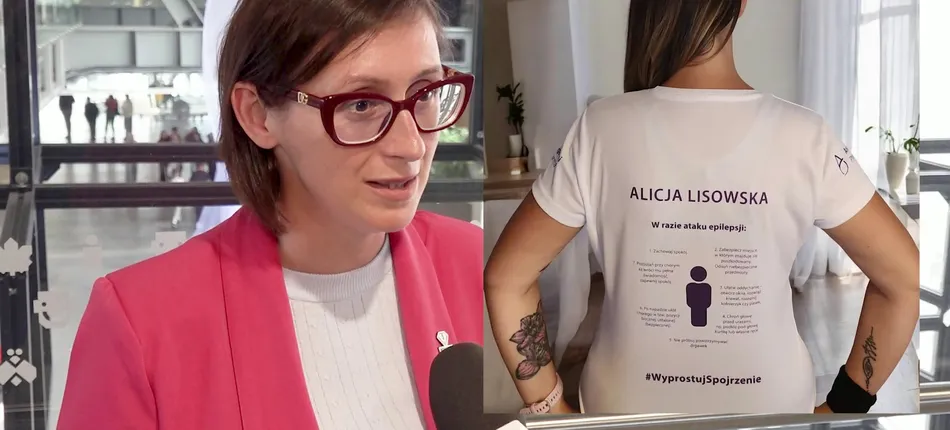
Let me give an example from my own life. I am a runner, I live in Tarchomin, and very often you can meet me on the streets of this district wearing a T-shirt that has instructions on the back to give me first aid in case of an epileptic seizure. For me, as a sick person, this is very important - it gives me a sense of security. I never know when a seizure might occur, and someone who wants to help me has clear instructions at hand.
At last year's Prague Half Marathon, many runners had more than two hours to read this manual while running behind me. I hope some of them remembered how to react properly.
Medexpress: What do you think can realistically contribute to changing attitudes and raising public awareness? Should it be health lessons, or more local initiatives like Lavender Days?
Alicja Lisowska: Education is key - and on many levels. Not only in schools, although the subject of "health education" is hugely needed and I very much hope that it will become mandatory. But education should take place on every possible platform.
Lavender Days is an example of an initiative that started out as a local one and has now gone nationwide. It is very important that as many sick people as possible get involved in such activities. Because it is also up to us, the sick, to dispel stereotypes. We should go out to people and show that it is not true that people with epilepsy cannot work - we do work and function well in society.
It's not true that we can't have children. As studies show and as doctors say - women with epilepsy can give birth to healthy children. Therefore, with our daily lives, at every opportunity, we must educate the public.
Topics
padaczka / epilepsja / Fundacja EPI-BOHATER / pierwsza pomoc / Alicja Lisowska / edukacja zdrowotna