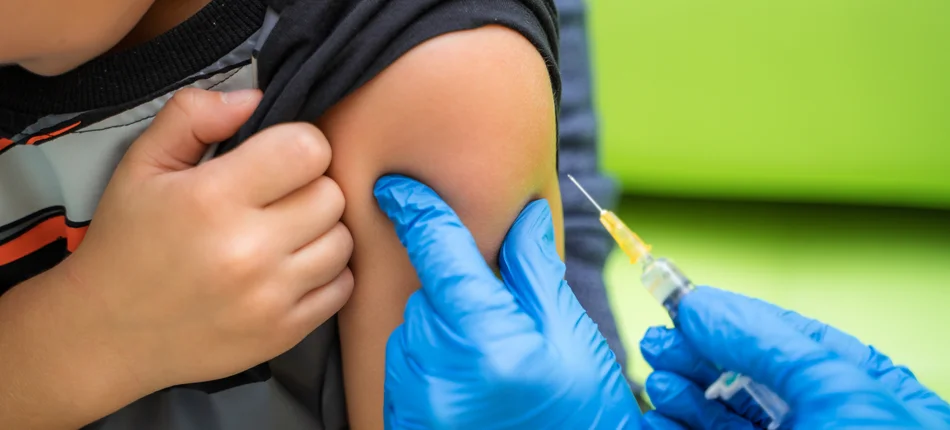
- The Foundation of the Mother and Child Institute (FIMiD), responding to the health challenges of caring for refugee families from Ukraine, in conjunction with UNICEF, is conducting an educational campaign called "Say YES to vaccinations." The initiative focuses on promoting immunization among Ukrainian children between the ages of 1 and 5 who are currently in Poland. One of the campaign's activities has been to conduct qualitative research aimed at, among other things: exploring the attitudes and experiences of Polish doctors and nurses in dealing with Ukrainian refugees, identifying needs and areas of support for medical personnel on vaccination-related issues, and examining the main factors motivating vaccination.
Mother and Child Institute Foundation suggests how doctors can talk to Ukrainian mothers about mandatory immunizations

Published Jan. 17, 2024 13:00
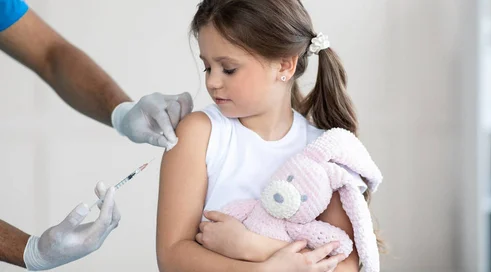
Fot. iStock/Getty Images
LEARN AND UNDERSTAND THE CHALLENGES AND NEEDS
The qualitative study conducted gathered relevant information on several key areas. First, it focused on the experiences and attitudes of Polish doctors and nurses who have daily contact with Ukrainian patients, particularly mothers of children aged 1-5. Secondly, it explored the different approaches and attitudes of Ukrainian mothers toward vaccinating their children, while identifying important motivating factors and barriers related to the vaccination issue from the perspective of medical personnel. The study also aimed to capture Polish doctors' and nurses' perceptions of the problem of Ukrainian children's immunization rates, as well as to explore the staff's expectations of the support and assistance needed to effectively manage the immunization process among children from refugee families.
HOW ARE UKRAINIAN PATIENTS PERCEIVED?
Polish doctors and nurses often look at Ukrainian patients as a group requiring a special approach. The language barrier, although smaller than before - due to education and more staff with Ukrainian, Russian or Belarusian language skills - is still a problem. Senior doctors and nurses, who speak basic Russian, are helping to improve communication. Despite these positive changes, it still takes more time to serve and take care of Ukrainian patients.
The survey also showed that doctors and nurses perceive a sense of entitlement on the part of some Ukrainian patients. Its cause may be the dissatisfaction that arises in situations where there is no possibility of immediate admission by a doctor, or when Ukrainian mothers are met with a refusal to make referrals for additional tests or a refusal to prescribe antibiotics. Doctors and nurses point out that such behavior may be due both to previous privileges granted to Ukrainian patients and differences in the functioning of health care in Ukraine, where access to doctors and medicines is less restrictive.
LANGUAGE BARRIER A KEY CHALLENGE
The survey found that the language barrier remains a major problem in communication between Ukrainian mothers and Polish doctors.
- Not only do language difficulties prolong patient service times, which is frustrating for both patients and medical staff, but they also contribute to the perception of Ukrainian patients as demanding and ungrateful. Moreover, the problem also makes Ukrainian moms often more closed-minded and distrustful of vaccinations. They don't broach the subject, are less likely to ask, are less trusting and avoid talking about their concerns, says Joanna Pruban, a psychologist and psycho-oncologist at IMiD, an expert on the campaign.
The study showed that problems in smooth communication make it much more difficult to establish the medical history of young patients. Missing or incomprehensible medical records often translate into either delays or abandonment of vaccinations. A significant challenge - from an organizational and financial point of view - is meeting the fairly frequent requirement for translated medical records. Its shortcomings are explained by mothers' ignorance of where to do the translation, and additionally by financial issues.
EDUCATION AND DOWNLOADS
The survey suggests that the main prescription for improving the situation should be education that raises awareness related to mandatory childhood vaccinations. It should be based on, among other things: the availability of doctors who speak Ukrainian and facilitating their contacts with mothers, and reaching Ukrainians directly with the topic of vaccination (e.g., at special events). An important role to play is the involvement of various institutions, such as city halls, municipal offices and educational institutions, in educational and outreach activities. They are close to refugee families and can initiate and conduct various educational campaigns aimed at parents and children. Campaign experts point out that such initiatives not only raise awareness, but have an integrative value, still needed in building mutual relations.
It is also important to equip medical personnel with useful "downloads." It should be easy to read from them, among other things:
● what vaccines were and are available on the Ukrainian market?
● what is their name (written phonetically and in Cyrillic)?
● the names of the diseases (in Polish and Ukrainian) for which there is a vaccine?
● what is the composition of a particular vaccine?
● how to proceed when the patient has not received all the indicated doses, can he be vaccinated (if so, with what) or do you need to repeat the vaccination?
SUPPORT OF ESTABLISHMENTS
The campaign, and the research conducted as part of it, also highlighted the need to support medical facilities in communicating with Ukrainian patients. In order to educate parents about the benefits of mandatory vaccinations and the safety of the vaccines used, bilingual information materials are essential. The survey showed that it would be quite helpful to develop special questionnaires for mothers of Ukrainian children, which would facilitate a quick and accurate interview about the vaccinations the child has received in Ukraine.
- Leaflets, brochures, posters or vaccination calendars should not only talk about vaccination in an understandable way, but should also help dispel myths that have grown up around the subject. This is crucial in terms of building trust," Joanna Pruban points out.
One of the campaign's activities was to develop packets with information materials in Ukrainian and distribute them to various hospitals and medical facilities. Since the beginning of the year, the IMiD Foundation has equipped 121 locations in 9 provinces with them.
WHAT CAN MOTIVATE VACCINATION - THE PERSPECTIVE OF DOCTORS AND NURSES
The research showed that the main factor prompting Ukrainian mothers to vaccinate their children is the prospect of permanent residence in Poland. What's more, younger and better-educated mothers are more likely to vaccinate, and they are also more likely to use private health care.
Another important factor in the increase in the number of vaccinations was and is the requirement for children attending nurseries and kindergartens, and less often schools, to have vaccinations. Depending on the city, a child's possession of the appropriate vaccinations increases the chances of admission to kindergarten. Sometimes it is a prerequisite. This is all the more important because for many Ukrainian mothers - especially those working and raising children alone - the possibility of nursery or kindergarten care is very important.
Doctors and nurses taking part in the survey also pointed to other, less common motivators: school nurses requiring vaccination records or families planning to travel to Western countries such as Germany, the US or Canada, where vaccination is required.