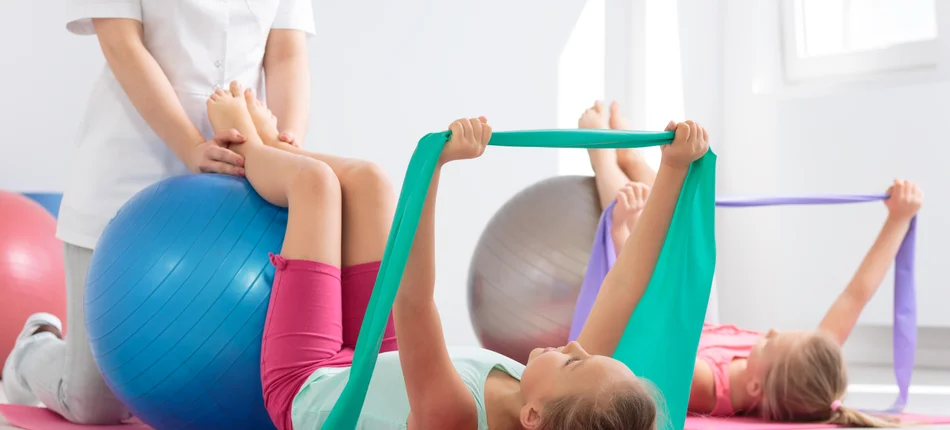
As the effectiveness of cancer treatment for children and adolescents increases, rehabilitation is also becoming increasingly important. According to a study conducted by the American Congress of Rehabilitation Medicine and the American Academy of Physical Medicine and Rehabilitation, as many as 20 of 30 adults surveyed who had undergone childhood cancer were found to have moderate or severely limited physical function. Rehabilitation started early in cancer treatment can help minimize the risk of patients developing permanent mobility limitations. Appropriately selected exercises and therapy ensure the maintenance or restoration of proper range of motion, muscle strength and motor function, which affects the quality of children's continued life.
Oncology rehabilitation for children and adolescents - what modalities work well with young children and which with adolescents?

Published Aug. 22, 2023 13:25
Fot. iStock/Getty Images
- Aspart of the oncological care of young patients with solid tumors of the musculoskeletal system, it is important to implement physiotherapy at the very beginning of treatment, even before surgery. It is not uncommon for a child with a bone tumor to have a contracture of the affected limb. It is therefore important to get the limb well exercised even before surgery. As a result,later the pain will no longer be so bothersome, and the patient will perform the exercises more effectively, which in turn will enable him to return to full physical fitness," explains Professor Anna Raciborska, head of the Department of Oncology and Oncologic Surgery of Children and Adolescents at the Mother and Child Institute.
However, it should be remembered that exercise is not possible in every situation. A contraindication to rehabilitation is a state of significant weakness in the child's body or cases in which movement may lead to a tumor rupture or pathological fracture of a limb, as well as low platelet levels or inflammation. The extent of rehabilitation and its intensity at each stage should be decided by the doctor together with the rehabilitation team.
Different needs in different age groups
The goal of rehabilitation is not only to return to physical fitness, but also to provide psychological, social and emotional support to patients of different age groups. It is often difficult for the youngest to understand the full importance of rehabilitation and the role of physical activity in recovery. Discomfort with exercise can affect their willingness to participate in activities and sometimes trigger emotional reactions. Therefore, young children require a special approach during the rehabilitation process.
School-aged children, on the other hand, are more aware of their health situation and often show an understanding of the purpose and meaning of rehabilitation. They are also more patient and able to focus their attention on one activity for a longer period of time. Unfortunately, periods of rebellion and resignation also occur at this developmental stage, with young patients resisting further work. In addition, children often feel fear of rejection by those around them due to their illness or related mobility problems. Patients at this age manifest an exceptionally strong need for acceptance, so working with them requires a great deal of empathy and attentiveness on the part of the rehabilitator.
Teenagers, on the other hand, have different needs than pre-school children, so rehabilitation must be more focused on psychosocial aspects, cognitive abilities and motivation. High school-aged adolescents show a mature attitude, understand the importance of rehabilitation in the overall treatment process, and often take responsibility for it. Physical appearance and mobility are very important to them, so they place a high value on exercise. Teenage patients already feel they are almost adults and want to be treated as such. They often want to be thoroughly informed about the entire treatment process and take an active part in it, including at the decision-making level.
Rehabilitation methods
The choice of specific therapeutic methods or movement forms depends on the individual needs of the child. It is important that therapists adapt them to the patient's age and level of psychophysical development, and take into account differences in the patient's experiences and personality.
- One of the most popular working methods used by physical therapists is play. This form of therapy, especially for toddlers of preschool and early school age, makes children more willing to engage in exercises, plus it is a natural way to learn and develop skills. Therapeutic play can involve the use of games, puzzles, blocks and other materials that engage the child in rehabilitation activities. Even in the smallest space, which is often limited in hospitals, you can create a substitute for a playground and engage children in activities that naturally strengthen muscles and correct posture. This allows children to perceive the treatment process as something positive and creates a friendly environment for recovery," says Anna Wyka-Wojeńska, M.D., rehabilitation coordinator at the Department of Oncology and Oncologic Surgery for Children and Adolescents and head of the Department of Therapeutic Rehabilitation at the Mother and Child Institute.
A popular option, not only for the youngest, is occupational therapy, including the increasingly appreciated art therapy, or therapy through art. For physically impaired children, art classes are great for improving fine motor skills (i.e. precise hand and finger movements), hand muscle tone, manual and graphomotor skills. For more able-bodied patients, on the other hand, it can be sports or dance classes with the approval of the attending physician and physical therapist.
Increasingly, modern gadgets are also being used as part of rehabilitation. For both younger children and teenagers, the opportunity to use various consoles, computer games or interactive devices can be more than just entertainment. Properly used, they allow an attractive and motivating approach to exercise, encouraging patients to take regular classes.
Another very effective form of rehabilitation is water exercise, which has a beneficial effect on improving the physical performance of children and adolescents suffering from bone cancer. Thanks to the reduction of body weight in water, patients can perform exercises without undue stress on the bones. Rehabilitation in water helps to obtain and consolidate proper joint ranges of motion, muscle strength and motor coordination. In addition, it is a very patient-friendly form. Water relieves pain and has a positive effect on the well-being of children. Exercises in the pool are perceived as pleasant and relaxing, which can help reduce stress, and they associate children with fun and a nice way to spend time.
Oncological rehabilitation of children and adolescents is a complex and multifaceted process, requiring a personalized approach to each patient. The basis is always exercises and therapeutic methods supplemented by other forms of movement. During their performance and in any type of physical activity, it is necessary to pay attention first and foremost to safety, correct form and the extent of the recommendations made. When working with both young children and adolescents, a key element is an empathetic approach, emotional support and motivation for physical effort, as well as the inclusion of the immediate environment in active participation in the process of their rehabilitation. It is then possible to achieve positive results that will allow patients to recover and function normally after cancer treatment.
Department of Oncology and Surgery of Children and Adolescents of the Institute of Mother and Child (IMiD)
Poland's oldest highly specialized Oncology Clinic for children and adolescents located in Warsaw. The Clinic's interdisciplinary, experienced team provides full diagnostics and comprehensive treatment of cancers in children from the fetal period to the age of 25 from all over the country. It specializes in the treatment of solid tumors outside the central nervous system and histiocytoses. The clinic is a reference center for sparing treatment, making it possible to save a limb for a sick child. By 2023, more than 800 endoprosthesis implantations had been performed, including those that are mechanically lengthened or by electromagnetic field. The youngest patient to undergo such a procedure was 8 months old. The Clinic's team also conducts scientific activities - including non-commercial clinical trials on the treatment of solid tumors in children.
Source: press mat.
Topics
rehabilitacja