The starting point of the Demographic Strategy 2040 adopted by the government is a statistic. "We are facing a creeping demographic catastrophe in many parts of the country, and some trends may be very difficult to curb." By 2020, Poland's population has fallen by 117,600 to 38.3 million people. A massive population decline was recorded in 14 of the 16 provinces.
A brief analysis of the causes of the creeping demographic disaster

Published May 9, 2023 14:15

Fot. iStock/Getty Images
"Around 2035, the number of people of working age will reach 10 million. With a simultaneous decline in the birth rate, seniors will make up about one-third of the population. The 80+ population will double. The latest demographic forecast of the Ministry of Finance, published by the Social Insurance Institution, predicts that the population in Poland will shrink by about 10 million, or a quarter, by 2080."
According to the Central Statistical Office, 305,000 children were born in Poland in 2020, the fewest since the end of World War II. Poland ranked fourth in Europe in terms of fertility rate.
Meanwhile, only 32 percent of Polish women plan to have offspring, according to the CBOS survey "Women's Procreative Attitudes."
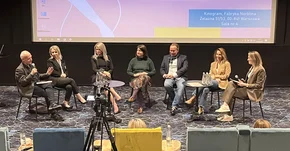
At the conference Why don't Polish women want to get pregnant? the reasons for this trend were discussed by experts invited by the Institute for Health Communication: Prof. Jacek Holowka, philosopher and ethicist, Prof. Marta Szajnik, gynecologist, Dr. Maja Herman, psychiatrist, Dr. Jacek Tulimowski, gynecologist, obstetrician, and actress Magdalena Waligórska.
The phenomenon of low birth rate, observed in many European countries, as unfavorable, requires inhibition, and for this purpose urgent action by the governments of these countries. Analysis of the causes of the problem defined by demographers belongs to medical science, social science, philosophy and politics, and they are very complex.
It's worth reading
Among the medical causes, infertility was listed first by experts. One in ten Polish women has endometriosis, and half of them are infertile. The quality of male semen, the second biological reason for infertility or difficulty conceiving a child, is getting lower and lower. Meanwhile, access to assisted reproductive techniques, including in vitro, is systemically lacking. "The lack of funding for this technique excludes from parenthood those who want to have children but are struggling with infertility. They are being left out by those in power," judges Dr. Jacek Tulimowski.
Also a problem is the varying quality of maternity care. "Some women give up on their next maternity because they can't afford to pay, and they need to have, for example, an ultrasound in the third trimester - because 'on the National Health Insurance' the date for this routine, necessary examination falls after the birth." - Dr. Tulimowski stressed.
Oil to the fire has been added by a law not allowing abortions due to incurable fetal defects. Meanwhile, the age of women getting pregnant for the first time is shifting - Polish women today often give birth to their first child at age 27 or after 30. - and pregnancy at a later age carries a higher risk of genetic defects. "In the absence of systemic support in such cases, it is hardly surprising that women give up on motherhood," judges Magdalena Waligorska.
Experts also see the reasons for the reluctance of many Polish women to have children as socio-psychological-political and cultural reasons. Of great importance is the economic and labor market situation, financial insecurity. "A young person, deciding on a commitment of 30 years, which is parenthood, needs a guarantee that he will solve all his problems: buy an apartment, educate children, lead a lifestyle that will give him a sense of meaning. Ad hoc government assistance, allowances for the next child, etc., is no help at all," Prof. Holowka believes.
Among the cultural reasons for Polish women's reluctance to have children, experts pointed to the change in their position due to the political and economic transformation of recent decades and the change in the model of society's organization from patriarchal to democratic:
"It would not have been possible to make an economic, industrial and technological breakthrough without giving autonomy to women, who have taken on the burden of a transitional situation, combining it with their traditional role. But for this very reason - the doubling of responsibilities - they simply give up this traditional role and do not bear children."
This is because in practice it is rather a sham to share responsibilities equally, and the lack of systemic support for mothers does not make it easier for them to care for their children, the participants in the debate commented. "Women today do not want to have children because they are sensible. Because no one offers them help to solve their problems. And everyone says: cope my dear, you are pretty, young, healthy and strong - everyone lived, and you will survive too. Under such conditions, women do not want to accept childbearing, and they are right," Prof. Holowka summed up this theme.
Another reason belonging to the spectrum of problems with procreation - the lack of a partner - was commented by Dr. Maja Herman: "Men today are in a difficult moment - women have liberated themselves from cultural and social dictates and prohibitions, so they have to find their way in this world, which, for the time being, raises numerous problems."
"The prospect of starting a family is receding. This is illustrated by an experiment on mice - a society that has everything is moving towards infantilization and fun," Magdalena Waligorska commented half-jokingly, half-seriously, while Dr. Tulimowski cited the conclusion of German research, which shows that the higher the GDP, the lower the fertility rate.
Psychologist Agata Ejsmont, for her part, attributes late planning to start a family and have offspring to the long time young people live with their parents - in this regard, Poles are fourth from last in the EU. Among those aged 18-34, half still live in the family home. Based on her practice as a psychologist, she also sees a burden on young women with fears - of pregnancy, childbirth, the first year with a baby at home, compounded first by the threat of a pandemic, now by war, inflation, climate change - generally due to the unpredictability of tomorrow.
The issue of responsible parenting, mainly the fear of becoming a "just a mother," according to the psychological theory of attachment, was discussed most in depth.
"Offspring become attached to one person. And she must be absolutely reliable," Prof. Holowka said. "Becoming a mother who would take on the role of a unique and exclusive caregiver is difficult. She has the right to delegate this role to other people, use the help of her grandmother, husband, count on the help of the school, the state, etc., but in a crisis situation the child should be able to return to her. Something traumatic and difficult to repair is the emotional rejection of one's own child, while maintaining one's own presence with him - this is unimaginable torture. This best explains why so many people don't want to have children."
Maja Herman affirmed that a child must have a permanent significant object until the age of three exclusively, with delegation of tasks, of course. "This gives the child a sense of security and ensures good psychosocial development. Boundaries are set, but in understanding, in empathy and in closeness with the child."
Actress Magdalena Waligorska commented on the harmfulness of the media message promoting the so-called partnership - equally - raising an offspring, an easy path - nursery, kindergarten, return to work - well, because you can't fall out of the labor market, you need to develop your career, realize yourself, nurture womanhood, because a happy mother is a happy child. Meanwhile, to a child in the first years "you have to devote yourself completely and give up a lot of things".
On the subject of ways to systemically solve the problem with Polish women's reluctance to have children, Prof. Holowka thinks that young people should "demand from successive governments a cross-party program - without voting, in which some will and some won't care about the future. They should be offered some kind of social solution financed locally, or by employing companies. In America, for example, most companies pay half of their workers' insurance. Either the state helps young people plan their lives, buy an inexpensive home, arrange child care and arrange for their education, or we stop at wishful thinking."
In conclusion, what needs to be changed is the lack of funding for the IVF procedure, the inhumane prospect of giving birth to children with lethal defects, the uneven quality and accessibility of perinatal care and to psychological support, starting with girls at school, potential mothers-to-be, and the maladjustment of young men to the new position of women, the improvement of which probably lies in the domain of educational institutions and upbringing at home.
The table of contents of the government document mentioned at the outset mentions among the "Objectives and directions of intervention" under the headings: "counteracting the decline in the standard of living of the family with the birth of more children", "increasing the degree of satisfaction of housing needs". "strengthening the family," "strengthening family ties," "removing barriers for parents who want to have children," "developing a parent-friendly labor market," developing health care, infrastructure and services needed by families, improving the quality of education and much more. Since it is the words that create reality, these - round and smooth - resemble the "wishful thinking" mentioned by Prof. Hołowka, and have a rather low "degree of satisfaction" of hopes for reversing the creeping demographic disaster.