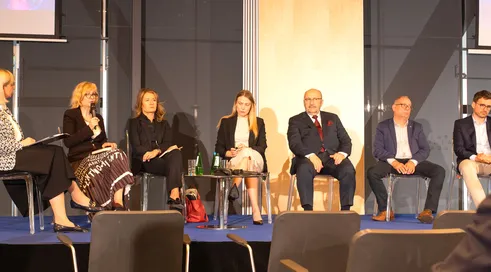
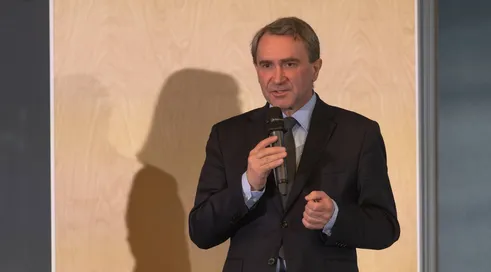
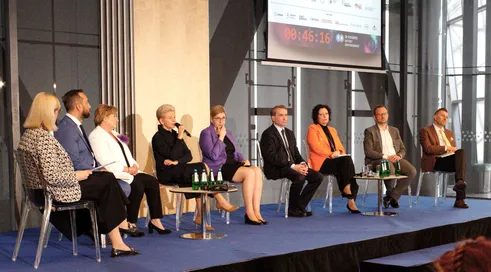
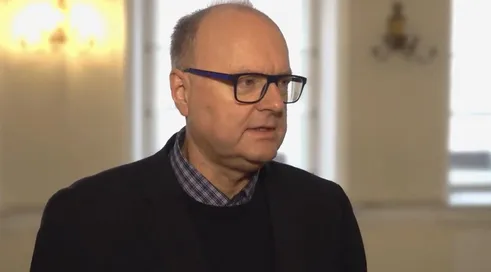
There won't be good accessibility to modern therapies without ensuring significantly higher health expenditures," Vice President of the National Health Fund Jakub Szulc said during a discussion dedicated to civilization diseases at the Patient Empowerment Congress. The panel dedicated to diseases of civilization was dominated this time by oncology and chronic pain management. Not without reason, it is cancer and unrelenting chronic pain that raise the most concerns and emotions.
Patient Empowerment 2025
The future is won today. Patient at the center - proactivity in the fight against civilization diseases

Published June 3, 2025 07:29
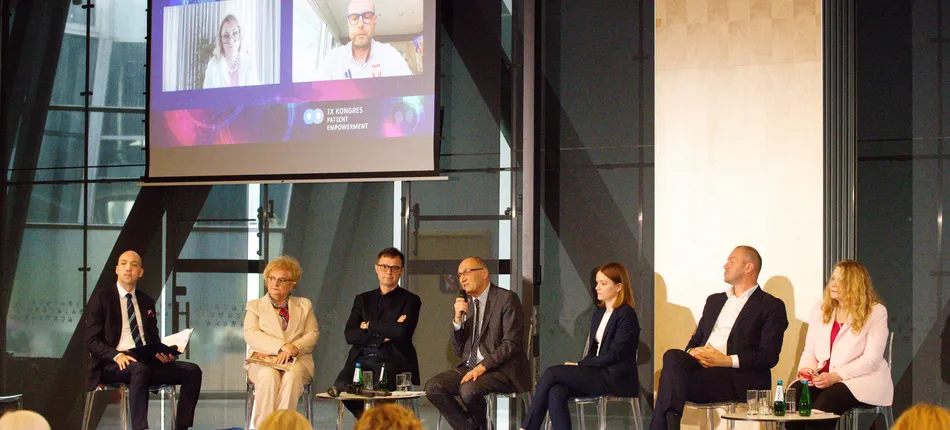
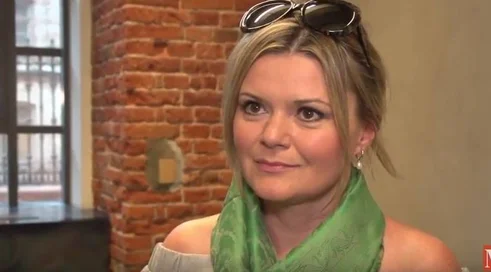
- Women, suffering from breast cancer, are often afraid to ask their doctors questions, which is why our breast cancer knowledge center is very popular, said Magdalena Cardinal, president of OmeaLife. - We urge patients to explore information about the specific subtype that affects them, to gather knowledge about a topic they will actually have to face and learn to live with. This reduces the likelihood that in conversations with doctors, but also with themselves, they will ask questions about whether they are sure they are being treated well, because, after all, a friend at the hospital or a patient from an online group "had it differently." The ladies exchange experiences, and sometimes this is constructive, but not always.
Magdalena Cardinal pointed out that even the best-educated patient does not become an expert, but knowledge empowers them. They learn, for example, that there are tools that could optimize the oncology treatment pathway - it's hardly surprising that they want to use them. Such a tool is multigene testing. OmeaLife's CEO cited the results of a study conducted earlier this year involving nearly 1,300 breast cancer patients. Ninety percent of them experienced side effects related to chemotherapy - and there are also huge concerns related to this topic that women experience when they learn of the diagnosis. - Many of them may question whether chemotherapy in their case will benefit them, she acknowledged. Onkotype DX tests allow, in certain types of cancer, to determine the risk of recurrence, and therefore - the necessity or lack thereof of including chemotherapy. - Our patients would like to be able to benefit from such a test. Many women, in fact, choose to do so and are satisfied. Both those who have been spared chemotherapy by the test and those who have received confirmation that in their case chemotherapy will enhance the effects of treatment," Magdalena Cardinal stressed, noting that in Europe this tool has been in operation for more than a decade. - Reimbursement of the tests was not sought before, because there was no access to many of the molecules with which patients are treated with the intent to cure. At the moment, when it comes to the availability of these therapies, we have nothing to be ashamed of, very good lines of treatment have been created," Magdalena Cardinal stressed, noting that while in the context of multigene testing, attention is most often paid to the benefits to the patient, no less important is the sense of certainty and security for doctors making therapeutic decisions.
During the discussion, the challenges of treating early breast cancer in particular resonated strongly. As Prof. Jacek Jassem, from the Department of Oncology and Radiotherapy at the Medical University of Gdansk, chairman of the board of the Polish League Against Cancer, chairman of the Central and East European OncologyGroup, said, we speak of early breast cancer when cancer cells do not appear outside the tumor and lymph nodes. If there is even one metastasis, then we are already talking about disseminated cancer. - Both diseases are being actively treated at the moment, and disseminated breast cancer is increasingly becoming a chronic disease with which the patient can live for years, although it is difficult to recover from it," the expert stressed, adding that early breast cancer does not necessarily mean a better prognosis in terms of the possibility of recurrence. - We are dealing with different clinical situations. When a patient has no cancer cells in the lymph nodes and the lump is small, the prognosis is excellent, the five-year survival rate in breast cancer overall reaches 80 percent, he said. - he reminded. However, there are also in early breast cancer patients with a much higher risk. An example is triple-negative breast cancer, which is very aggressive, with lymph node metastasis, and is aggravated by the young age of the patients, because the cancer has a more aggressive course. - However, recurrences after five years in this type of cancer almost do not happen, their peak occurs shortly after primary treatment, then the risk remains very low for years, he explained.
Hormone-sensitive cancer has a different course, much less aggressive, but with a persistently high risk of recurrence for decades. - This risk decreases very slowly," Prof. Jassem said. As the expert stressed, in order to avoid late recurrences, hormone therapy should be prolonged. - First it was used for 2-3 years, at the moment the gold standard is 5 years, in some cases even ten. The therapy is acceptable, the patient usually takes one pill a day, there is no major toxicity," he pointed out, adding that access to new drugs has improved tremendously in recent years. - We are not talking about two or three years. This positive change has already started earlier. We are not much out of line with rich Europe," he said, while pointing out that we can only talk about unmet need in the case of CDK4/6 inhibitors (cyclins). - In fact, about one drug, because the other is already reimbursed," he pointed out.
As of April 2025, abemaciclib was reimbursed. The second drug, ribocyclib, which has been approved by the European Commission for use in a broad patient population - including patients without lymph node involvement - with HR+/HER2- early breast cancer at high risk of recurrence, is awaiting a decision. The reimbursement of a single cyclamide, therefore, does not close the topic of providing appropriate care to patients with early breast cancer at high risk of recurrence. The latter - ribociclib - could benefit a wider group of women. This is because we know that also in patients with a small tumor, without metastasis to the axillary nodes, there are recurrences after treatment.
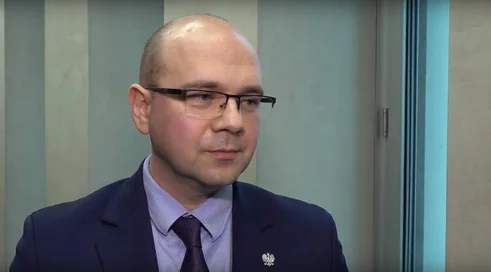
- Without revolutionary changes in the health care system, we manage to move forward, said Jakub Szulc, deputy president of the National Health Fund, recalling how a decade ago, shortly after the oncology package came into force (2014), he prepared a report, working for an international consulting firm, on the situation of oncology patients and what needs to be done to improve it. - Today we tend to focus on shortcomings and the need to catch up with European standards, but in fact in many areas we are already meeting those standards, he assessed.
At the same time, the deputy head of the National Health Fund stressed that it is necessary to respond - in treatment decisions - to scientific reports. - I'm not just talking about breast cancer, but about all solutions, recommendations that should be implemented. We should adapt our solutions to what science says.
In his opinion, this is all the more important because the epidemiology is absolute. Breast cancer, but also other cancers, are diseases of civilization, and one has to reckon with an increase in their number. - This is not only an organizational challenge, but also a financial one. Let's remember that we are still, as a country, at the end of the European pile in terms of health expenditures, those public and in general," he stressed, adding that if we want to respond to the challenges that epidemiology will bring in the near future, it will be necessary to increase spending. - We spend 5.3 percent of GDP from public money. If we want to secure health needs, we need to spend considerably more.
The topic of money cannot be ignored when deciding whether to cover new drugs or tools. Aleksandra Zawada, Acting Head of the Chemotherapy Department in the Medical Technology Assessment Division, Agency for Health Technology Assessment and Tarification, stressed that in the case of multigene tests, the assessment procedures are identical to those for drugs. - We study efficacy and safety, taking into account a broad review of the literature," she said, admitting that there is no doubt about the merits, because the tests do indeed allow assessment, in the case of patients with early breast cancer, of the risk of distant metastasis, i.e. the need (or lack thereof) for chemotherapy. Based on the assessment, the Minister of Health will be able to assess whether the system can afford it. - The costs are quite high, but it should be remembered that incurring them will avoid unnecessary chemotherapy, which translates not only into savings on drugs, but also system costs, hospitalization, outpatient visits or treatment of side effects. A better quality of life for patients is not overlooked either.
The issue of multigene tests was also addressed by Katarzyna Piekarska, a KO deputy, announcing that she would be filing a parliamentary interpellation on their reimbursement. - We have a right to knowledge. The patient today is increasingly aware, and wants personalized, tailor-made therapy," she said, recalling that she herself is an oncology patient. The politician focused primarily on the issue of prevention, admitting that she doesn't understand how such reluctance to undergo screening tests can prevail in an increasingly educated society. In her opinion, this can only partly be explained, for example, by traffic exclusion, which should be combated, for example, by mobile points reaching poorly connected localities. - However, I don't understand how screening can be avoided by women who have undergone treatment for breast cancer," she admitted. Piekarska recalled that already in the previous parliamentary term there was talk of the need for educational campaigns in the area of health and prevention at the EU level, as well as joint purchases of critical medicines or joint research on a cancer vaccine. - The EU could do more, she stressed.
Raising health awareness would undoubtedly be helped by health education at the school level, but, she lamented, it is entering as an optional subject from the new year. - I see a big role for patient organizations but also experts in breaking down harmful stereotypes about what health education is and explaining that its main purpose is to make young people aware of their responsibility for their own health.
Elzbieta Markowska, president of the Polish Coalition of Oncology Patients, also joined the call for reimbursement of multigene tests. - They are expensive, but they are needed," she addressed the Fund's vice president, Jakub Szulc. As she stressed, it is particularly important to level the playing field for patients from smaller towns, treated outside leading oncology centers. - Every patient should have the opportunity to benefit from innovative treatment. Patients and their relatives are becoming better educated, with information on what therapies are or may be available. The idea is to get doctors from smaller hospitals to consult our cases," she pointed out. The hope, she said, is that the National Oncology Network has come into effect and that the importance of coordinators is growing. - Patients are often lost, they don't know what to do, what doctors say, she admitted.
Professor Mateusz Jankowski, who moderated the discussion, pointed out that Poles' fears in the area of health relate firstly to cancer, secondly to pain. He also recalled data showing that one-fifth of the adult population struggles with pain, and that pharmacological methods of relieving it can lead to serious problems (the opioid crisis in the United States is the clearest example of this).
As Prof. Tomasz Mandat, head of the Nervous System Tumor Clinic at the National Cancer Institute in Warsaw, stressed, an established and proven method of non-drug pain relief are spinal cord stimulators, which have been used for several decades. - While the implantation of such a pacemaker used to be associated with extensive surgery, today these procedures are far less invasive, involving the insertion of a matchstick-diameter electrode into the spinal cord, this is done percutaneously, and the device itself is placed not under the patient's arm, like a pacemaker, but on the back or buttock, he explained. With an efficiency of up to 80 percent, the pacemakers can also be used in oncology patients, of whom up to 20 percent experience severe pain at the time of diagnosis, and up to half of patients with a five-year survival rate. - This is associated, of course, with improvements in the effectiveness of oncology therapies; some patients develop neuropathic pain, which is a chronic disease.
For these patients, the expert explained, addiction-inducing opioids, which were intended to relieve pain in end-of-life patients, cannot be used. This is why there is a growing interest in non-pharmacological therapies in highly developed countries. - In the state of Florida, four times more pacemakers are implanted annually than in Poland," stressed Prof. Tomasz Mandat.
Zbigniew Maciejewski, a para-athlete who won a bronze medal in individual time trial at the Paralympic Games last year, talked about what the possibility of such a therapeutic option might mean for the patient. As he said, when a traffic accident robbed him of his fitness and made it necessary for him to undergo more than a dozen surgeries, doctors spread their hands helplessly. The situation was changed by a scientific program in which he was implanted with a pacemaker. - The last years before this operation were vegetation in bed and constant pain, thoughts of euthanasia. After the operation, the pain decreased by several degrees, and a few months later I was able to return to normal functioning," he recounted. The implantation of a latest-generation pacemaker marked another leap. - From a person living on a bed, in a wheelchair, I was able to become an umbrella athlete," he said.
Asked about the prospects for financing this solution, the deputy chairman of the National Health Fund recalled that the Fund's role at the moment comes down solely to the technical administration of the process of contracting services and settling payments. In turn, decisions on valuations and whether benefits will be included in the basket are made by the AOTMiT and the Ministry of Health. - We have received with concern the AOTMiT's proposal to reduce the valuation of pacemaker implantation and replacement. We are concerned that in an era of inflation, but also of technological development, which translates into an increase in the price of devices, their availability to our patients will be less, especially when it comes to more advanced, modern devices," he said.
Reduced availability of out-of-hours pain therapies can translate, clearly, into the need for drug therapies, which are associated - as the example of the US, where 100,000 people are expected to die from fentanyl addiction this year alone, shows - with serious public health risks.
Topics
Patient Empowerment