The therapeutic advances made in lung cancer over the past few years have been called a revolution by experts. New drugs are hitting cancer cells more and more precisely, patients are living longer and better quality of life. Most importantly, this progress is still ongoing. On World Lung Cancer Day, celebrated on August 1, experts take stock of changes in the treatment of patients with this cancer and list problems that need to be solved. The day aims to raise awareness of this disease, which is one of the most frequently diagnosed and deadliest cancers in the world.
Today is World Lung Cancer Day

Published Aug. 1, 2025 10:31
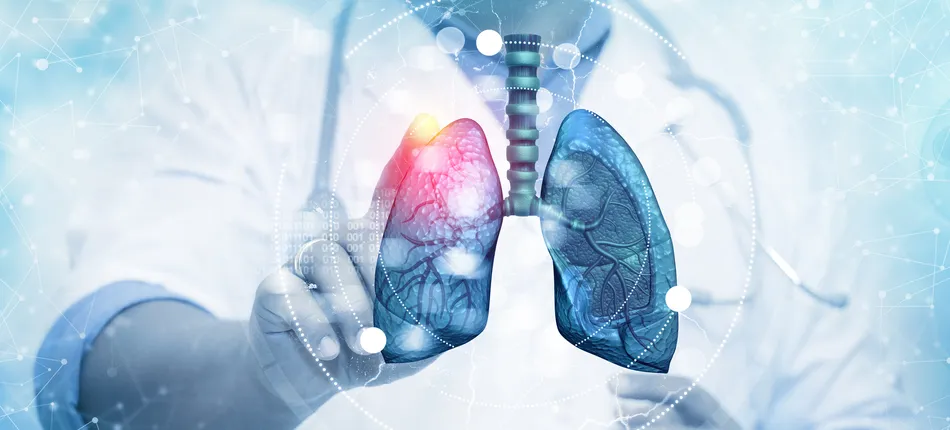
Fot. iStock/Getty Images
"I'm back at work, living a normal life."
Until a dozen years ago, lung cancer patients knew they had three treatment options: chemotherapy, surgery and/or radiation. Over the past few years, a plethora of new drugs have become available for them and have been reimbursed. Many of these modern targeted therapies are for patients who have never smoked but have lung cancer caused by various mutations. These drugs do more than just prolong life. - A patient with a mutation in the EGFR gene recently wrote on our FB: "I'm back to work, living a normal life." Could there be anything more wonderful for a person with lung cancer? Especially since patients with mutations in the EGFR, ALK+ or KRAS gene are usually young people who have young children," says Malgorzata Maksymowicz, who has had lung cancer for years and runs a support group for lung cancer patients on FB.
Modern targeted drugs also allow patients with ALK mutations to live a normal life. - And what's more, they protect them from brain metastasis, which is probably the worst," adds Malgorzata Maksymowicz.
It is in the treatment of non-small cell lung cancer that there has been a huge breakthrough. Until recently, this cancer was considered almost always fatal, and the only method that could lead to a cure was surgery. Even when a patient had stage one cancer and was operated on radically, his risk of recurrence was almost 20 percent, and in the case of stage two and three it reached 50-70 percent, and if there were distant metastases, doctors could only offer the patient chemotherapy or palliative radiotherapy, and still most patients lived an average of 6-8 months.
Currently, doctors have at their disposal drugs that molecularly target specific mutagenic gene variants, or so-called targeted drugs, as well as immunotherapy, which does not directly destroy cancer cells, but tunes the immune system so that it sees these dangerous cancer cells and destroys them itself. A few months ago, it was found that adding chemotherapy or a bispecific anti-EGFR and anti-MET antibody to monotherapy improved treatment outcomes. A mutation in the EGFR gene is detected in 10-14 percent of patients with adenocarcinoma of the lung, which is one subtype of non-small cell lung cancer.
Let's start with prevention
Nearly 23,000 people die of lung cancer in Poland each year. To improve this infamous statistic, primary prevention is essential. - Back to the fight against smoking. The Polish Lung Cancer Group will actively conduct an anti-smoking campaign, which is also to concern
e-cigarettes, as they are a stepping stone to regular smoking, says Prof. Dariusz M. Kowalski, clinical oncologist, Secretary General of the Polish Lung Cancer Group. - Patient participation in lung cancer early detection programs should also be increased. The idea is that more patients should have low-stage lung cancer detected, because such patients can be radically operated on. The only method that can detect cancer early is low-dose computed tomography.
If a patient develops symptoms that may indicate lung cancer, including chronic cough, shortness of breath and chest pain, expectoration of blood, early rapid imaging diagnosis is essential, rather than treating him with yet another antibiotic. - PCPs have the option of ordering a chest CT scan for people with suspected lung cancer. When this examination indicates an abnormality, the next step should be the collection of biological material, i.e. sections or biopsies, followed by advanced molecular diagnostics and immunological diagnostics, which make it possible to qualify patients not only for treatment at the disseminated stage, but also for radical treatment, says Prof. Kowalski. These advanced diagnostics include next-generation sequencing, or NGS, as the primary method of molecular diagnostics, and immunochemical determination of PDL-1 protein, or qualification for immunotherapy.
The next step in the management of a lung cancer patient is the so-called MDT procedure, i.e. the qualification of the patient for the appropriate treatment method, which is carried out by a multidisciplinary team. - It must include a thoracic surgeon, a clinical oncologist, a radiation oncologist and often additionally a molecular biologist, a pathomorphologist, a specialist in diagnostic imaging or a pneumonologist," Professor Kowalski lists. - In recent years, incredible advances have been made in the treatment of lung cancer. Two new therapeutic classes of drugs are available - molecularly targeted drugs and immunotherapy, which, properly selected according to the type of patient's cancer, have completely changed the lives of lung cancer patients. They have not only prolonged it, but also improved its quality.
So far, modern treatments have not been developed for all lung cancer patients. - I hope that new drugs will appear for a growing group of patients. However, I would like to emphasize that even if the drug is effective in only 1 percent of patients, after all, it means that 230 people have been saved - because every year in Poland lung cancer is detected in 23,000 people, and many of them got sick through no fault of their own, they never smoked cigarettes," says Malgorzata Maksymowicz.
Not all patients receive modern treatment not only because drugs targeting their mutation have not yet been developed. The reason is also that not all patients have molecular testing, and even if it is done, the patient sometimes has to wait several months for the result. During this time, the disease progresses and the patient may no longer qualify for treatment.
Support in treatment
However, access to modern drugs - effective and safe - is not enough. Good organization of patient care is also important. - There were supposed to be an oncology network and lung cancer unity, there were supposed to be coordinators everywhere to coordinate the process of diagnosis and treatment of cancer patients, but the average patient knows little about such plans and is not very interested in them," says Malgorzata Maksymowicz.
So what do lung cancer patients face today once they have a diagnosis and have begun treatment? - They are left alone with their disease and the side effects of oncology treatment. They have their next appointment with an oncologist in three or four months, and during that time they develop complaints that they don't know what to do about. PCPs are not familiar with oncology treatment, and with cracked fingernails or annoying skin lesions, patients will not go to the ED after all," says Malgorzata Maksymowicz.
At the start of oncology treatment, few patients get a referral to a dermatologist-oncologist. Exceptions include situations where a doctor or nurse calls the patient a week or two after starting treatment and asks how he or she is feeling. - This happens in countries where cancer patients live longer than in our country," says Malgorzata Maksymowicz. - Such a patient feels taken care of, is reassured. This kind of support gives him a sense of security, and this has an impact on treatment outcomes.
According to Malgorzata Maksymowicz, leaving the patient to fend for themselves and lack of specialized support when side effects appear may be one of the reasons why Poland is in the lead when it comes to the number of deaths from lung cancer. - That's why I advise anyone who starts cancer treatment and writes to me on FB to enroll in a home hospice as soon as possible. Such a facility will provide contact with specialists as soon as side effects of therapy appear. The only problem is that there are not enough home hospices in our country and you have to wait in line, sometimes for several months, until a place becomes available," says Malgorzata Maksymowicz.
Malgorzata Maksymowicz believes that patients with lung cancer need not so much psychological help, about which there is a lot of talk, but the support of a doctor, nurse or coordinator whom they could call in case of need and who would also call them from time to time. - Psychological help would be more useful to the patient's relatives, who often don't know how to talk to them. In my support group on FB, mainly the daughters of patients ask a lot of questions. They are the ones who need not only information, but also psychological support. They want to talk, they feel lost and often terrified by the situation that has befallen their loved one," says Malgorzata Maksymowicz.
infra