An international survey of seniors suffering from ulcerative colitis and Crohn's disease, lectures by specialists and meetings in Polish cities, and the purple illumination of famous edifices - on May 19, patients with inflammatory bowel disease (IBD) around the world will celebrate World IBD Day.
Today is World IBD Day. The number of elderly patients is increasing

Published May 19, 2023 08:00
fot. Towarzystwo J-Elita
The survey for people with IBD aged 60 and older was created in seventeen languages and includes, among other things, questions about quality of care and life for seniors. It was created by experts from the European Federation of Crohn's and Colitis Ulcerosa Associations (EFCCA). The Polish version was developed and made available today (19.05.) on its website by the EFCCA-affiliated "J-gut" Society.
- "We want to learn more about the condition, treatment, complications and associated diseases of people with ulcerative colitis and Crohn's disease at an older age," explains Magdalena Sajak-Szczerba, secretary of the "J-gut" Society and EFCCA board member. - Admittedly, young people, between the ages of 20 and 29, are most likely to develop IBD, but experts estimate that in the next decade as many as one-third of all patients will be older people.
That's why the slogan for this year's campaign is "IBD has no age." Its most important demand is equal access to the best treatments, regardless of age. Seniors with IBD struggle with many conditions and take many different medications. Unfortunately, they are underrepresented in clinical trials. Therefore, there is a risk that they may not fully benefit from the best treatment options. Hence, more knowledge about their health condition is needed. The aging population of IBD patients requires comprehensive action and preparation of the health care system. Counteracting age discrimination and ensuring the best possible quality of life for older IBD patients are also important.
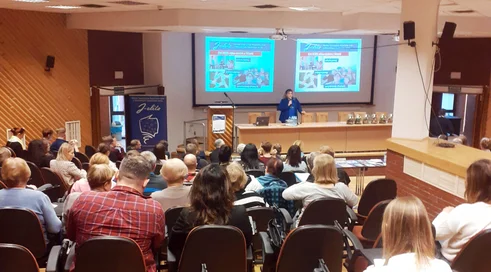
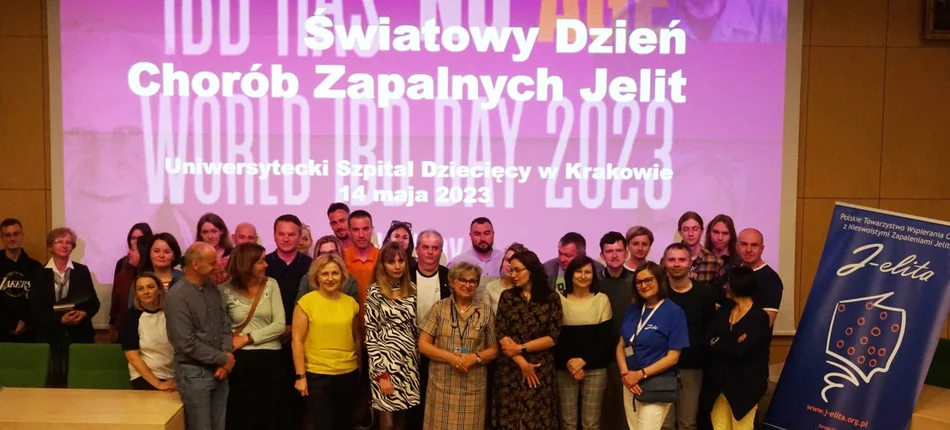
On the occasion of World IBD Day, the "J-intestinal" Society is organizing events throughout Poland. The celebration began last Sunday, May 14, at the University Children's Hospital in Krakow with an open workshop for patients, with a lecture by, among others, pediatric gastroenterologist Prof. Malgorzata Sladek.
Scheduled for Saturday, May 20, is the IBD Education Day in Kielce, with lectures by specialists, a picnic for sick children and their families at the Nature and Forestry Education Center in Glinna near Szczecin, an educational booth in the center of Wroclaw (details on the association's website - j-elita.org.pl).
Traditionally, various buildings will be illuminated in purple - the color of the NZJ - today, including: M. Karlowicz Philharmonic Hall in Szczecin, Tarczynski Arena stadium in Wroclaw, Tauron Arena performance hall and Father Bernatek footbridge on the Vistula River in Krakow.
Inflammatory bowel disease (IBD), also known as inflammatory bowel disease, is a chronic autoimmune disease that includes ulcerative colitis and Crohn's disease. The disease manifests itself with diarrhea (up to 30 bowel movements per day), abdominal cramps and pain, rectal bleeding, weight loss, fever and fatigue. It has periods of exacerbation and remission, when symptoms subside or are less severe. IBD can be accompanied by extraintestinal symptoms, affecting the eyes, joints, or skin, among others. Patients in an exacerbation often require hospitalization, and many people struggling with a severe form of the disease undergo surgery to remove a section of the intestine (in Crohn's disease) or the entire large intestine, or what is known as a colostomy (in ulcerative colitis) and a stoma.
Source: press release