Tooth trauma. What next?

Published Jan. 20, 2022 11:04
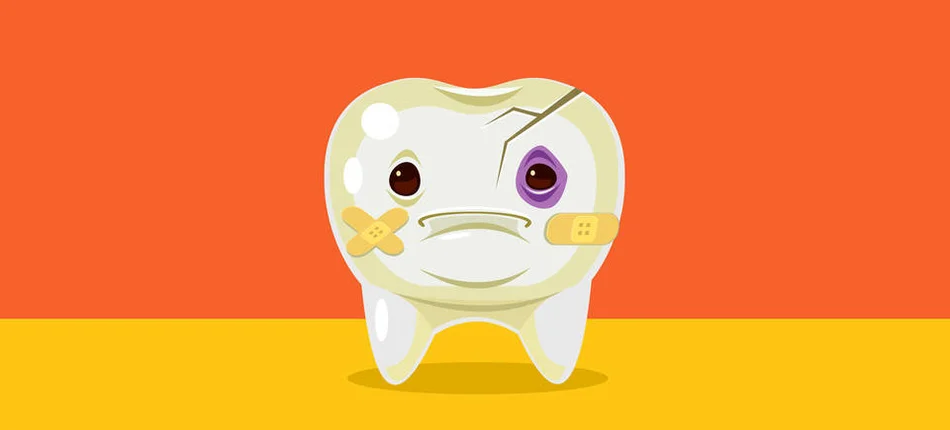
Fot. Getty Images/iStockphoto
An accident on a ski slope and your teeth. How to protect yourself against injuries?
Even seemingly harmless injuries, after which we do not feel pain or visible damage to the crown, require diagnostics because they could have damaged the tooth structure. Therefore, each impacted tooth should be examined, x-rayed and subjected to pulp vitality test, which will give an answer to the question whether it responds properly to electrical stimuli. The more so as the consequences for our health may only appear after some time. Sometimes it is several hours when the adrenaline level drops, and sometimes even several days.
What signals from the teeth should particularly worry us?
- A tingling sensation is a natural reaction to shock, but an important sign that something may be wrong, should also be the emergence of hot-cold tooth sensitivity, which may indicate damage to the enamel, or the slightest feeling of mobility in jaw, which may indicate a more serious injury. Even if the fracture is not immediately visible, there may be a slight fracture of the bone in the gap between two teeth, which is not such a rare situation, and may not be visible without careful diagnosis. The obvious indication for a visit to the dentist is swelling, which may show up after a few days, says the drug. dent. Bartłomiej Karaś, member of the Research Department of the Polish Endodontic Society.
When the teeth are injured
- In the optimistic version - when the damage is minimal - the tooth requires three months of observation so as not to overlook the moment when it may be necessary to implement treatment. However, if at the first visit we see that the tooth structure has been damaged, we know that it will require dental intervention: root canal treatment, reconstruction (extension), or even removal - explains Dr. Karaś.
Regardless of whether the tooth has been knocked out (the tooth has fallen out of the socket) or broken (the crown is damaged), it is important to find the fragment if possible, rinse it under running water and deliver it to the dentist as soon as possible. - Such a procedure creates an opportunity - as long as the tooth was healthy - for sticking the part that has been broken off - explains the specialist.
How to transport a broken part of a tooth?
It's best in your own saliva, that is, keeping it in your mouth. Since this solution obviously does not work for children (risk of swallowing), you can keep it in milk (it has a slightly alkaline pH, similar to saliva), or - taking into account that we do not often have this product during a bicycle trip or on a ski slope - in the water. The most important thing is to do it as quickly as possible (preferably within an hour or two).
press info