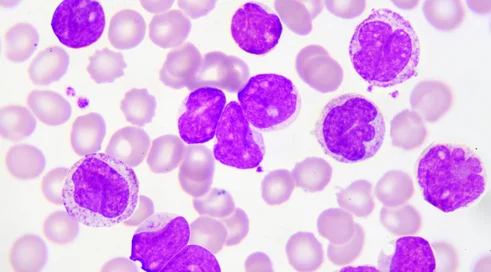
May 28 marks World Blood Tumor Day. According to the Institute of Hematology and Transfusiology in Warsaw, about 150,000 people suffer from these cancers - more than 6,000 cases are diagnosed annually. Over the past three decades, the incidence of blood cancers has doubled - people aged 50-79 are most often diagnosed, but younger people are becoming increasingly ill - The youngest patient in Poland diagnosed with plasmocytic myeloma was 19 years old.
World Blood Cancer Day

Published May 28, 2023 12:22

- The mainstay of testing is a blood count, which reflects our overall health - such tests should be performed prophylactically once a year. It is important to remember that the sooner we detect the disease, the more effective the treatment will be. The scope of diagnosis and treatment in the field of hematooncology is at a very high level. A good example is plasmocytic myeloma, which, thanks to the development of medicine and the availability of modern therapies, is becoming a chronic disease, although still incurable and heterogeneous. Treatment makes it possible not only to improve the patient's quality of life, but also to prolong it. Due to the nature of the disease - recurrence and increasing drug resistance - patients need a full range of therapies in this area. Waiting with hope for new therapies are patients in the 4th and subsequent lines of treatment and with nephrological complications, because it is for them that therapeutic options have run out and are currently standing against the wall without access to effective treatment, despite previous therapies - emphasizes Lukasz Rokicki president of the Wieslawa Adamiec Carita Foundation.
Blood cancers are diseases in the area of hematological diseases that develop in the hematopoietic system - in the bone marrow and/or the lymphatic system. Tumor cells become incorporated into the bloodstream thereby displacing healthy ones. This causes them to be unable to perform their previous functions in the body, such as fighting infection, preventing hemorrhage or transporting oxygen. We divide blood cancers into cancers of the hematopoietic system and cancers of the lymphatic system. I include plasmocytic myeloma, acute myeloid leukemia, chronic myeloid leukemia, acute lymphoblastic leukemia, chronic lymphocytic leukemia (the most common type of leukemia), non-Hodgkin's lymphomas, Hodgkin's lymphoma.
- As a foundation for plasmocytic myeloma patients, we know how important it is to educate the public. Few people realize that there are other blood cancers besides leukemia - that's why, especially on a day like today, we will remind people about the importance of regular blood tests, which can be performed under the National Health Fund," explains Lukasz Rokicki President of the Wieslawa Adamiec Carita Foundation. - I would also like to point out that myeloma today is a completely different disease than it was even 20 years ago. The introduction of new therapies to successive lines of treatment has significantly affected the lives of patients with plasmocytic myeloma - we are currently talking
about several years of life, not a few, as was the case just two decades ago. The current problem in the treatment of plasma cell myeloma is growing drug resistance, especially to the mainstay drugs such as bortezomib and lenalidomide, he adds.
Plasmocytic myeloma is a rare bone marrow neoplasm of a recurrent nature that arises from the proliferation of abnormal plasma cells. The disease causes bone pain, bone fractures, anemia, easy bruising, fatigue, recurrent infections and excessively high blood calcium levels. Although plasmocytic myeloma remains an incurable disease, it is becoming a chronic one thanks to advances in science and the availability of appropriate therapies.
Blood count - is it enough?
- Myeloma is a rather insidious disease that resembles other ailments. In most patients, it manifests itself as bone pain in the back, so patients very often seek advice from an orthopedist or neurologist. The pains are caused by multifocal damage to the bones, such as the spine, ribs, sternum and skull and, less frequently, the limbs. They result from infiltration of the bone marrow by cancerous plasmocytes. On blood counts, the most common abnormality in myeloma is a reduced red blood cell count and hemoglobin concentration, resulting from anemia. A three-digit ESR, the so-called Biernacki reaction, should also alarm the GP. Also very characteristic of the disease are elevated creatinine levels, which indicate poorer kidney function and damage, and elevated calcium levels. In addition, in patients with myeloma, a urine test shows the presence of protein, explains Professor Piotr Rzepecki, head of the Department of Internal Medicine and Hematology at the Military Medical Institute
What is the treatment for myeloma patients?
Usually in oncology, the first treatment is the most important, which very often aims to radically remove the cancerous lesion. Unfortunately, plasmocytic myeloma is a heterogeneous disease and requires an individual approach and a wide range of therapies with different mechanisms of action as it changes during the course of the disease.
- A current challenge in myeloma treatment is patients with the problem of increasing resistance to treatment with initial-stage agents such as lenalidomide and bortezomib, which are used in most three-drug regimens. Which leaves patients diagnosed after 2018 and with renal complications with limited options for further treatment. All of the three-drug therapies currently available in the drug program include bortezomib or lenalidomide. Of the patients I treat, this is about 60-70% of patients," explains Dr. Dominik Dytfeld
of the Department of Hematology and Bone Marrow Transplantation at the Karol Marcinkowski Medical University in Poznan, president of the Polish Myeloma Consortium. - The drug program relatively provides good therapies for patients in the early stages of resistance. Unfortunately, after line 3, where we deal with patients in this more advanced stage of the disease, access to modern therapies is significantly limited. Therapies such as isatuximab with pomalidomide, isatuximab with carfilzomib and dexamethasone, daratumumab with carfilzomib and dexamethasone are missing, he adds.
- The availability of therapies has improved significantly - we have a comprehensive drug program that provides European accessibility to new therapies. There are still individual therapies that we are still waiting for and hope to have available to patients soon. I am referring to patients who are ineligible for transplantation and in relapse cannot receive triple-drug therapy with carfilzomib (KRd), and reimbursement of isatuximab, which is badly needed at later stages of treatment for patients with drug resistance," explains Krzysztof Giannopoulos, head of the Department of Experimental Hematooncology at the Medical University of Lublin. - It is worth noting that patients who have not had access to modern therapies will currently need slightly different treatment regimens, so the drug program should take into account both patients currently diagnosed and those already treated for several years. We're talking about the group of patients who were diagnosed before 2018 and received less effective treatments resulting in much shorter remissions of the disease, and patients have already received several lines of therapy. Currently, these patients are in their fourth and subsequent lines of treatment and have limited accessibility to the latest regimens available mainly in lines 2-4.The opportunity for these patients is a combination therapy
of isatuximab in combination with pomalidomide and dexamethasone, which increases the likelihood and strength of treatment response and addresses increasing drug resistance, as the drugs used in this regimen have different mechanisms of action. Reimbursement of this therapy would enable effective treatment of plasmocytic myeloma with a multidrug regimen in accordance with guidelines, and each of our patients could receive a three-drug anti-CD38 therapy with a newer-generation immunomodulatory drug as all of these patients have already received lenalidomide-based therapies, he adds.
Cartia Foundation has jointly participated in marathon with patients for years
- I have always said that myeloma is a marathon - I run it together with other patients. As part of the Foundation's activities, we are building awareness of plasmocytic myeloma and early diagnosis, as well as initiating and supporting activities to increase Polish patients' access to modern myeloma treatments," explains the Carita Foundation president. - Currently, we have a wave of drug-resistant patients and patients with nephrological complications who, at this point, have no further prospect of treatment. We are waiting with great hope for Minister Miłkowski's decision to expand the myeloma treatment program with new drugs, especially since among our charges there are patients in the 4th and subsequent lines of treatment with kidney complications for whom the current drug program has run out of therapeutic options and are currently up against the wall without access to effective treatment, despite previous therapies," notes Lukasz Rokicki. We would like doctors to be able to look at each patient's case in an individualized way and show patients new treatment pathways. Access to a wide range of therapies for myeloma treatment is essential. Clinical trials regularly show how combination therapies make a difference in the lives of people living with cancer. What we can do ourselves is prevention, because even such basic blood tests as a CBC say a great deal about our health, and the sooner we start treatment, no matter what cancer, the better the prognosis, he adds.
Source: Carita