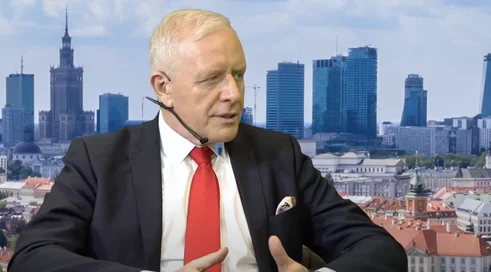
- PCPs have been given tools and diagnostic capabilities at their facilities. It's a much broader package of tests, including those that were previously only available in outpatient specialty care," Magdalena Kolodziej, president of the We Patients Foundation, says in an interview with Medexpress when asked about the two years of coordinated care in POZ.
Coordinated care in primary care is the most patient-centric solution in decades

Published Oct. 18, 2024 12:52

Coordinated care in POZ has been in place in Poland since October 1, 2022. How do you assess this solution since its implementation? What are the biggest benefits for patients?
In our opinion, this is the biggest change that has been introduced in healthcare in the last few decades. It is the most patient-centric solution we can imagine. Our foundation even awarded a patient-centric leadership award to the team that developed and implemented this solution. Solutions that allow patients to get health care as close as possible to where they live, i.e. at the POZ, are the best and most convenient for them. It is a solution that serves many patients.
The We Patients Foundation recently conducted a survey on the experiences of patients receiving this form of care. What are the conclusions of the survey?
Literally a few days ago, we made public the results of this survey. The group of respondents were patients covered by the coordinated care model in thriving facilities where quality has always been at a high level. Even in these facilities, patients clearly felt the improvement and declare that they have even better access and care, they feel safe, they don't have to wander and search, and their needs are met. They have an individualized treatment plan set up and discussed with them, so they also know exactly what awaits them. They have no doubts about how to take their medications and what tests to perform. They greatly appreciate the care of the coordinator, who helps make appointments and reminds them. Many of the problems that patients face on a daily basis are solved here. They also greatly appreciate the educational counseling, of which they can have up to six per year.
One of the most frequently cited problems for patients is long queues to see specialists, coordinated care was supposed to help ease the burden on the health care system by taking care of patients at the primary care level. Is the change being felt by patients?
Yes, I think this is one of the key changes felt by patients. PCPs have been given tools and diagnostic capabilities in their facilities. It's a much broader package of tests, including those that were previously only available in outpatient specialty care. These include ECG Holter, heart echo, Doppler ultrasound and thyroid biopsy. Differences in waiting can be seen, for example, in the case of the ECG Holter. The standard wait in the queue is an average of 16 weeks, while in coordinated care it is an average of 2 weeks, and we have not added the wait time for the appointment itself either. We see a very big difference in thyroid biopsy. It's about 3 weeks in coordinated care, while the standard is as long as 22 weeks.
Recently, there has been a lot of talk about cardio-renal-metabolic syndrome (CRM). Will the smooth functioning of coordinated care within the available pathways allow patients to be diagnosed more quickly?
We have the ability to perform more specialized tests in the PCP. Such a patient can be cared for by a single doctor who can diagnose each of the three ailments and care for the patient as a sick individual, rather than three separate entities.
From the point of view of patient organizations - what measures should be taken to ensure that more patients take advantage of coordinated care options at the PCP level?
NFZ data show that about half of the Polish patient population is covered by coordinated care. This, for two years of operation, is quite a good result. All the time there is a team working at the Ministry of Health that is looking at the needs, mainly of the medical community, but also the opinions of patients, which will also certainly be taken into account. Patients who answered questions in our survey talked about the need for access to educational materials, generally a campaign aimed at the broader public. There are few communications that talk about what coordinated care is and how much it can change a patient's life. They also talk about the need to add new pathways, for example, rehabilitation, psychological care.