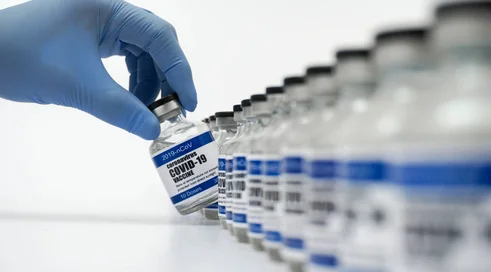
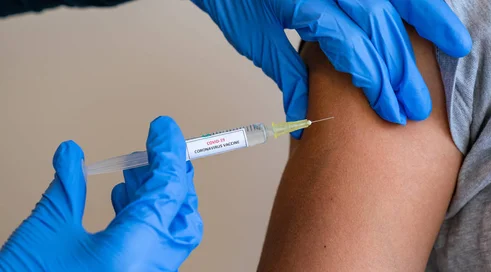
– Immunosuppression is moving to the top of the pyramid of factors affecting the risk of a severe course of Covid-19. Vaccination is still the primary recommendation for the immunocompetent, but many do not respond adequately to it. Then, pre-exposure prophylaxis with the use of monoclonal antibodies is an option - said prof. Krzysztof Tomasiewicz from the Department and Clinic of Infectious Diseases of the Medical University of Lublin during the conference "Covid-19 from A to Z".
Covid-19 pre-exposure prophylaxis is important for immunosuppressed patients

Published Dec. 8, 2022 13:54
Fot. Getty Images/iStockphoto
Antibodies as an additional option
Although successive variants of the coronavirus cause a severe course of the Covid-19 disease in a smaller and smaller percentage of patients, according to experts, efforts must still be made to protect oneself against infection as much as possible. This is especially important in the group of people who are particularly vulnerable to severe Covid-19. As noted by Prof. Krzysztof Tomasiewicz, the profile of this group is changing. While in terms of the age criterion, these are still people aged 65+, there has been a dramatic change in terms of medical factors.
– At the beginning of the pandemic, the most vulnerable groups were people with diabetes and cardiovascular disease. Now people in immunosuppression have moved to the top of this pyramid - noted Prof. Tomasiewicz.
Coronavirus infection is particularly dangerous for patients in this group, because the infection may, for example, lead to a delay or complete failure to implement anti-cancer treatment. Vaccination continues to be the primary form of protection against Covid-19. According to the expert, booster vaccination should be promoted above all. However, some patients do not respond satisfactorily to vaccination. For them, a chance to acquire immunity is prophylaxis with the use of monoclonal antibodies.
– We do not consider pre-exposure prophylaxis as an alternative. This is an option for those for whom all vaccination schemes have been insufficient. Then we have to consider two antibodies that, firstly, have been shown to be effective against most variants, secondly, they provide a long half-year duration of activity, and thirdly, they are safe and we have abundant evidence that they also work on patients undergoing immunosuppressive therapies - was mentioned by the professor.
TREATMENT AND COURSE OF DISEASE ARE IMMUNITY DISAPPOINTERS
The group of patients in whom it is particularly advisable to implement the possibility of administering antibodies as pre-exposure prophylaxis are people with hematological and hemato-oncological diseases. Prof. dr hab. n. med. Krzysztof Giannopoulos, vice-rector for the Doctoral School and Clinical Research of the Medical University of Lublin, head of the Department of Experimental Hematooncology of the Medical University of Lublin, emphasized that the reduction of the effectiveness of vaccination against Covid-19 is primarily influenced by strongly immunosuppressive procedures used in treatment. Also, the course of the disease can significantly affect the post-vaccination response.
– In the case of myeloma, the greater the immunodeficiency that accompanies clonal plasma cell proliferation, the less effective the vaccination will be. In the patients we observed, there was a very limited effectiveness in neutralizing the virus, which decreased over time - said Prof. Christopher Giannopoulos.
– In those patient groups where vaccination may not be optimal, pre-exposure prophylaxis should be used. The drug consisting of two antibodies was well tolerated in the patients in whom I used it. I think it will be an excellent protective shield for immunocompetent patients. Recent registration studies have shown that the preparation also has very good therapeutic efficacy - added the professor.
Prof. dr hab. n. med. Iwona Hus, head of the Department of Hematology, Central Clinical Clinical Hospital of the Ministry of the Interior and Administration in Warsaw, emphasized that the groups of patients particularly vulnerable to immune disorders will be people struggling with cancers of the lymphatic system, as well as acute myeloid leukemia. She added that the course of Covid-19 in haemato-oncological patients is characterized by a high risk of death, reaching 34%. According to prof. Iwona Hus, the administration of a mix of monoclonal antibodies would be the optimal form of prophylaxis in patients with haematological cancers with an increased risk of severe Covid-19.
– Protection is provided for about six months and the drug is given by injection into a muscle. It should be emphasized that it does not replace a vaccine. Vaccinations are the most important, but our patients often have no chance for the vaccination to be effective - emphasized the professor.